
As sea levels continue to rise and human development expands, coastal environments are facing unprecedented pressure. One of the most urgent yet less recognized issues in this context is coastal squeeze, a phenomenon that threatens biodiversity, human settlements, and natural defenses against storms. Unlike more widely discussed topics such as climate change or plastic pollution, coastal squeeze has only recently gained attention, yet its impacts are just as profound. Understanding the causes, consequences, and solutions to this challenge is essential for protecting both ecosystems and human communities worldwide.
What Is Coastal Squeeze?
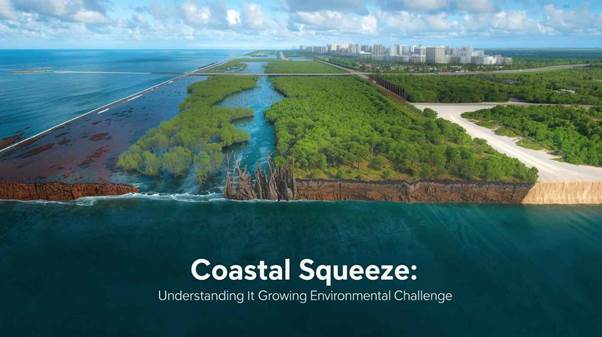
Coastal squeeze occurs when rising seas, erosion, or other natural pressures push coastal habitats inland, but human infrastructure such as seawalls, embankments, and urban development blocks their retreat. This forces habitats like salt marshes, mangroves, mudflats, and sand dunes into a shrinking space, ultimately leading to their disappearance. Unlike natural coastal changes, where ecosystems have room to shift and adapt, coastal squeeze traps them between advancing seas and immovable human barriers.
Causes of Coastal Squeeze
Multiple factors contribute to the growing problem of coastal squeeze, and most are closely tied to human activity:
- Urban expansion: As coastal cities and resorts grow, they occupy land that ecosystems need to migrate inland.
- Hard engineering: Seawalls, dikes, and flood defenses protect properties but restrict natural shoreline dynamics.
- Sea-level rise: Driven by global warming, higher sea levels accelerate erosion and habitat loss.
- Land reclamation: Converting wetlands and estuaries into farmland or housing reduces buffer zones that once absorbed tidal movement.
These combined pressures make coastal squeeze one of the most complex environmental challenges to manage.
Ecological Impacts of Coastal Squeeze
The ecological consequences of coastal squeeze are severe. Salt marshes, wetlands, and mangroves are biodiversity hotspots, providing vital breeding grounds for fish, birds, and countless other species. When these habitats vanish, entire ecosystems collapse, and the balance of marine and coastal life is disrupted.
Beyond biodiversity, these habitats perform essential ecosystem services. They filter pollutants from water, store significant amounts of carbon, and act as natural shields against storms. The loss of such systems due to coastal squeeze undermines both climate resilience and long-term sustainability.
Human Consequences of Coastal Squeeze
The effects of coastal squeeze extend far beyond environmental concerns. Communities that rely on healthy coastal zones face significant challenges:
- Fisheries decline: The destruction of mangroves and marshes reduces fish nurseries, impacting food supply and fishing industries.
- Increased flood risk: Without wetlands and dunes to absorb storm surges, coastal settlements are more vulnerable.
- Tourism loss: Natural coastlines attract visitors, but shrinking beaches and degraded wetlands reduce tourism income.
Ultimately, coastal squeeze is not just about nature it is a social, cultural, and economic issue that affects millions of people worldwide.
Coastal Squeeze and Climate Change
Climate change acts as a multiplier for coastal squeeze. Rising global temperatures cause seas to expand and ice sheets to melt, while more frequent and intense storms batter coastlines.
Table of Contents
Coastal defenses like seawalls may provide short-term protection, but they also lock ecosystems in place, worsening coastal squeeze. Without sustainable adaptation strategies, the combined effects of climate change and human development could make the issue irreversible in many regions.
Examples of Coastal Squeeze Around the World
- United Kingdom: Salt marshes along the east coast are shrinking as rising seas and flood defenses trap them in place.
- United States: Wetlands along the Gulf Coast are disappearing rapidly due to levees and rising waters.
- South Asia: In Bangladesh and India, dense populations and seawall construction prevent mangroves from migrating inland.
- Pacific Islands: Low-lying islands face severe coastal squeeze, with communities and ecosystems alike running out of space.
These examples show that coastal squeeze is a truly global issue, affecting rich and poor nations alike.
Strategies to Address Coastal Squeeze
Solving the problem of coastal squeeze requires a balance between human needs and natural resilience. Some key strategies include:
- Managed realignment: Intentionally allowing certain areas to flood, creating space for habitats to adapt naturally.
- Soft engineering: Using sand replenishment, planting mangroves, or dune restoration instead of concrete walls.
- Better zoning and planning: Preventing new construction in high-risk coastal zones.
- Habitat restoration: Rebuilding degraded wetlands, estuaries, and dunes to improve ecosystem function.
Such solutions not only reduce coastal squeeze but also enhance protection against climate change impacts.
Role of Policy and Community Action
Governments and communities both play vital roles in tackling coastal squeeze. Policymakers must enforce sustainable coastal management, while international agreements can promote collaboration across borders. Local communities, meanwhile, can contribute by supporting conservation projects, adopting eco-friendly practices, and raising awareness of the issue. When governments and citizens work together, efforts to reduce coastal squeeze are far more effective.
The Future Outlook
If left unchecked, coastal squeeze could lead to the irreversible loss of some of the world’s most valuable ecosystems by the end of the century. However, with proactive adaptation and sustainable planning, societies can preserve natural coastlines while protecting human settlements. Advances in ecosystem restoration, green infrastructure, and climate adaptation provide hope that the future can look different. The question is whether action will be taken quickly enough to reverse the current trend.
Conclusion
Coastal squeeze is a powerful yet often overlooked threat to ecosystems, economies, and communities worldwide. Driven by sea-level rise and human encroachment, it erodes natural defenses, undermines biodiversity, and increases the vulnerability of coastal populations. While the problem is complex, it is not insurmountable. Through smarter planning, sustainable development, restoration efforts, and active community engagement, societies can reduce the impact of coastal squeeze and safeguard coastal ecosystems for generations to come. Addressing this issue is not just an environmental responsibility but a necessity for human well-being.