
Air pollution is one of the most pressing environmental and public health challenges of our time. While many factors contribute to poor air quality, one atmospheric phenomenon often makes pollution far worse: Thermal inversion. Normally, air near the ground rises, carrying pollutants upward and dispersing them.
Table of Contents
However, during thermal inversion, this natural process is disrupted, trapping pollutants close to the surface. The result is smoggy skies, respiratory issues, and environmental stress. Understanding what thermal inversion is, how it occurs, and its consequences is vital for both science and society.
What Is Thermal Inversion?
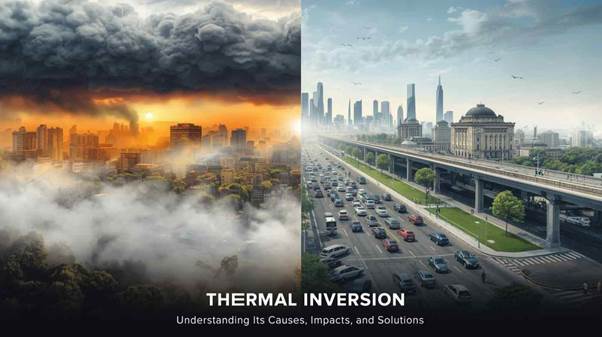
Under typical conditions, the air closer to Earth’s surface is warmer than the air above, allowing heat and pollutants to rise and disperse. A Thermal inversion occurs when a layer of warm air sits above cooler air at the surface. This creates a “lid” effect, preventing vertical air circulation. Instead of dispersing, pollutants accumulate near the ground, leading to hazy conditions and poor air quality. While thermal inversion is a natural atmospheric event, its impacts are intensified in regions with high industrial activity, traffic congestion, and limited wind circulation.
Causes of Thermal Inversion
Several natural and human-related factors can lead to Thermal inversion:
- Geography: Valleys are particularly prone to inversion because mountains block air movement, trapping cooler air near the surface.
- Weather conditions: Calm winds, clear skies, and long nights allow the ground to cool rapidly, encouraging the development of inversion layers.
- Urban activity: Large cities produce heat and pollution, which amplify inversion effects.
- Seasonal patterns: Winter is the most common time for thermal inversion, as nights are longer and surface cooling is more intense.
These factors combine to create stagnant air, setting the stage for pollution buildup.
Ecological Impacts of Thermal Inversion
The ecological consequences of Thermal inversion extend beyond human health. Plants exposed to high concentrations of ground-level ozone, nitrogen oxides, and particulates may suffer reduced growth, leaf damage, or even death. Pollutants trapped during inversion events can acidify soil and water bodies, harming aquatic ecosystems. In urban areas, smog from thermal inversion blocks sunlight, reducing photosynthesis and affecting biodiversity. Thus, inversion-related pollution disrupts both terrestrial and aquatic ecosystems.
Human Health Impacts of Thermal Inversion
One of the most serious consequences of Thermal inversion is its effect on human health. Pollutants such as carbon monoxide, sulfur dioxide, and particulate matter accumulate in the breathing zone. Prolonged exposure can lead to respiratory illnesses, cardiovascular problems, and aggravated asthma. Vulnerable groups including children, the elderly, and those with pre-existing conditions are at particular risk. Historical events, such as the 1952 Great Smog of London, demonstrate how deadly inversion episodes can be, with thousands of premature deaths linked to pollution trapped under inversion layers.
Thermal Inversion and Urban Pollution
Cities are especially vulnerable to the impacts of Thermal inversion. Urban areas with dense traffic and industrial emissions already suffer from poor air quality, which worsens when inversion prevents pollution from dispersing. Large metropolitan centers such as Los Angeles, Mexico City, and New Delhi frequently experience smog linked to thermal inversion. In these cases, pollution is not just a nuisance but a major threat to public health, economic productivity, and overall quality of life.
Climate Change and Thermal Inversion
The relationship between climate change and Thermal inversion is complex but important. Climate change alters weather patterns, increases temperature extremes, and affects wind circulation. These changes may increase the frequency and severity of inversion events in some regions. For example, rising global temperatures can intensify heatwaves, which are often linked with stagnant air conditions favorable for inversion. As a result, climate change could worsen air pollution episodes by amplifying the effects of thermal inversion.
Case Studies of Thermal Inversion Worldwide
- Los Angeles, USA: Known for its smog, the city’s basin geography makes it highly susceptible to thermal inversion events.
- Mexico City, Mexico: Surrounded by mountains, the city regularly experiences severe air pollution trapped by inversion.
- Beijing, China: Industrial emissions combined with inversion events create hazardous air quality, leading to frequent “red alerts.”
- London, UK: The Great Smog of 1952 remains one of the most infamous examples of thermal inversion amplifying pollution.
These examples show how geography, climate, and human activity interact to intensify the effects of thermal inversion.
Strategies to Address Thermal Inversion
While thermal inversion itself cannot be prevented it is a natural meteorological event its impacts can be mitigated. Effective strategies include:
- Reducing emissions: Limiting industrial and vehicular pollution reduces the pollutants available to be trapped during inversion.
- Urban planning: Designing cities with green spaces and efficient transport systems helps lower emissions.
- Regulation: Implementing stricter air quality standards during inversion-prone seasons reduces exposure risks.
- Public awareness: Informing residents about inversion events and pollution levels allows vulnerable individuals to take protective measures.
These actions do not eliminate thermal inversion but help minimize its harmful consequences.
Policy and Community Action
Governments, scientists, and communities all play roles in addressing the challenges of Thermal inversion. Policymakers can invest in cleaner energy sources, promote public transportation, and enforce stricter air quality regulations. Communities can support these efforts through sustainable practices such as carpooling, tree planting, and reduced energy consumption. Collaboration across levels of society is essential for reducing the risks associated with thermal inversion.
Conclusion
Thermal inversion is a natural atmospheric phenomenon, but its interaction with modern pollution makes it a significant threat to both human health and the environment. By trapping pollutants close to the ground, thermal inversion creates hazardous conditions that affect ecosystems, economies, and societies. Although the event itself cannot be controlled, its consequences can be managed through emission reductions, smart urban planning, and proactive policies. Addressing this issue requires awareness, cooperation, and innovation. By doing so, societies can protect public health and ensure cleaner air for future generations.