
River deltas are some of the most productive and densely populated regions in the world. They provide fertile soils for agriculture, support fisheries, and serve as hubs of commerce and settlement. Yet, despite their importance, these fragile landscapes face an accelerating threat: Delta erosion.
Driven by climate change, sediment shortages, and human interference, the erosion of deltas has become a global issue. As the land disappears, millions of lives, ecosystems, and economies are put at risk. Understanding the causes, consequences, and solutions to Delta erosion is essential for sustainable development and environmental protection.
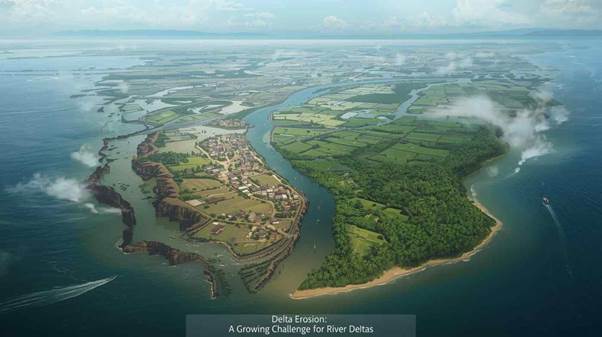
What Is Delta Erosion?
Delta erosion refers to the gradual loss of land in river deltas, where rivers meet the sea. Normally, rivers carry sediment downstream, replenishing the delta and balancing natural erosion. However, when sediment supply declines or sea levels rise faster than deltas can adapt, erosion outpaces replenishment. Unlike ordinary coastal erosion, delta erosion occurs across wide, low-lying landscapes that are vital for human and ecological survival.
Causes of Delta Erosion
Several interconnected factors drive Delta erosion, many of them linked to human activity:
- Sediment starvation: Dams, reservoirs, and river diversions trap sediment that would otherwise nourish deltas.
- Sea-level rise: Accelerated by climate change, rising seas erode delta land and push saltwater inland.
- Land subsidence: Over-extraction of groundwater and natural compaction cause deltas to sink.
- Deforestation and farming: Poor land practices upstream reduce the flow of sediment.
- Extreme weather: Hurricanes, cyclones, and floods increase soil loss and degradation.
These forces often overlap, making Delta erosion one of the most complex environmental challenges.
Ecological Impacts of Delta Erosion
The ecological consequences of Delta erosion are severe. Deltas host wetlands, mangroves, and estuaries that act as biodiversity hotspots. As land disappears, habitats for fish, birds, and countless other species vanish. The destruction of mangroves and wetlands reduces natural carbon storage, undermines water quality, and weakens resilience to climate change. Entire food webs can collapse when these ecosystems are degraded. Thus, delta erosion is not just about land it is about the survival of life forms that depend on it.
Human Impacts of Delta Erosion
The human cost of Delta erosion is equally alarming. Deltas are home to hundreds of millions of people who rely on them for agriculture, fisheries, and industry. The erosion of fertile soils reduces food production, threatening both local and global food security. Coastal communities lose natural barriers against storms, increasing vulnerability to flooding. Tourism also suffers as scenic landscapes vanish. In some regions, delta erosion displaces populations, creating climate refugees and intensifying social pressures.
Global Examples of Delta Erosion
Around the world, Delta erosion is a pressing concern:
- The Mississippi River Delta (USA): Wetlands are vanishing due to dams, levees, and oil extraction, leaving Louisiana more exposed to hurricanes.
- The Mekong Delta (Vietnam): Sand mining, hydropower dams, and sea-level rise threaten one of Asia’s most important rice-producing areas.
- The Nile Delta (Egypt): Sea-level rise and sediment shortages endanger agriculture and urban settlements.
- The Ganges-Brahmaputra Delta (Bangladesh and India): Home to millions, this delta faces flooding, erosion, and displacement from climate impacts.
These examples highlight the global scale of Delta erosion and its wide-reaching consequences.
Delta Erosion and Climate Change
Climate change acts as a powerful accelerator of Delta erosion. Rising sea levels increase saltwater intrusion, eroding soils and contaminating freshwater supplies. Stronger storms batter fragile coastlines, while shifting rainfall patterns affect sediment transport. Without urgent intervention, climate change may push many deltas beyond the point of recovery. Addressing delta erosion must therefore go hand in hand with global efforts to reduce greenhouse gas emissions and adapt to changing conditions.
Strategies to Address Delta Erosion
Despite the scale of the problem, there are effective ways to slow or even reverse Delta erosion. Key strategies include:
- Sediment management: Modifying dams to release sediment or using engineered diversions to replenish deltas.
- Ecosystem restoration: Replanting mangroves, wetlands, and grasses that stabilize soil and buffer against erosion.
- Soft engineering solutions: Using natural barriers instead of concrete seawalls, which often worsen erosion.
- Managed retreat: Allowing controlled flooding to give deltas space to adapt.
- Sustainable agriculture: Promoting farming methods that reduce land degradation and improve soil health.
When combined, these approaches can help maintain delta stability while also supporting human livelihoods.
Policy and Community Action
Governments and local communities both have vital roles in addressing Delta erosion. Policymakers must integrate delta management into climate adaptation and urban planning strategies. International cooperation is also essential, as many rivers flow across borders. At the same time, community-based projects such as mangrove planting or sustainable farming offer grassroots solutions that make deltas more resilient. Education and awareness campaigns can further encourage sustainable practices among delta populations.
The Future Outlook
If left unaddressed, Delta erosion could reshape the world’s coastlines and displace millions of people by the end of the century. Yet, the future does not have to be bleak. Innovations in sediment restoration, adaptive planning, and ecological engineering offer hope. By treating deltas not as expendable land but as vital ecosystems, societies can protect them from disappearing. The urgency lies in acting now, before erosion and climate change push deltas past a point of no return.
Conclusion
Delta erosion is a silent but powerful force threatening ecosystems, communities, and global food security. Caused by sediment shortages, sea-level rise, and human intervention, it undermines both biodiversity and economic stability. However, with proactive measures such as ecosystem restoration, sediment management, and sustainable planning the effects of delta erosion can be reduced. Addressing this challenge requires global cooperation, local participation, and long-term vision. Protecting deltas is not just about preserving land it is about ensuring resilience, food security, and a sustainable future for generations to come.