
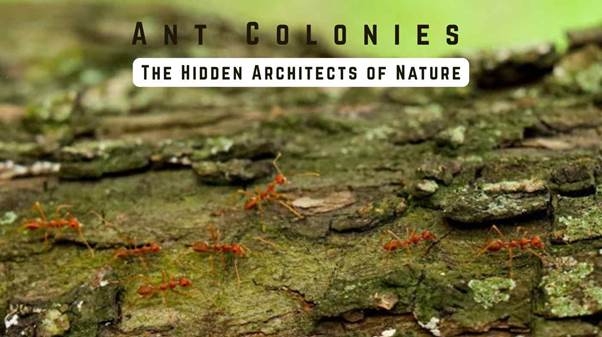
Ant colonies are among the most fascinating and complex social systems in the animal kingdom. Found on nearly every continent, these small yet powerful societies have thrived for millions of years due to their incredible teamwork, adaptability, and organization. An ant colony is more than just a nest it is a living, functioning community where each member has a specific role. From the queen’s egg-laying duties to the tireless work of soldiers and workers, every ant contributes to the survival of the colony.
Table of Contents
In this article, we will explore the definition, history, importance, benefits, challenges, and real-world examples of ant colonies to understand how they shape ecosystems and inspire human innovation.
Defining Ant Colonies
An ant colony is a structured community of ants living together in a single nest or network of nests. Colonies can range in size from a few dozen ants to millions, depending on the species. These societies are highly organized, with ants divided into castes such as queens, workers, and soldiers, each fulfilling unique responsibilities. This division of labor ensures efficiency and survival, making ant colonies some of the most successful living systems on Earth.
Evolution and Background of Ant Colonies
Origins of Social Behavior
The evolutionary roots of ant colonies go back over 100 million years. Scientists believe ants evolved from wasp-like ancestors that first began to cooperate for survival. Over time, they developed advanced communication systems using pheromones, allowing them to coordinate complex tasks.
Adaptations Through Time
Ant colonies have survived countless environmental changes thanks to their adaptability. Some species evolved underground nests to withstand predators and climate extremes, while others built towering mounds or formed floating rafts during floods. These adaptations highlight the resilience of ant colonies throughout history.
Ecological Importance of Ant Colonies
Balancing Ecosystems
Ant colonies are vital to maintaining balance in natural ecosystems. They aerate soil through constant tunneling, which improves plant growth. Ants also recycle nutrients by breaking down organic matter and preying on pests that could harm crops.
Benefits to Humans
Humans benefit in numerous ways from the activities of ant colonies:
• Soil enrichment that enhances agriculture
• Natural pest control, reducing the need for chemicals
• Seed dispersal, which helps regenerate forests and grasslands
By supporting biodiversity and aiding food production, ant colonies play an invisible but essential role in human survival.
Adaptations and Behaviors of Ant Colonies
Sensory Communication
Ants in a colony communicate primarily through chemical signals called pheromones. These signals help ants mark trails, warn of danger, and coordinate attacks or food-gathering missions.
Division of Labor
The efficiency of ant colonies lies in their social structure:
• Queens are responsible for reproduction
• Workers gather food, care for young, and maintain the nest
• Soldiers defend the colony from predators
This organized system ensures every task is performed with precision.
Challenges Faced by Ant Colonies
Human-Induced Threats
Modern human activity threatens ant colonies in several ways:
• Habitat destruction through deforestation and urbanization
• Use of pesticides that eliminate entire colonies
• Pollution that disrupts natural ecosystems
Climate Change Pressures
Changing weather patterns also affect ant populations. Rising temperatures can reduce food availability, while extreme events like floods and droughts destroy nests. Species in sensitive habitats, such as rainforests, are especially vulnerable.
Real-World Examples of Ant Colonies
Leafcutter Ants
Leafcutter ants are perhaps the most famous ant colonies, known for their farming behavior. They cut leaves and carry them back to their nests, where they cultivate fungus to feed the colony. This remarkable form of agriculture rivals human farming in complexity.
Army Ants
Army ants form massive colonies that are always on the move. These nomadic ants can overwhelm prey much larger than themselves through coordinated swarms, demonstrating the raw power of collective action.
Fire Ants
Fire ants create floating colonies during floods, linking their bodies together to survive. Their aggressive defense mechanisms and adaptability make them one of the most resilient species.
Conservation of Ant Colonies
Protection Strategies
Conserving ant colonies requires efforts to preserve their habitats and reduce harmful human activities. Strategies include:
• Establishing protected forest reserves
• Reducing pesticide use in agriculture
• Promoting awareness of ants’ ecological importance
Community Involvement
Local communities can help by adopting sustainable farming practices and supporting conservation projects. Citizen science programs also encourage people to monitor ant populations, contributing to global knowledge.
Conclusion
Ant colonies are extraordinary examples of cooperation, adaptability, and survival. These miniature societies demonstrate how unity and organization can achieve remarkable results. From leafcutter farming to army ant raids, they showcase the power of collective intelligence in the natural world. Despite the challenges posed by human activity and climate change, ant colonies continue to thrive in many environments. Protecting them is not only about saving ants but also about preserving the ecosystems they support. By valuing and safeguarding ant colonies, we ensure that these hidden architects of nature continue their vital work for generations to come.
Q 1: What are ant colonies and how do they function?
Ant colonies are structured communities led by a queen, supported by workers and soldiers. Each caste has specific roles that keep the colony thriving.
Q 2: Why are ant colonies important for ecosystems?
Ant colonies improve soil health, recycle nutrients, disperse seeds, and control pest populations, making them vital for maintaining ecological balance.
Q 3: How large can ant colonies grow?
Some ant colonies contain just a few hundred members, while supercolonies can have millions of ants spread over vast territories.
FAQs for the Ant colonies
FAQ 1: What are ant colonies and how do they function?
Ant colonies are structured communities led by a queen, supported by workers and soldiers. Each caste has specific roles that keep the colony thriving.
FAQ 2: Why are ant colonies important for ecosystems?
Ant colonies improve soil health, recycle nutrients, disperse seeds, and control pest populations, making them vital for maintaining ecological balance.
FAQ 3: How large can ant colonies grow?
Some ant colonies contain just a few hundred members, while supercolonies can have millions of ants spread over vast territories.