
Mosquito swarms are often noticed on warm summer evenings, rising as clouds of buzzing insects above fields, water bodies, or backyards. These gatherings are not random they are mosquito swarms, one of nature’s fascinating yet sometimes annoying spectacles. A mosquito swarm refers to a cluster of male mosquitoes that gather in the air, usually around dusk, waiting for females to arrive for mating. While many view them as a nuisance, mosquito swarms reveal critical insights into insect behavior, reproduction, and ecology.
Table of Contents
This article explores what mosquito swarms are, their historical and biological background, why they form, their ecological importance, and the challenges they create for humans. We will also look at real-world examples and the role of modern research in managing their impact. By the end, you’ll gain a new perspective on mosquito swarms not just as irritants, but as complex natural phenomena with both benefits and problems.
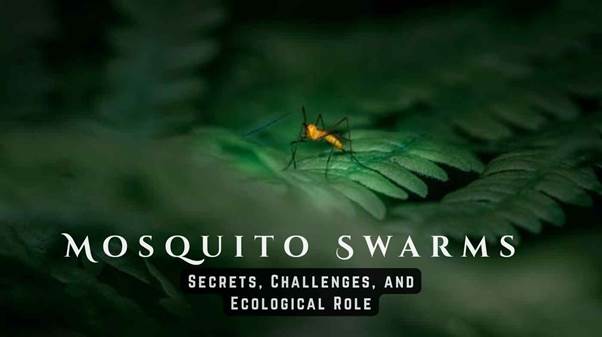
What Are Mosquito Swarms? (Definition and Behavior)
Mosquito swarms are large groups of male mosquitoes that gather together in specific locations for the purpose of attracting females. Unlike random flying, these swarms are highly organized and form at the same spots every day, often near water, vegetation, or landmarks. The buzzing sound we hear is caused by the synchronized wingbeats of thousands of males.
Female mosquitoes enter these swarms when ready to mate, ensuring reproduction and survival of the species. Interestingly, swarms do not last long; they typically appear at dusk or dawn and disperse once the mating process is complete.
The History and Study of Mosquito Swarms
Scientists have studied mosquito swarms for centuries, particularly because of their link to diseases like malaria, dengue, and Zika. Historical records show that even ancient civilizations observed these insect gatherings and connected them to seasonal patterns.
Modern entomology uses radar technology and high-speed cameras to study swarming patterns. Researchers discovered that swarms form in consistent “marker locations,” which may include trees, open fields, or even the tops of houses. These studies are crucial for developing mosquito control strategies.
Why Do Mosquito Swarms Form?
Swarms serve a biological purpose: successful reproduction. Male mosquitoes gather in groups to increase the chances of attracting a female. Swarming is essentially a mating strategy where competition plays out in the air.
Key points on why swarms form:
• They act as mating hotspots for females.
• Swarming ensures stronger genetic diversity.
• It helps mosquito populations survive seasonal changes.
Without mosquito swarms, their populations would decline, which could affect food chains that rely on them.
Ecological Importance of Mosquito Swarms
Though often disliked, mosquito swarms play an important ecological role:
• Food Source: Birds, bats, frogs, and fish feed on swarming mosquitoes.
• Pollination: Some mosquito species feed on nectar and assist in pollination.
• Nutrient Recycling: Dead mosquitoes enrich soil and aquatic ecosystems.
In this way, mosquito swarms contribute to biodiversity and environmental balance.
The Challenges of Mosquito Swarms for Humans
Despite their ecological role, mosquito swarms cause significant problems:
• Health Risks: Females from swarms can spread diseases such as malaria, dengue, and West Nile virus.
• Nuisance Factor: Large swarms make outdoor activities uncomfortable.
• Economic Impact: Tourism, agriculture, and healthcare systems suffer due to mosquito-borne illnesses.
These challenges make mosquito swarms a major public health concern in many regions.
Real-World Examples of Mosquito Swarms
In Africa, massive mosquito swarms form after rainy seasons near rivers and wetlands. These swarms are so large that they appear on weather radar systems, sometimes mistaken for storm clouds.
In Florida and Louisiana, swarms rise from marshes during summer evenings, becoming both a natural wonder and a local challenge. In some indigenous cultures, these swarms are considered indicators of seasonal change, guiding agricultural practices.
Scientific Efforts to Manage Mosquito Swarms
Controlling mosquito swarms is crucial to reducing disease transmission. Scientists are experimenting with innovative approaches:
• Sterile Insect Technique (SIT): Releasing sterile male mosquitoes to reduce breeding success.
• Genetic Engineering: Altering mosquito DNA to limit reproduction.
• Natural Predators: Encouraging bats, fish, and dragonflies to feed on mosquitoes.
• Environmental Control: Reducing stagnant water sources to limit breeding grounds.
These efforts aim to balance ecological benefits while reducing human risks.
Future Perspectives on Mosquito Swarms
As climate change alters global weather patterns, mosquito swarms are expected to become more frequent and widespread. Warmer temperatures create favorable breeding conditions, expanding mosquito habitats into new regions. Scientists predict that understanding swarming behavior will be critical for preventing future outbreaks of mosquito-borne diseases.
Conclusion
Mosquito swarms are more than buzzing annoyances; they are essential to the survival of mosquito species and contribute to ecological balance. While they provide food for predators and play a role in pollination, they also pose health and economic challenges for humans. By studying their behavior and using innovative control methods, scientists hope to reduce risks while respecting their ecological role. Next time you see a mosquito swarm, remember it’s not just a cloud of pests it’s a natural event shaped by millions of years of evolution. Stay informed and explore nature with awareness.
Q1: What are mosquito swarms?
Mosquito swarms are groups of mosquitoes that gather in large numbers, often for mating or feeding purposes, usually during dusk or dawn.
Q2: Why are mosquito swarms dangerous?
Mosquito swarms can increase the risk of diseases like malaria, dengue, and Zika virus due to their ability to bite multiple hosts rapidly.
Q3: How can mosquito swarms be controlled?
Mosquito swarms can be managed through methods like eliminating stagnant water, using insect repellents, and deploying biological controls like mosquito-eating fish.