
Coastal erosion is not just an environmental issue; it carries enormous economic consequences for communities, governments, and industries that rely on coastal stability. The constant loss of shorelines affects property values, damages infrastructure, reduces tourism revenue, and forces expensive protection measures. For decades, many viewed coastal erosion as a natural process, but today, the accelerated pace driven by climate change, rising sea levels, and human activity has placed significant financial strain on global economies.
Table of Contents
This article explores the economic costs of coastal erosion, its historical context, impacts on key sectors, challenges in management, and real-world examples of regions grappling with these high costs.
Understanding Coastal Erosion and Its Economic Dimensions
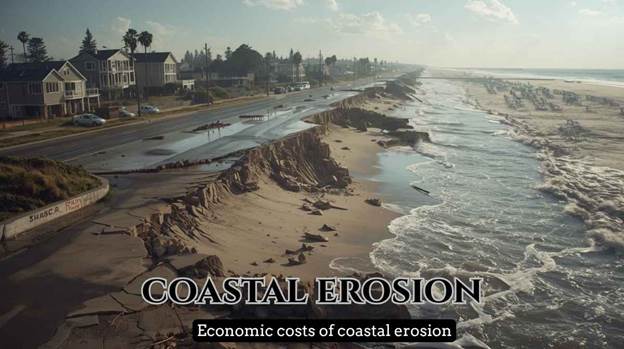
Coastal erosion refers to the gradual wearing away of shorelines due to wave action, currents, storms, and human interference. While it is a natural process, its acceleration in recent decades has intensified the economic burden on coastal economies. Property destruction, port disruptions, and agricultural land loss are just some of the economic effects.
- Loss of residential and commercial property
- Decline in tourism revenue due to shrinking beaches
- Increased insurance premiums for coastal assets
Historical Background and Rising Concerns
Historically, communities adapted to coastal erosion through relocation or simple barriers. However, rapid urbanization along coastlines since the 20th century has amplified financial losses. With more than 40% of the global population living near coasts, the stakes have never been higher. Coastal cities such as New Orleans, Venice, and Dhaka are prime examples where the costs of erosion and flooding overlap, straining public budgets and private investments.
The Economic Importance of Managing Coastal Erosion
Impacts on Infrastructure
Critical infrastructure such as roads, ports, airports, and energy plants are often located near coastlines. Damage from coastal erosion can halt trade and supply chains, leading to billions in losses.
Real Estate and Property Values
Property near the shore often carries premium prices, but erosion reduces land availability and depreciates property values. Homeowners and investors lose equity, while governments face increased compensation claims.
Tourism and Local Economies
Tourism is a major revenue source for coastal regions, but beach erosion discourages visitors. For example, popular destinations like the Maldives and Florida spend millions annually to restore beaches and maintain their tourism-driven economies.
Direct and Indirect Costs of Coastal Erosion
The economic costs are both visible and hidden:
- Direct Costs: Infrastructure repairs, beach nourishment projects, construction of seawalls, and relocation expenses.
- Indirect Costs: Decline in fisheries, loss of agricultural productivity due to saltwater intrusion, and reduced investor confidence.
These costs accumulate, creating a long-term financial burden on governments and private stakeholders.
Global Examples of Economic Losses
- United States: The annual cost of coastal erosion is estimated at $500 million in property loss, with billions more spent on protective measures.
- Bangladesh: Rising sea levels and erosion displace millions, leading to lost agricultural land and mounting humanitarian costs.
- Europe: The EU spends over €1 billion annually on coastal defense and adaptation.
Challenges in Addressing Coastal Erosion
Climate Change and Rising Seas
Sea level rise accelerates erosion, making traditional protective methods less effective.
Cost of Protection
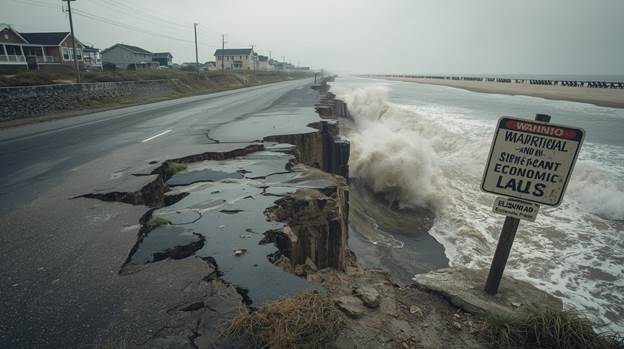
Building seawalls, groynes, and artificial reefs demands high upfront investment, often straining government budgets.
Policy and Governance Issues
Many coastal nations lack cohesive policies to address the long-term financial risks of erosion, leaving communities vulnerable.
Economic Strategies for Mitigation
To reduce the economic impact of coastal erosion, governments and stakeholders are adopting integrated approaches:
- Beach nourishment programs to restore lost sand
- Green infrastructure solutions such as mangrove restoration
- Insurance models tailored for high-risk coastal zones
- Public-private partnerships to fund protective infrastructure
Future Outlook: The Price of Inaction
If left unmanaged, the economic costs of coastal erosion will multiply in coming decades. The World Bank projects trillions in potential damages by 2100 if climate change and erosion remain unchecked. By investing in proactive measures now, governments can reduce long-term economic vulnerability and protect livelihoods.
Conclusion
The economic costs of coastal erosion extend far beyond the visible loss of land and property. From shrinking tourism revenue to soaring infrastructure repair costs, erosion is a financial crisis as much as it is an environmental one. Proactive measures such as green infrastructure, integrated policies, and global collaboration are essential to reduce the long-term burden. Recognizing coastal erosion as an urgent economic issue, not just an ecological one, is the first step toward sustainable solutions. Communities, policymakers, and businesses must act now to secure both the environment and the economy for future generations.
Q1: What is the economic cost of coastal erosion globally?
The global cost runs into billions annually, with direct and indirect losses from property, infrastructure, and tourism sectors.
Q2: Which industries are most affected by coastal erosion?
Tourism, real estate, fisheries, agriculture, and transport industries face the heaviest economic impacts.
Q3: How do governments manage coastal erosion economically?
They invest in beach nourishment, seawalls, mangrove restoration, and insurance models to balance costs and protection.