
Soil fertility management plays a vital role in ensuring healthy crop growth and sustainable agricultural productivity. Among the many factors that determine soil fertility, soil pH stands out as a critical component that directly influences nutrient availability and microbial activity. A balanced soil pH is not only necessary for maximizing yields but also for maintaining long-term soil health.
Table of Contents
In this article, we explore the connection between soil pH and fertility balance, discuss why it matters for farmers, examine historical and scientific perspectives, and provide practical insights into maintaining fertile soils through proper pH regulation. By the end, readers will gain a clear understanding of how soil fertility management can improve productivity while protecting the environment.
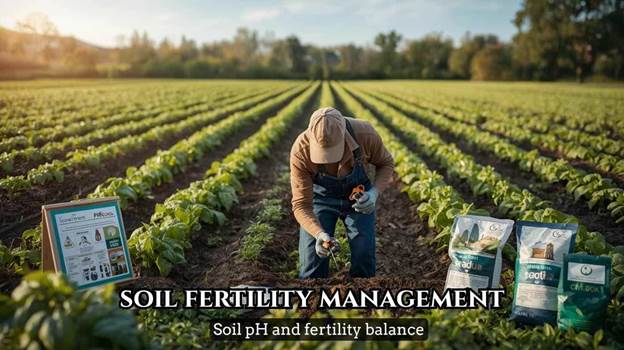
Understanding Soil Fertility Management and Soil pH
Soil fertility management refers to the practices used to maintain or improve the nutrient status of soil, ensuring crops receive essential minerals for growth. Soil pH, which measures the acidity or alkalinity of soil, plays a central role in this balance. Most crops thrive in a pH range of 6.0 to 7.5, where nutrients like nitrogen, phosphorus, and potassium are most available. When soil becomes too acidic or alkaline, nutrient uptake declines, reducing crop yields.
Key roles of soil pH in fertility balance:
- Controls the solubility of nutrients such as iron, zinc, and phosphorus
- Influences microbial activity essential for nitrogen fixation
- Determines the effectiveness of fertilizers applied to soil
Historical Background of Soil Fertility and pH Research
The concept of soil fertility management dates back thousands of years, as early farmers used organic manure and crop rotations to maintain productivity. Scientific research into soil pH began in the 19th century, when agronomists discovered its role in nutrient absorption. The development of lime application as a corrective measure revolutionized farming practices, allowing farmers to restore fertility in acidic soils. Today, modern soil testing technologies and precision agriculture have made it easier to monitor pH and adjust fertility strategies accordingly.
Importance of Soil pH in Sustainable Agriculture
A balanced soil pH is critical for sustainable crop production and food security. Without it, fertilizers are less effective, and soil health deteriorates.
Benefits of balanced soil pH for fertility:
- Enhances nutrient uptake efficiency
- Improves soil structure and aeration
- Boosts microbial diversity and nitrogen fixation
- Reduces the need for chemical fertilizers
Maintaining proper soil fertility management ensures that farmlands remain productive for generations without exhausting natural resources.
Challenges in Managing Soil Fertility and pH
Farmers face multiple challenges when trying to balance soil fertility and pH. Climate change, excessive fertilizer use, and poor irrigation practices often lead to soil degradation. Acidification is particularly common in tropical regions due to heavy rainfall leaching nutrients from soil. Conversely, alkaline soils in arid areas present problems for nutrient absorption.
Common challenges include:
- Soil acidification from overuse of nitrogen fertilizers
- Salinity and alkalinity in irrigated lands
- Limited access to soil testing in developing regions
- Rising costs of soil amendments such as lime and gypsum
Practical Approaches to Soil Fertility Management
Managing soil fertility and achieving pH balance requires integrated approaches. Farmers and agricultural experts recommend combining organic and inorganic methods for long-term results.
Effective practices include:
- Soil testing to identify pH levels and nutrient deficiencies
- Lime application to neutralize acidity in soils
- Gypsum use for alkaline soils with high sodium content
- Crop rotation and cover crops to improve soil organic matter
- Organic compost and manure to balance nutrient cycles naturally
- Integrated nutrient management (INM) that combines organic and chemical fertilizers for maximum efficiency
Global Case Studies in Soil Fertility and pH Management
Several countries have demonstrated the success of soil fertility management by balancing soil pH.
- United States: Widespread lime application has helped corn and soybean farmers maintain soil productivity.
- India: Integrated nutrient management programs are improving fertility in acidic soils of the northeastern states.
- Brazil: Large-scale lime treatment in the Cerrado region transformed previously unproductive acidic soils into one of the world’s most important agricultural zones.
These real-world examples show how soil fertility management directly influences agricultural output and economic growth.
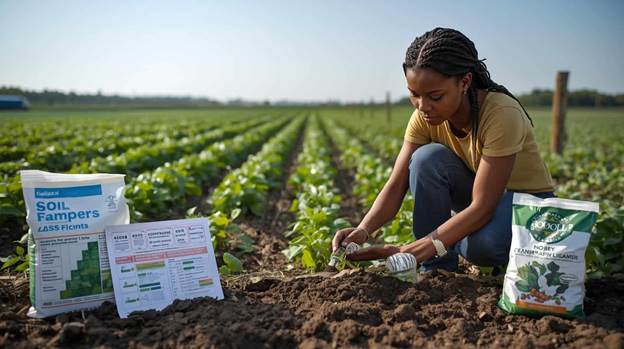
Future Outlook: Innovations in Soil Fertility and pH Balance
The future of soil fertility management lies in technology-driven solutions. Precision agriculture, smart soil sensors, and biofertilizers are enabling farmers to monitor soil pH in real time and apply tailored solutions. Furthermore, the development of eco-friendly soil amendments can reduce environmental risks while maintaining productivity. By embracing these innovations, global agriculture can achieve both sustainability and profitability.
Conclusion
Soil fertility management and soil pH balance are inseparable aspects of modern agriculture. A well-balanced soil pH ensures optimal nutrient availability, enhances fertilizer use, and safeguards long-term soil productivity. Historical lessons, scientific research, and modern innovations all highlight the importance of managing soil fertility for sustainable farming. As challenges like climate change and soil degradation intensify, adopting integrated soil fertility management practices becomes even more essential. Farmers, policymakers, and researchers must work together to restore and protect soil health, ensuring a secure food future for generations.
Q1: Why is soil pH important in soil fertility management?
Soil pH determines nutrient availability, microbial activity, and fertilizer effectiveness, making it essential for maintaining fertility.
Q2: How can farmers correct acidic soils?
Applying lime and using organic compost are effective methods for neutralizing soil acidity and improving fertility.
Q3: What are common challenges in soil fertility management?
Challenges include acidification, salinity, poor soil testing access, and the high costs of amendments like lime and gypsum.