
Climate migration has become one of the most pressing human challenges of the 21st century. As rising temperatures, extreme weather, and sea-level rise reshape the planet, millions are being forced to move from their homes in search of safer environments. Unlike traditional migration driven by conflict or opportunity, climate migration is an involuntary movement triggered by environmental degradation and natural disasters. From flooded islands in the Pacific to drought-stricken African farmlands, the phenomenon affects every continent.
Table of Contents
This article explores what climate migration means, its causes and history, why it matters, and how nations are responding. We’ll also discuss real-world examples of displaced communities and global solutions to address this growing humanitarian crisis, emphasizing the need for proactive policies and sustainable adaptation measures.
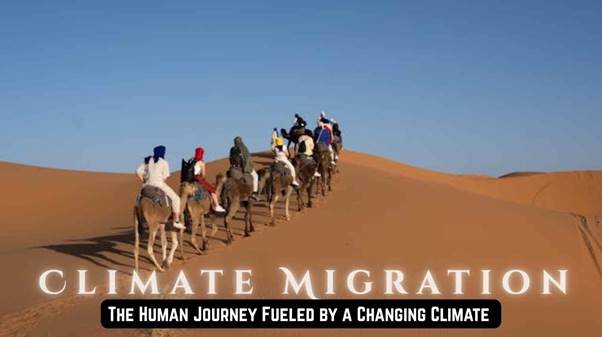
What is Climate Migration? Understanding the Concept
Climate migration refers to the movement of people driven by changes in the environment caused by climate change. These include rising sea levels, droughts, floods, and storms that make living conditions unsustainable.
Unlike economic or political migrants, climate migrants often have no choice but to leave their homes. The International Organization for Migration (IOM) defines them as individuals who move primarily due to sudden or progressive climate-related changes that adversely affect their lives or living conditions.
In short, climate migration is both an environmental and humanitarian issue that reshapes global population patterns and challenges existing political borders.
Historical Background: The Rise of Climate-Induced Movement
Although climate migration seems like a modern issue, its roots trace back centuries. Ancient civilizations, such as those in Mesopotamia and the Indus Valley, collapsed partly due to prolonged droughts.
However, the scale and speed of migration we see today are unprecedented. Since 2008, an average of 21.5 million people have been displaced annually due to climate-related disasters, according to the UNHCR. Events like Hurricane Katrina (2005), the Syrian drought (2006–2010), and recent floods in Pakistan (2022) have highlighted how climate stress triggers large-scale movement.
As global warming intensifies, experts predict that over 200 million people could become climate migrants by 2050 if action is not taken.
Causes of Climate Migration: Environmental and Human Factors
Several environmental and social factors contribute to climate migration, making it a complex global phenomenon:
1.Sea-Level Rise: Coastal communities, especially in Bangladesh, the Maldives, and Pacific Islands, face permanent submersion risks.
2.Extreme Weather Events: Hurricanes, cyclones, and floods destroy homes and infrastructure, forcing relocation.
3.Drought and Desertification: Persistent water scarcity in regions like Sub-Saharan Africa reduces agricultural productivity.
4.Deforestation and Resource Depletion: Environmental degradation accelerates displacement by disrupting local livelihoods.
While nature plays a major role, human-driven carbon emissions amplify these conditions, making sustainable adaptation vital.
Effects of Climate Migration: Beyond Borders and Communities
The effects of climate migration reach far beyond individual families it reshapes societies.
•Urban Overcrowding: Rural migrants move to cities, increasing pressure on housing and infrastructure.
•Cultural Displacement: Communities lose ancestral lands and traditional practices, eroding identity.
•Economic Shifts: Some regions experience labor shortages, while others struggle with unemployment surges.
•Conflict Risks: Competition over water, food, and land resources can escalate into local or regional conflicts.
These outcomes reveal why climate migration is not just a symptom of global warming but a trigger for deeper social transformation.
Benefits of Addressing Climate Migration
While the issue is challenging, addressing climate migration brings several benefits:
•Global Awareness: It encourages countries to prioritize environmental sustainability.
•Innovation and Adaptation: Drives the development of climate-resilient infrastructure and policies.
•Social Integration: Promotes cross-cultural cooperation as communities adapt to new environments.
•Economic Opportunities: Managed migration can fill labor gaps and boost productivity in host regions.
Tackling the problem with compassion and innovation can turn crisis into opportunity, fostering global solidarity.

Challenges of Climate Migration: Policy and Protection Gaps
Despite its urgency, climate migration faces many barriers:
1.Lack of Legal Status: Climate migrants are not formally recognized as refugees under international law.
2.Limited Resources: Developing countries often lack funds to support displaced populations.
3.Political Resistance: Many nations hesitate to open borders for environmental migrants.
4.Infrastructure Gaps: Urban centers receiving migrants are often ill-equipped for population surges.
Bridging these gaps requires global cooperation, updated refugee frameworks, and equitable climate funding.
Real-World Examples of Climate Migration
Several real-life cases illustrate the devastating and ongoing nature of climate migration:
•Bangladesh: Rising sea levels have displaced millions in low-lying coastal zones.
•Pacific Islands: Nations like Kiribati and Tuvalu face total submersion, prompting relocation plans.
•Sub-Saharan Africa: Prolonged droughts force farmers to abandon their lands for urban centers.
•United States: Coastal erosion in Louisiana and Alaska is driving indigenous communities inland.
Each example reveals how environmental change redefines borders, economies, and human survival.
Solutions and Future Directions: Adapting to a Changing Climate
To manage climate migration effectively, global efforts must focus on resilience and adaptation.
•Sustainable Development: Investing in renewable energy and reforestation reduces climate stress.
•Climate Financing: Wealthier nations should fund vulnerable regions through international agreements.
•Early Warning Systems: Predictive technologies can prevent loss of life during disasters.
•Legal Recognition: Updating international refugee laws ensures protection for climate-displaced persons.
By combining policy reform, community adaptation, and global cooperation, we can minimize future displacement and secure a sustainable future.
Conclusion
Climate migration reflects humanity’s struggle to adapt to a rapidly changing environment. As rising seas, droughts, and disasters drive people from their homes, the global community must respond with empathy and innovation. Recognizing climate migrants, funding adaptation programs, and reducing emissions are crucial steps toward resilience. Every action local or global contributes to ensuring that no one is forced to flee their home because of a crisis they didn’t create. The time to act on climate migration is now, before it becomes the defining issue of our century.
Q1: What causes climate migration?
Climate migration happens when people are forced to move due to environmental changes like rising sea levels, droughts, floods, or extreme weather events that make living conditions unsafe or unsustainable.
Q2: How does climate migration affect global society?
Climate migration impacts cities, economies, and social systems by increasing urban crowding, creating job competition, and sometimes causing conflicts over scarce resources like water and land.
Q3: Can climate migration be prevented?
While not fully preventable, climate migration can be reduced through sustainable development, renewable energy use, reforestation, and stronger global policies that support vulnerable communities.