
Understanding the Phenomenon of a Small Dust Devil
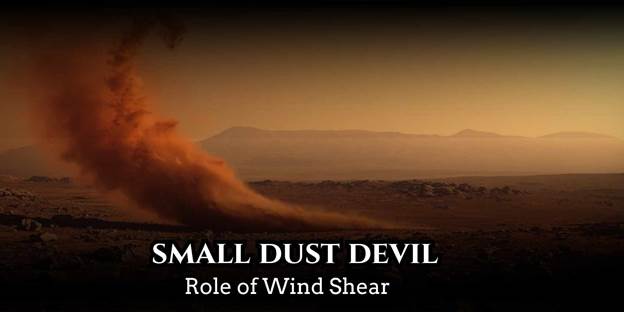
A small dust devil is a rapidly rotating column of air that picks up loose dust and debris, creating a visible swirling vortex. Unlike tornadoes, which are linked to severe storms, dust devils form on clear, hot days when the sun heats the ground intensely. The role of wind shear is critical in the creation and sustainability of these whirlwinds.
Table of Contents
This article explores how wind shear interacts with convection currents, temperature gradients, and terrain to produce dust devils. It also examines their environmental significance, potential hazards, and scientific importance in understanding atmospheric dynamics.
Definition and Formation of Small Dust Devils
How a Small Dust Devil Forms
A small dust devil forms when the ground heats unevenly, causing hot air to rise quickly through cooler air layers above. This creates convection, leading to spinning motion when slight wind shear the change in wind speed or direction with height is present. When these forces align, a rotating column of air forms and lifts dust from the surface.
Essential Ingredients for Formation
Several key conditions contribute to small dust devil formation:
- Intense surface heating
- A light, variable background wind
- A dry, loose soil surface
- Weak to moderate vertical wind shear
- Clear skies allowing maximum solar radiation
These factors combine to create the instability and rotation necessary for these short-lived vortices.
The Role of Wind Shear in Dust Devil Development
Understanding Wind Shear Dynamics
Wind shear refers to the variation of wind speed or direction over a short vertical or horizontal distance. In the context of small dust devils, wind shear provides the initial rotation or spin. The rising air from heated surfaces interacts with this shear, stretching the vortex vertically and strengthening the rotational motion.
Vertical vs Horizontal Wind Shear
- Vertical wind shear affects the strength and height of the dust devil. Too strong, and the vortex becomes unstable; too weak, and rotation doesn’t sustain.
- Horizontal wind shear influences the direction of movement and helps tilt the column, increasing the vortex’s visibility and duration.
Together, these components define whether a dust devil remains small and weak or grows into a more intense rotating column.
Physical Mechanisms Behind Small Dust Devils
Convection and Pressure Differences
The small dust devil phenomenon is deeply tied to convection. As warm air rises, it leaves behind a localized low-pressure zone at the surface. Surrounding air rushes in to fill this void, and with wind shear present, the inflowing air starts to spin. The rotation intensifies as air continues to rise and stretch the column, creating the familiar spiral shape.
Energy Source and Sustainability
The energy sustaining a small dust devil comes from the temperature difference between the hot surface and the cooler air above. When this energy source weakness such as when clouds block sunlight or when the surface cools the dust devil dissipates.
Scientific Importance and Environmental Impact
Studying Small Dust Devils for Atmospheric Insights
Scientists study small dust devils to understand localized convection and wind interactions. These vortices offer valuable insights into boundary-layer meteorology and micro-atmospheric circulation. Instruments like Doppler lidars and thermal cameras are used to observe how wind shear influences their rotation and life cycle.
Environmental and Ecological Effects
Although usually harmless, small dust devils play subtle roles in the environment:
- Redistribution of soil particles, aiding minor soil aeration
- Influence on local air quality, temporarily raising dust concentrations
- Erosion and sediment transport, shaping desert and arid landscapes
Their environmental role, though limited, mirrors larger atmospheric processes on Earth and even Mars, where similar dust vortices occur.
Real-World Examples of Dust Devil Activity
Desert and Arid Region Observations
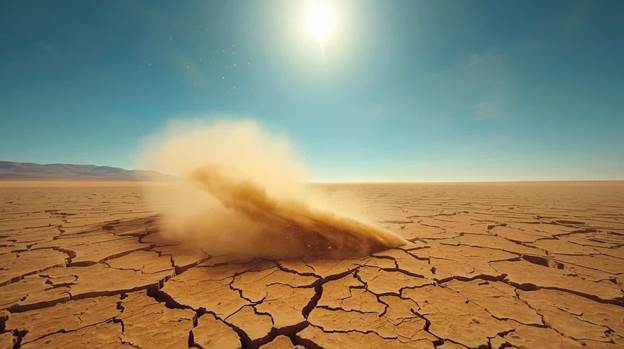
In deserts like the Sahara, Arizona, and the Australian Outback, small dust devils are common midday occurrences. Here, wind shear interacts with intense ground heating to generate hundreds of miniature whirlwinds daily. Farmers and scientists often monitor these formations as indicators of surface heat flux and wind turbulence.
Martian Dust Devils
Interestingly, NASA’s Mars rovers have recorded numerous dust devils on the Martian surface. These are powered by solar heating and subtle wind shear in the thin Martian atmosphere, suggesting that similar physics apply beyond Earth.
Challenges and Misconceptions
Common Misunderstandings
People often mistake small dust devils for tornadoes. However, dust devils are formed by thermal convection rather than storm-related processes. They are short-lived, less intense, and generally harmless compared to tornadoes.
Research Limitations
Studying wind shear in dust devil formation poses challenges due to their transient nature. Field measurements must be quick and precise to capture data before the vortex disappears.
Practical Implications of Understanding Wind Shear
Benefits of Studying Dust Devil Dynamics
Understanding the role of wind shear in small dust devils contributes to:
- Improving weather prediction models
- Enhancing aerospace and drone flight safety in dry regions
- Supporting environmental monitoring and land management
Knowledge gained from these miniature whirlwinds helps meteorologists predict localized wind events and air quality changes.
Conclusion
In summary, the formation of a small dust devil is a fascinating interplay between solar heating, convection, and the role of wind shear. These natural mini-tornadoes highlight the dynamic balance of air movement and temperature in our atmosphere. By studying how wind shear shapes their rotation and strength, scientists gain deeper insights into both Earth’s and Mars’s atmospheric behavior. Understanding such small-scale phenomena not only enriches meteorological science but also fosters greater appreciation of the forces shaping our environment.