
In a world constantly shaped by environmental shifts, species adaptation stands as one of nature’s most remarkable processes. From the icy poles to the blazing deserts, every organism has evolved unique traits that enable survival in diverse conditions. Species adaptation refers to the biological adjustments that species undergo over generations to better fit their surroundings.
Table of Contents
This article explores the fascinating mechanisms of species adaptation, its history, importance, benefits, challenges, and real-world examples that reveal how life on Earth continues to evolve in response to natural and human-induced changes. By understanding how adaptation works, we gain insights into biodiversity conservation, climate resilience, and the future of ecosystems in a rapidly changing planet.
Understanding Species Adaptation
At its core, species adaptation is an evolutionary process where organisms develop traits that enhance their survival and reproduction in specific environments. This process occurs over long periods through genetic variation and natural selection.
There are three main types of adaptation:
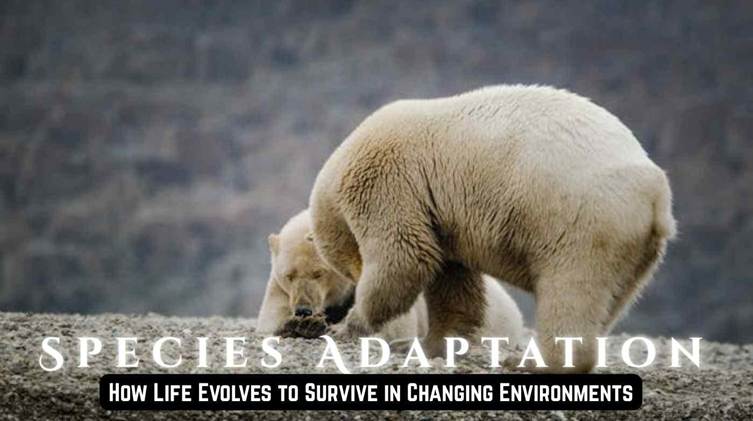
- Structural adaptations – physical traits like the thick fur of polar bears.
- Behavioral adaptations – actions like birds migrating seasonally.
- Physiological adaptations – internal changes, such as desert reptiles conserving water.
These adaptive traits often arise due to environmental pressures like temperature changes, scarcity of food, or predation risks, ensuring only the fittest survive and reproduce.
The Evolutionary Roots of Adaptation
The concept of species adaptation dates back to Charles Darwin’s groundbreaking work on natural selection. Darwin observed finches on the Galápagos Islands, each with differently shaped beaks suited to their food sources. This became one of the earliest and clearest examples of adaptive evolution.
Over millions of years, species have evolved to occupy specific ecological niches. This slow but continuous process not only shapes biodiversity but also determines how ecosystems function. For instance, amphibians evolved from fish to adapt to life on land one of the most remarkable transitions in evolutionary history.
The Importance of Species Adaptation in Ecosystem Stability
Healthy ecosystems rely on species adaptation to maintain balance and diversity. When species adapt, they strengthen food webs, promote resilience, and prevent ecosystem collapse.
Key benefits of adaptation include:
- Increased species survival against environmental changes
- Enhanced resistance to diseases and predators
- Better reproductive success and genetic diversity
Adaptation is particularly crucial in today’s era of climate change, where species must evolve faster than ever to survive rising temperatures, shifting habitats, and changing food availability.
Challenges Facing Species Adaptation in Modern Times
Despite nature’s resilience, human activity has accelerated environmental changes at an unprecedented rate, making species adaptation more difficult.
Major challenges include:
- Climate change: Rapid temperature shifts disrupt species’ natural habitats.
- Deforestation: Loss of forests forces animals to migrate or face extinction.
- Pollution: Contaminants alter ecosystems and affect reproductive success.
- Invasive species: New competitors can outcompete native species for resources.
These threats often outpace the natural speed of adaptation, leaving many species unable to cope with the pace of change.
Real-World Examples of Species Adaptation
- Peppered moths during the Industrial Revolution: Their coloration changed from light to dark to blend with soot-covered trees a clear case of human-driven species adaptation.
- Polar bears: Evolved from brown bears, they developed thick fur and layers of fat to survive Arctic conditions.
- Urban wildlife: Birds and insects are adapting to artificial light, noise, and pollution, showcasing rapid modern adaptations.
These examples highlight how both natural forces and human influence shape the evolutionary path of life on Earth.
The Role of Technology and Conservation in Supporting Adaptation
Modern science plays a vital role in helping species adapt. Conservation biology, genetic research, and ecosystem management help maintain biodiversity and promote species adaptation.
Key strategies include:
- Restoring degraded habitats
- Protecting genetic diversity through breeding programs
- Monitoring species using satellite tracking and DNA sequencing
By combining traditional conservation efforts with advanced technology, humans can assist nature in maintaining adaptive capacity.
Why Species Adaptation Matters for Humanity
The benefits of species adaptation extend beyond ecosystems they directly impact human life. Diverse and adaptable species contribute to food security, medicine, and climate regulation.
For example:
- Plants adapting to drought help secure future food supplies.
- Microorganisms evolving in extreme conditions inspire new medical and industrial solutions.
- Forests with diverse tree species store more carbon, mitigating climate change.
Protecting adaptation means protecting our future.
Conclusion
Species adaptation is a powerful reminder of nature’s ability to endure, evolve, and thrive despite challenges. However, as human-induced changes accelerate, the survival of countless species depends on our actions. Preserving biodiversity, restoring habitats, and supporting ecological research are vital to maintaining the planet’s adaptive capacity. By understanding and protecting adaptation, we secure not only the future of wildlife but also our own. Stay informed, support conservation, and be part of sustaining Earth’s evolutionary legacy.
1: What is species adaptation and why is it important?
Species adaptation is the process through which organisms develop traits to survive in changing environments. It’s important because it helps maintain biodiversity, ecosystem stability, and species survival against climate and environmental changes.
2: What are the main types of species adaptation?
The three main types are structural adaptation (physical traits like fur or beak shape), behavioral adaptation (actions like migration), and physiological adaptation (internal changes such as water retention or temperature regulation).
3: How does climate change affect species adaptation?
Climate change forces species to adapt faster than usual. Many animals and plants struggle to evolve quickly enough, leading to migration, reduced populations, or even extinction in extreme cases.