
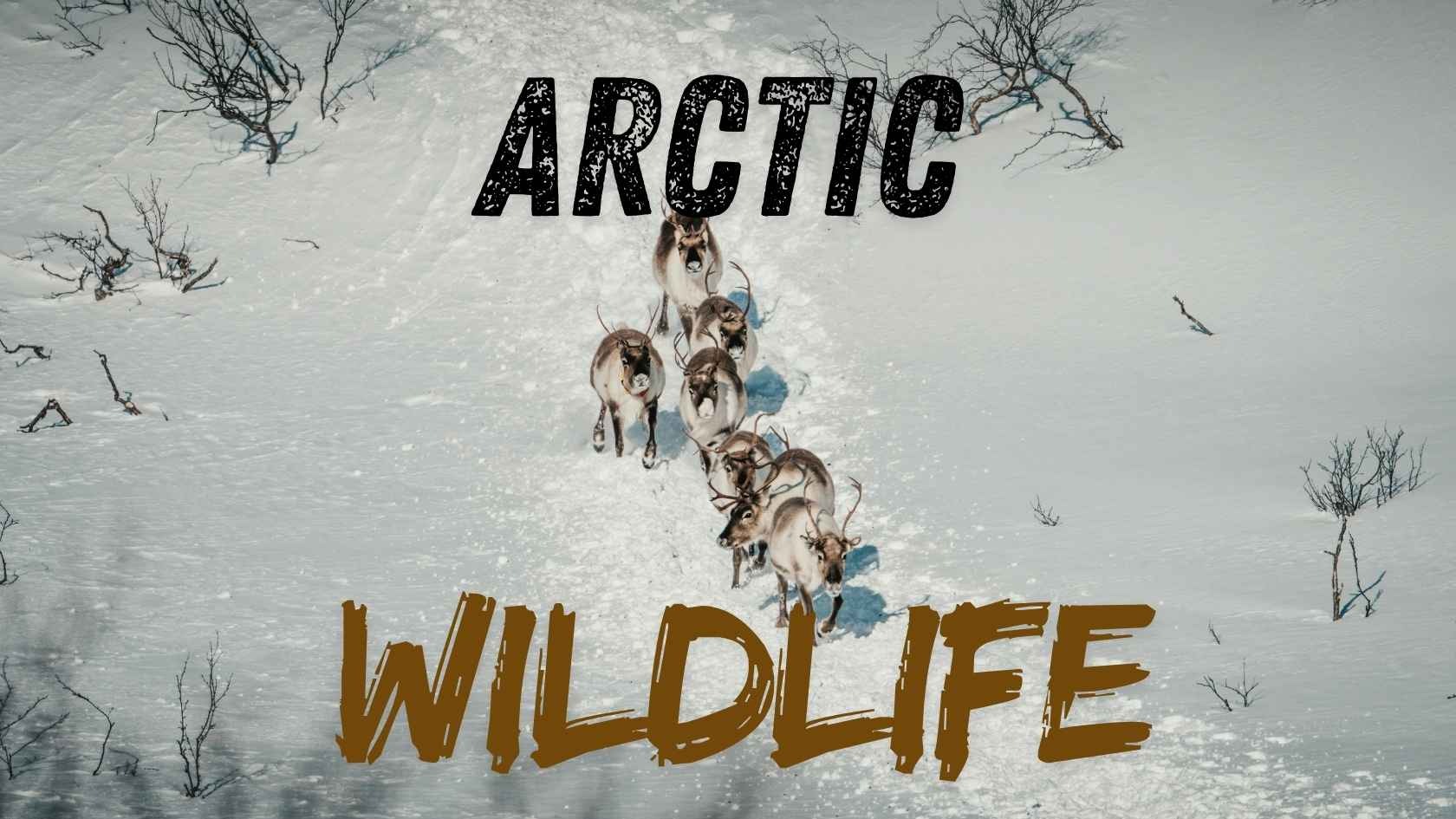
The Arctic is heating up as much as four times as quickly as the global average, and the consequences for arctic wildlife are becoming impossible to ignore. In March 2025, the Arctic recorded its lowest maximum sea ice extent in the 47-year satellite record. The oldest, thickest Arctic sea ice that has survived more than four years has declined by more than 95% since the 1980s.
These are not distant projections. They are happening now.
For polar bears hunting on shrinking ice, for seals raising pups on unstable platforms, and for millions of migratory birds that depend on Arctic breeding grounds, these changes are rewriting the rules of survival. In the northern Bering and Chukchi seas, Arctic species have declined sharply by two-thirds and one-half, respectively while populations of southern species expand northward.
This article draws on the latest scientific research, including the 2025 Arctic Report Card published by NOAA and authored by 112 scientists from 13 countries. As a wildlife and nature writer who has followed Arctic conservation for 15 years, I’ll break down what science tells us about the future of Arctic wildlife and what it means for the broader web of life on our planet.
The Current State of the Arctic Ecosystem
The Arctic region is experiencing environmental changes at an unprecedented pace. The twelve months ending in September 2025 broke all previous temperature records for the region, marking the hottest year the Arctic has experienced since scientists began tracking climate data over a century ago. This rapid warming is fundamentally altering everything from ice coverage to animal behavior patterns across the frozen north.
Understanding the current state of arctic wildlife requires looking at multiple interconnected factors. Since the 1980s, nearly all of the thick, ancient ice that once dominated the region has vanished. Today, only small pockets of this older ice remain in waters between northern Greenland and Canada’s remote island chains. This thick, older ice once provided stable platforms for hunting, breeding, and resting for numerous species.
The changes extend beyond ice loss. Warmer Atlantic waters are now pushing hundreds of miles into the central polar ocean, far beyond their historical boundaries. This process brings warmer, saltier waters northward, disrupting the natural layering that historically protected sea ice from underlying warmth. For marine mammals and fish species that evolved over thousands of years in these conditions, such rapid transformation presents serious survival challenges.
Sea Ice Loss and Its Cascading Effects
March 2025 set an alarming new benchmark when winter ice coverage dropped to its smallest extent since satellite monitoring began nearly five decades ago. What makes this particularly concerning is the quality of remaining ice. The remaining patches of older, thicker ice exist only in a narrow band stretching across the northernmost reaches of Greenland and neighboring Canadian islands. Younger, thinner ice melts faster and offers less stability for wildlife that depends on it.
How Climate Change Is Affecting Arctic Animals
The warming Arctic is creating winners and losers among wildlife populations. Species that evolved for extreme cold are struggling while southern species push northward into newly accessible territories. This ecological reshuffling is happening faster than most animals can adapt.
These apex predators depend on frozen ocean surfaces for nearly every aspect of their lives, using ice platforms to chase seals, find mates, take shelter, and raise their cubs in protective snow dens. Polar bears face shortened hunting seasons as ice forms later and melts earlier each year. Bears living in Canada’s Baffin Bay region now remain stranded on shore for an extra month compared to three decades ago, directly linked to shifting ice patterns.
The situation for arctic wildlife dependent on ice extends to numerous other species. Caribou herds wandering across the tundra have declined by more than fifty percent since the early 2000s. Rising temperatures cause more rain instead of snow, covering plants with ice and making grazing significantly harder for these animals.
Here are the species most affected by warming conditions:
- Polar bears facing reduced hunting success and longer fasting periods
- Ringed seals losing stable platforms for raising pups
- Walruses forced onto overcrowded shorelines where calves face trampling risks
- Arctic foxes experiencing diminished access to prey and threatened denning sites
- Lemmings losing protective snow cover that shields them from predators
The Borealization of Arctic Ecosystems
Waters off Alaska’s northern coast have witnessed dramatic population shifts, with native cold water species dropping by half or more while warmer water animals expand their range. This phenomenon, called borealization, represents a fundamental shift in ecosystem composition.
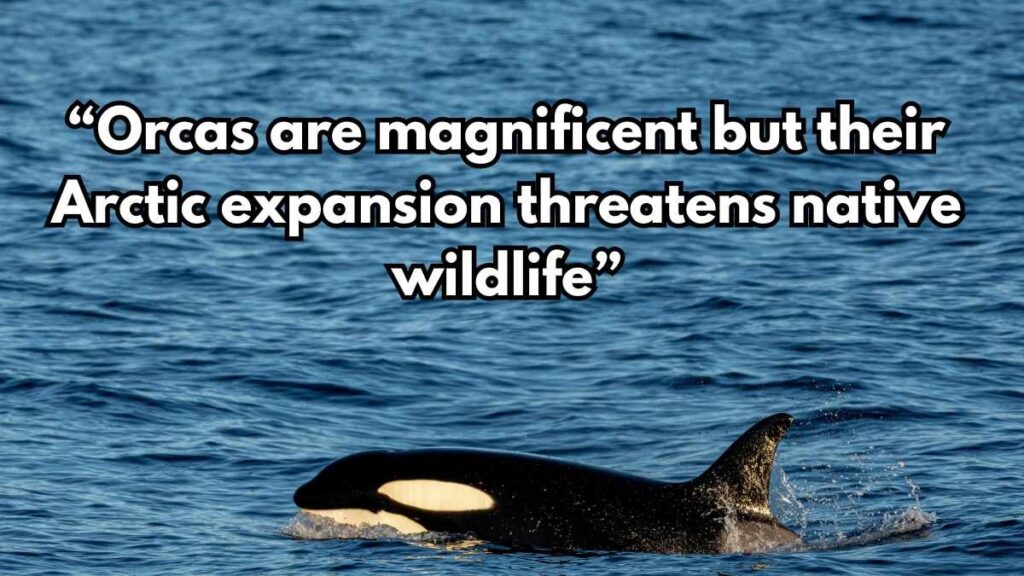
Orca whales are expected to venture deeper into polar waters as ice free seasons grow longer each year. While orcas are magnificent predators, their expansion into Arctic waters creates new competition for resources and introduces additional predation pressure on seals, narwhals, and other marine mammals.
What Scientists and Researchers Are Predicting
The scientific community has developed increasingly sophisticated models to project the future of arctic wildlife over coming decades. These predictions paint a challenging picture while highlighting windows of opportunity for intervention.
Scientific projections indicate the region could experience its first completely ice free summer within the next ten to thirty years, with some models suggesting this could happen before 2040. This timeline gives conservation efforts urgency but also provides a clear target for protective measures.
Temperature increases in polar regions are occurring roughly four times faster than the global average, making this one of the most rapidly changing environments on Earth. Leading climate researcher Julienne Stroeve warns that if global temperatures climb by 2.7 degrees, the polar north will face devastating chain reactions. Summer ice will disappear entirely, Greenland’s massive glaciers will melt at accelerating rates, and permanently frozen ground will thaw across vast territories.
Research into food web dynamics reveals surprising connections. Even minor changes in tiny crustacean populations could trigger dramatic declines in polar bear numbers, demonstrating how interconnected and fragile these ecosystems truly are.
Current research suggests that even with moderate emission cuts, certain polar bear populations face regional disappearance before the century ends. Some areas may lose these iconic predators entirely as their frozen hunting grounds vanish. However, aggressive emissions reductions could significantly improve outcomes for ice dependent species.
Conservation Efforts and What Is Being Done
Despite the challenges, dedicated organizations and communities are working to protect arctic wildlife through innovative approaches. These efforts combine traditional knowledge with modern science to create effective conservation strategies.
The World Wildlife Fund recently launched a new grant initiative specifically designed to fund Arctic protection projects. This program supports conservation, stewardship, and research focusing on coastal Arctic ecology and community sustainability.
Grant funding now flows directly to projects protecting polar bears, walruses, various seal species, beluga whales, bowhead whales, and numerous seabird populations across Alaska’s coastal regions. By working directly with Indigenous communities, these grants ensure conservation efforts respect local knowledge and traditions.
Protected Areas and Policy Initiatives
New legislation introduced in the United States Congress would grant the Arctic National Wildlife Refuge the highest possible federal protection status. Such legislative efforts aim to shield critical habitats from industrial development while preserving breeding grounds for caribou, polar bears, and migratory birds.
- Establishing marine protected area networks across Arctic waters
- Implementing sustainable fishing regulations in newly accessible regions
- Reducing shipping pollution through international cooperation
- Supporting Indigenous led monitoring and research programs
- Advocating for aggressive global emissions reductions
Conservation experts emphasize that governments must protect at least thirty percent of all land, ocean, and freshwater ecosystems to preserve biodiversity for future generations.
What the Future Holds for Arctic Species
The trajectory for arctic wildlife depends heavily on choices made in the coming years. Scientists present multiple scenarios ranging from managed adaptation to severe ecosystem collapse.
Without dramatic reductions in carbon emissions, the polar north could become thirty to sixty percent wetter by century’s end, with temperatures climbing anywhere from thirteen to fifteen degrees Celsius above current levels. Under such conditions, the Arctic would become virtually unrecognizable compared to today.
Climate models project that summer months will see open water across the entire polar ocean, while Greenland’s ice sheet will experience surface melting across four times more area than during pre industrial times. These changes would fundamentally alter habitat availability for ice dependent species.
However, every fraction of a degree matters. Holding global temperature rise to 1.5 degrees Celsius would allow the Arctic to retain critical summer ice coverage, preserving essential
How Readers Can Help Protect Arctic Wildlife
Individual actions combined with collective advocacy can make meaningful differences for arctic wildlife conservation. While the challenges are immense, pathways to positive impact exist for everyone.
Supporting reputable conservation organizations provides direct funding for research and protection efforts. Organizations like WWF, Ocean Conservancy, and Defenders of Wildlife conduct on the ground work across Arctic regions. Even modest donations contribute to satellite tracking programs, habitat protection initiatives, and community based conservation projects.
Reducing personal carbon footprints addresses the root cause of Arctic warming. Reaching climate stability requires cutting global emissions by forty percent before 2030 and achieving net zero carbon output by mid century. Transportation choices, energy consumption, and dietary decisions all influence individual emissions profiles.
Civic engagement amplifies conservation impact. Contacting elected representatives about Arctic protection legislation, supporting climate focused candidates, and participating in public comment periods for environmental regulations all contribute to systemic change. The fate of polar bears, walruses, and countless other species increasingly depends on policy decisions made far from the frozen north.
Conclusion
The frozen north stands at a critical crossroads. Rising temperatures, vanishing ice, and shifting ecosystems are reshaping life for polar bears, seals, caribou, and countless other creatures that call this region home. Scientists warn that without immediate action, we could witness irreversible changes within our lifetimes. Yet hope remains. Conservation programs, protected areas, and global emissions reductions offer pathways to preserve these remarkable ecosystems. Every choice matters, from policy decisions to personal habits. The future of arctic wildlife ultimately rests in our collective hands, and the time to act is now.