The alarming reality of coral reefs disappearing across our oceans is no longer a distant future projection but a crisis unfolding right before marine scientists’ eyes. Recent oceanographic surveys reveal that bleaching events, ocean acidification, and rising sea surface temperatures are dismantling reef ecosystems at rates that even the most aggressive climate models failed to anticipate. What was once predicted to happen by 2050 is already devastating marine biodiversity hotspots across the Pacific, Indian, and Atlantic oceans today.
Coral reefs support approximately 25 percent of all marine species despite covering less than one percent of the ocean floor. When coral reefs disappearing accelerates beyond projected timelines, the cascading ecological consequences threaten fisheries, coastal protection systems, and pharmaceutical research pipelines simultaneously.
In this advanced guide, we will examine the biogeochemical mechanisms driving reef degradation, analyze satellite monitored bleaching data, explore symbiotic zooxanthellae collapse, and review ecosystem tipping point research that explains why coral reefs disappearing demands immediate scientific intervention. Understanding why coral reefs disappearing outpaces current predictions requires diving into marine ecology, carbon cycle disruption, and thermal stress physiology far deeper than mainstream environmental coverage ever attempts.
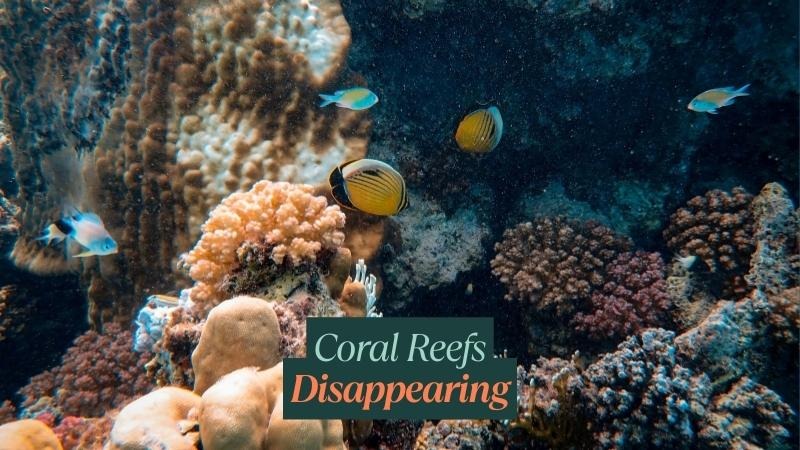
Understanding Why Coral Reefs Are Vanishing at Unprecedented Rates
To comprehend the full scope of coral reefs disappearing across global ocean systems, you need to examine the biological architecture that makes these ecosystems simultaneously vital and extraordinarily fragile. Coral reefs are living structures built by tiny marine invertebrates called coral polyps that secrete calcium carbonate skeletons over centuries. These polyps maintain a symbiotic relationship with microscopic algae called zooxanthellae, which live within coral tissue and provide up to 90 percent of the energy corals need to survive through photosynthesis.
When ocean temperatures rise even 1 to 2 degrees Celsius above seasonal averages, corals expel their zooxanthellae in a stress response known as bleaching. Without these symbiotic algae, the coral loses its primary energy source and turns ghostly white. If thermal stress persists beyond four to six weeks, the coral starves and dies permanently. This bleaching mechanism is the primary driver behind coral reefs disappearing at velocities that have alarmed marine biologists worldwide.
The Historical Timeline of Reef Degradation
Coral reef ecosystems have existed for approximately 500 million years, surviving multiple mass extinction events throughout geological history. However, the rate of decline observed over the past four decades is without precedent in the paleontological record. The first globally recognized mass bleaching event occurred in 1998, affecting an estimated 16 percent of reef systems worldwide. Subsequent events in 2010, 2016, 2017, and 2020 each exceeded the previous in severity and geographic reach. Marine geologists studying fossilized reef cores confirm that the current pace of coral reefs disappearing has no parallel in at least 400,000 years of ocean history.
The Biogeochemical Forces Driving Reef Collapse
Understanding coral reefs disappearing requires examining multiple interconnected environmental stressors operating simultaneously. Rising sea surface temperatures remain the most immediate threat, but ocean acidification represents an equally devastating long term challenge. As atmospheric carbon dioxide concentrations increase, approximately 30 percent of that excess carbon is absorbed by ocean water. This absorption triggers a chemical reaction that produces carbonic acid, gradually lowering ocean pH levels.
Reduced pH directly undermines the ability of coral polyps to construct and maintain their calcium carbonate skeletons. Research published in the journal Nature Climate Change demonstrates that current acidification rates are reducing coral calcification capacity by approximately 15 percent compared to preindustrial baselines. This means corals are simultaneously losing their energy supply through bleaching while losing their structural building material through acidification, creating a devastating two front assault on reef integrity.
How Nutrient Pollution Compounds the Crisis
Agricultural runoff carrying nitrogen and phosphorus fertilizers into coastal waters creates algal blooms that smother coral surfaces and block sunlight essential for zooxanthellae photosynthesis. Sedimentation from coastal development further reduces water clarity. These localized stressors compound the global threats of warming and acidification, explaining why coral reefs disappearing proceeds even faster in regions near densely populated coastlines and intensive agricultural zones.
The Cascading Ecological Consequences of Reef Loss
The impact of coral reefs disappearing extends far beyond the underwater landscape and reverberates through entire coastal ecosystems, economies, and human communities. Coral reef systems function as nursery habitats for approximately 25 percent of all marine fish species, meaning their collapse directly threatens global fisheries that provide protein sustenance for over one billion people worldwide.
- Loss of coastal storm protection as reef structures that naturally dissipate up to 97 percent of wave energy degrade, leaving shoreline communities increasingly vulnerable to tropical cyclones, tsunamis, and erosion damage
- Collapse of marine biodiversity hotspots that support an estimated one to nine million species, many of which remain undiscovered and could hold pharmaceutical value for treating cancers, infections, and inflammatory diseases
- Devastation of reef dependent tourism economies generating over 36 billion dollars annually across nations including Australia, Indonesia, Thailand, and Caribbean island states
- Disruption of marine food web dynamics as herbivorous fish populations that control algal growth lose their habitat, allowing unchecked algae proliferation that further accelerates reef degradation in a destructive feedback loop
- Diminished ocean carbon sequestration capacity as healthy reef ecosystems that participate in marine carbon cycling lose functionality, potentially amplifying atmospheric greenhouse gas accumulation
These cascading consequences reveal why coral reefs disappearing represents one of the most consequential environmental crises of our generation, with implications spanning ecological, economic, and human health dimensions simultaneously.
Current Conservation Challenges and Scientific Obstacles
Despite growing awareness, efforts to reverse coral reefs disappearing face formidable scientific and logistical challenges. The most fundamental obstacle is the global nature of thermal stress. Even if every localized pollution source were eliminated tomorrow, rising ocean temperatures driven by accumulated atmospheric greenhouse gases would continue triggering mass bleaching events for decades under current emission trajectories.
Coral restoration programs involving fragment transplantation and artificial reef construction have shown localized success but remain impossibly small relative to the scale of destruction. The Great Barrier Reef alone spans 344,400 square kilometers, while the largest restoration projects cover areas measured in hectares. This mathematical disparity between degradation scale and restoration capacity represents one of the most sobering realities facing marine conservation scientists today.
The Genetic Adaptation Bottleneck
Some researchers are exploring assisted gene flow and selective breeding programs to develop heat resistant coral strains capable of surviving warmer ocean conditions. However, coral reproductive cycles span years rather than weeks, making genetic adaptation extraordinarily slow compared to the pace of environmental change. The question of whether coral reefs disappearing can be slowed through genetic intervention remains deeply contested among marine biologists, with many arguing that without addressing root causes of ocean warming, even heat tolerant corals will eventually reach their thermal ceiling.
Real World Case Studies From Frontline Research
The Great Barrier Reef in Australia has experienced six mass bleaching events since 1998, with the most recent surveys indicating that over 90 percent of individual reefs now show signs of bleaching damage. Australian marine researchers utilizing aerial survey technology and underwater drone monitoring have documented coral reefs disappearing across northern and central reef sections at rates that exceeded their most pessimistic projections.
In the Caribbean, reef coverage has declined from approximately 50 percent in the 1970s to less than 10 percent today. Scientists monitoring reefs in Belize, Jamaica, and the Florida Keys report that stony coral tissue loss disease has devastated remaining reef structures since 2014, adding a biological pathogen threat to the existing cocktail of thermal and chemical stressors.
Meanwhile, coral reefs disappearing around Southeast Asian archipelagos threatens the Coral Triangle, the global epicenter of marine biodiversity containing over 75 percent of all known coral species. Indonesian and Philippine marine research stations report accelerating bleaching frequencies with insufficient recovery intervals between thermal events, preventing damaged corals from rebuilding before the next stress episode arrives.
However, pockets of hope exist. Researchers studying reef systems in the Red Sea have discovered corals exhibiting unusual heat tolerance, potentially linked to their evolutionary history in naturally warm waters. These heat resistant populations are now the subject of intensive genomic research aimed at understanding whether their adaptive traits can be transferred to vulnerable reef populations elsewhere. Additionally, marine protected areas in Palau and Raja Ampat demonstrate that reducing localized stressors like overfishing and sedimentation can significantly improve reef resilience against global thermal events, providing a conservation framework that combines local action with international climate policy advocacy to address coral disappearing at multiple scales simultaneously.
Conclusion
The scientific evidence paints an undeniable picture that coral reefs disappearing is accelerating beyond even the most aggressive climate model projections. Throughout this guide, we examined how rising sea surface temperatures trigger zooxanthellae expulsion and mass bleaching events, while ocean acidification simultaneously erodes the calcium carbonate foundations corals need to survive. The cascading consequences span marine biodiversity collapse, fisheries devastation, coastal protection loss, and billions in tourism revenue destruction across vulnerable island nations.
Conservation efforts including fragment transplantation, assisted gene flow research, and marine protected area establishment offer localized hope but remain dramatically undersized relative to the global scale of degradation. Red Sea heat tolerant coral populations provide a promising genomic research frontier, yet without addressing root causes of greenhouse gas emissions, even adaptive interventions face fundamental limitations. Confronting coral reefs disappearing demands integrated action combining international climate policy reform, localized pollution reduction, expanded marine sanctuary networks, and accelerated restoration science to preserve these irreplaceable ecosystems before critical tipping points become permanently irreversible.