Fog formation occurs when air near the ground cools enough for water vapor to condense into tiny droplets, creating a low-lying cloud. This process is heavily influenced by aerosols microscopic particles suspended in the atmosphere that serve as condensation nuclei.
Table of Contents
Without these particles, water vapor would struggle to condense, making fog formation far less likely. Aerosols provide the “seed” upon which moisture collects, shaping the thickness, duration, and visibility of fog.
Definition and Scientific Background of Fog Formation
To understand the role of aerosols, it’s essential to first define fog scientifically. Fog forms when:
- The air temperature drops to the dew point, causing condensation.
- The relative humidity reaches near 100%.
- Sufficient aerosols or condensation nuclei are present in the air.
These aerosols can be natural, like dust, pollen, or sea salt, or human-made, such as smoke and industrial emissions. Historically, fog events were observed in coastal or mountainous regions, but industrialization has intensified urban fog due to pollution-driven aerosols.
The Role of Aerosols in Fog Microphysics
Aerosols act as cloud condensation nuclei (CCN). When moist air cools, water vapor attaches to these particles, forming fog droplets. The size and composition of aerosols determine the properties of the fog.
- Larger aerosols lead to bigger droplets and thicker fog.
- Smaller or fewer aerosols produce thinner, less dense fog.
- Chemical composition also affects droplet stability hygroscopic aerosols (like sulfates) attract more water, enhancing fog formation.
This delicate balance of particle size and humidity defines the visibility, density, and persistence of fog in different environments.
Types of Fog and Aerosol Influence
Several types of fog exist, and each interacts differently with aerosols:
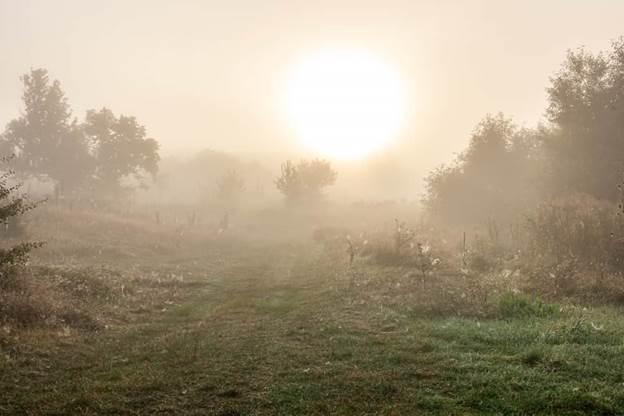
- Radiation Fog: Forms on calm nights when the ground cools rapidly. Aerosols from soil and vegetation promote droplet condensation.
- Advection Fog: Advection fog forms when warm, humid air flows over a cooler surface, causing the moisture in the air to condense. Sea salt aerosols often dominate in coastal regions.
- Industrial or Smog Fog: Known as “smog,” this type arises from human-made aerosols soot, nitrogen oxides, and sulfur dioxide creating thick, polluted fogs in urban areas.
Importance of Aerosols in Fog Persistence and Dissipation
Aerosols don’t just initiate fog formation they also influence how long fog lasts. High concentrations of pollution particles can stabilize fog droplets, preventing evaporation and prolonging foggy conditions. Conversely, clean or low-aerosol environments experience fog that dissipates quickly once sunlight warms the surface.
Meteorological research has shown that urban areas with heavy traffic and industrial activities have more frequent and persistent fog due to increased aerosol loads. In contrast, rural and coastal regions exhibit lighter fogs influenced by natural particles like sea spray or organic matter.
Combustion-Generated Aerosols and Fog Intensification
Combustion sources, such as vehicle emissions and biomass burning, emit black carbon and sulfate aerosols. These not only affect air quality but also intensify fog formation by increasing the number of condensation nuclei.
Studies show that cities like Delhi, London, and Beijing experience severe fog episodes during winter due to trapped combustion aerosols under temperature inversions. These particles absorb sunlight, warming the air above while keeping the surface cool conditions ideal for dense fog buildup.
Challenges and Environmental Impacts of Aerosol-Driven Fog
While fog plays a role in replenishing local moisture and reducing temperatures, aerosol-rich fog presents serious environmental and health challenges.
- Reduced Visibility: Fog mixed with pollutants creates hazardous driving conditions.
- Acid Deposition: Industrial aerosols can acidify fog droplets, damaging vegetation and infrastructure.
- Respiratory Problems: Inhalation of polluted fog increases respiratory illnesses in urban populations.
Moreover, excessive aerosols disrupt natural atmospheric processes, influencing precipitation patterns and contributing to climate imbalances.
Real-World Examples and Case Studies
- London’s Great Smog (1952): This historical event demonstrated how high aerosol levels from coal burning could transform fog into a deadly smog, leading to thousands of deaths.
- Beijing Winter Fog Episodes: Persistent winter fog in Beijing arises from industrial aerosols trapped under inversion layers, causing visibility to drop below 50 meters.
- San Francisco Coastal Fog: In contrast, this natural fog forms primarily from sea-salt aerosols and cool oceanic air, sustaining regional ecosystems without harmful pollutants.
Monitoring Fog Formation through Aerosol Analysis
Modern meteorology uses remote sensing and satellite data to monitor fog conditions and aerosol concentration. Instruments like lidar and ceilometers track droplet formation and visibility in real-time. These technologies help scientists predict fog formation events and issue early warnings for aviation and transportation safety.
By studying aerosol chemistry, researchers can distinguish between natural and human-induced fog, guiding environmental policies and pollution control measures.
Conclusion
The intricate relationship between fog formation and aerosols highlights how tiny particles shape large-scale atmospheric phenomena. Aerosols serve as the invisible architects of fog, influencing its density, duration, and visibility. Understanding this dynamic is vital for weather prediction, climate modeling, and pollution management. As human activities continue to alter aerosol composition, studying fog formation offers insight into balancing environmental safety with urban development. To stay informed about changing fog dynamics, explore ongoing research in atmospheric sciences and air quality control.
1. What are aerosols in fog formation?
Aerosols are tiny airborne particles that serve as condensation nuclei for fog droplets to form.
2. How do aerosols affect fog density?
Higher aerosol concentrations create denser fog by increasing the number of droplets in the air.
3. Can pollution make fog worse?
Yes, pollutants like soot and sulfates enhance fog formation and reduce visibility.