Understanding the Forest Ecosystem and Its Urban Connection
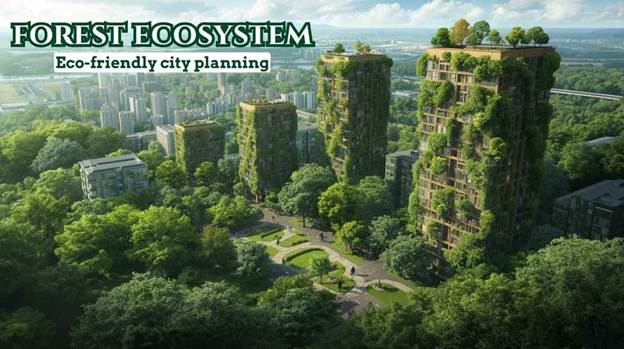
A forest ecosystem represents one of nature’s most balanced and self-sustaining systems, where trees, plants, soil, animals, and microorganisms coexist in perfect harmony. Each element contributes to the regeneration and survival of others, creating a natural cycle of growth, decay, and renewal. This concept offers valuable insights for modern urban planners aiming to design eco-friendly, sustainable cities.
Table of Contents
In the same way that a forest ecosystem supports life through interdependence, eco-friendly city planning focuses on creating urban spaces that promote both environmental health and human well-being. The goal is to build cities that function as living organisms recycling waste, conserving energy, and maintaining balance with their surroundings.
Historical Roots of Eco-friendly City Planning
While the idea of sustainable cities might seem modern, it has deep historical roots. Ancient civilizations such as the Indus Valley, Greek, and Roman societies designed cities that worked alongside natural systems. They managed water flow, sunlight, and vegetation intelligently an early reflection of forest ecosystem thinking.
However, the industrial revolution shifted priorities toward economic expansion, often at the expense of nature. As pollution and deforestation increased, urban planners began revisiting nature’s systems for inspiration. The forest ecosystem model emerged as a guide to balance growth with environmental responsibility. Today, this vision has evolved into green urbanism and biophilic design, both rooted in nature’s wisdom.
Importance of Forest Ecosystem Principles in Sustainable Urban Design
The forest ecosystem provides powerful lessons for sustainable city development. By studying how forests function, city planners can create self-sufficient systems that conserve energy, reduce waste, and improve quality of life.
1. Circular Resource Use
In forests, waste does not exist fallen leaves become nutrients, and water is naturally recycled. Similarly, cities can implement circular economy systems that reuse materials, treat wastewater, and convert organic waste into compost or energy.
2. Energy and Climate Regulation
Forests stabilize climate through carbon absorption and temperature regulation. Eco-friendly cities can replicate this through urban forests, green roofs, and solar energy systems that maintain temperature balance and reduce carbon emissions.
3. Community and Diversity
Just as biodiversity sustains the forest, social and architectural diversity sustains cities. Mixed-use buildings, walkable neighborhoods, and cultural inclusivity reflect the richness of a forest ecosystem in urban form.
Benefits of Applying Forest Ecosystem Models to City Planning
When cities adopt forest ecosystem principles, the results extend beyond environmental health they transform social, economic, and physical well-being.
•Cleaner Air and Water: Urban trees and green belts naturally filter pollutants, improving public health.
•Reduced Energy Consumption: Buildings surrounded by vegetation use less energy for cooling and heating.
•Biodiversity Restoration: Creating green corridors and urban forests supports native species.
•Healthier Communities: Access to natural spaces lowers stress and enhances mental wellness.
•Economic Growth: Green cities attract investment, boost tourism, and reduce long-term infrastructure costs.
These benefits demonstrate that forest-based urban design creates cities that are not only eco-friendly but also livable and economically resilient.
Challenges in Integrating Forest Ecosystem Principles
Despite its promise, implementing the forest ecosystem approach in city planning presents significant challenges.
•Limited Space: Dense cities struggle to allocate land for large green zones or forests.
•High Initial Costs: Green infrastructure requires investment before delivering returns.
•Policy Gaps: Many cities lack legal frameworks that support sustainable practices.
•Public Awareness: Without community participation, eco-friendly projects can fail to thrive.
These challenges can be overcome through innovation, public-private partnerships, and policy reforms. Long-term vision and collaboration remain essential to integrate forest ecosystem sustainability into city planning successfully.
Real-world Examples of Forest Ecosystem-based Eco-friendly Cities
Singapore: The “City in a Garden”
Singapore exemplifies how the forest ecosystem can shape modern urban design. The city’s vertical gardens, park connectors, and tree-lined streets create natural microclimates and encourage biodiversity. Every neighborhood includes accessible green spaces that act as urban forests.
Copenhagen: Carbon-neutral Vision
Copenhagen integrates forest-inspired sustainability through cycling networks, renewable energy, and green roofs. The city’s carbon-neutral target by 2030 reflects its commitment to functioning like a self-regulating forest system balancing energy production and consumption efficiently.
Masdar City, UAE: Renewable Urban Ecosystem
Masdar City was designed as a model of eco-friendly urbanism. It utilizes renewable energy, water recycling, and passive cooling systems drawn from the natural forest ecosystem. It proves that sustainable cities can thrive even in arid environments.
The Future of Eco-friendly City Planning Inspired by Forest Ecosystems
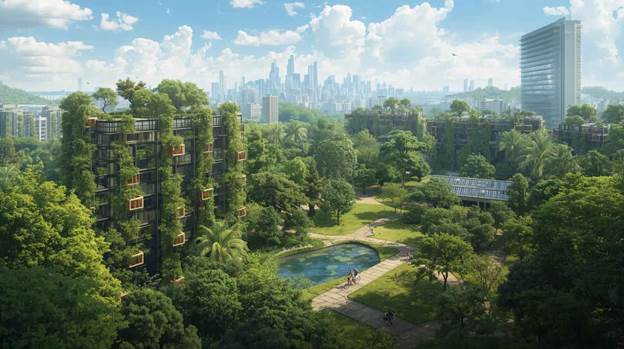
As climate challenges intensify, the forest ecosystem offers a sustainable blueprint for the future. The next phase of urban evolution involves merging natural principles with smart technology.
•Smart green infrastructure can monitor air quality and manage energy efficiency.
•Vertical forests will become common features in high-density cities.
•Urban biodiversity corridors will link green areas for ecological balance.
By modeling cities after forests, planners can create resilient ecosystems that adapt to change. The forest ecosystem proves that sustainability is not an option it’s a necessity for human survival and future prosperity.
Conclusion
The forest ecosystem stands as nature’s ultimate example of harmony, efficiency, and renewal. Its principles interdependence, regeneration, and diversity offer vital lessons for eco-friendly city planning. Cities that mirror forest functions can thrive sustainably while supporting human and ecological well-being. From Singapore’s green skylines to Copenhagen’s carbon-neutral systems, forest-inspired urban design is transforming the world. The future lies in cities that grow like forests clean, balanced, and full of life.
Q1: What is a forest ecosystem?
A forest ecosystem is a balanced system where trees, plants, and wildlife interact with their environment to maintain natural cycles of energy and renewal.
Q2: How does the forest ecosystem relate to city planning?
Eco-friendly cities use forest principles like recycling resources, biodiversity, and energy efficiency to create sustainable urban system.