The catastrophic reality of global warming melting ice caps is no longer a distant scientific prediction but a measurable planetary emergency unfolding before our eyes every single day. Satellite observations reveal that Arctic and Antarctic ice sheets are disintegrating at rates that exceed even the most aggressive climate models published just a decade ago. Entire glacial systems that remained stable for thousands of years are now collapsing within single human lifetimes.
This meticulously researched article investigates global warming melting ice caps through critical polar studies examining rising atmospheric temperatures, carbon emission driven thermal expansion, polar ice sheet collapse, and the devastating connection between fossil fuel dependency and accelerating sea level rise endangering billions of coastal inhabitants worldwide.
Recognizing the full scope of global warming melting ice caps is essential for anyone concerned about climate change consequences, environmental sustainability, and the future habitability of low elevation regions across every continent on Earth.
By completing this comprehensive analysis, you will deeply understand how global warming melting ice caps is reshaping our planet and what scientifically validated strategies offer genuine hope for slowing this unprecedented ecological transformation before irreversible tipping points permanently alter human civilization.
The Scientific Foundation of Polar Ice Destruction
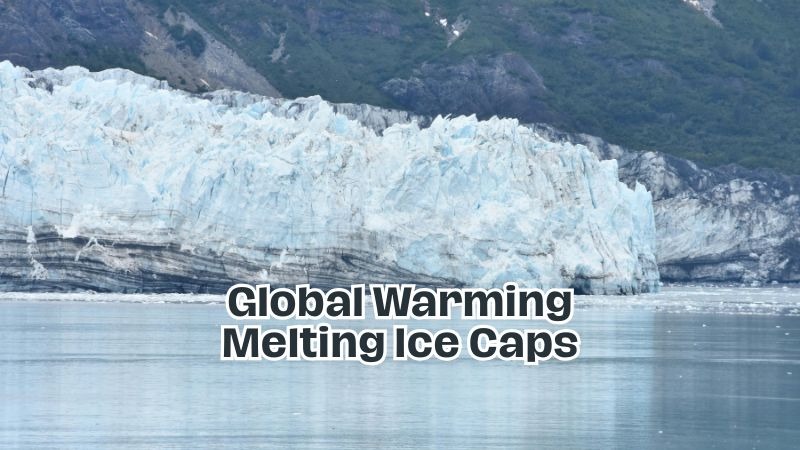
The phenomenon of global warming melting ice caps describes the accelerating loss of polar and glacial ice driven primarily by rising atmospheric and oceanic temperatures resulting from human industrial activity. Earth’s cryosphere, which includes all frozen water on the planet, has maintained relative stability for millennia. However, the past century has witnessed unprecedented disruption to this delicate equilibrium as rising atmospheric temperatures push polar regions beyond their natural recovery capacity.
Understanding global warming melting ice caps requires recognizing that ice sheets function as massive climate regulators. They reflect incoming solar radiation back into space through a property called albedo, moderate global weather patterns, and store approximately sixty nine percent of the world’s freshwater supply. When these systems destabilize, the consequences ripple through every interconnected Earth system with compounding severity that scientists are still working to fully quantify.
Historical Timeline of Polar Ice Research
Scientific interest in polar ice behavior dates back to the nineteenth century when early explorers first documented glacial retreat in Alpine regions across Europe. However, systematic investigation of global warming melting ice caps at continental scales only became possible following the establishment of permanent Antarctic research stations during the 1950s.
The discovery of the Antarctic ozone hole in 1985 dramatically expanded public and governmental interest in atmospheric science. Subsequent deployment of sophisticated satellite monitoring systems throughout the 1990s provided researchers with continuous data streams revealing that polar ice sheet collapse was occurring faster than theoretical models had predicted. This historical trajectory demonstrates why contemporary understanding of climate change consequences has evolved from speculative theory into measured observational science supported by decades of accumulated evidence.
How Rising Atmospheric Temperatures Accelerate Polar Decline
The fundamental mechanism driving global warming melting ice caps involves the steady increase of greenhouse gas concentrations trapping excess thermal energy within Earth’s atmosphere. Carbon dioxide concentrations have risen from approximately 280 parts per million during preindustrial times to over 420 parts per million today. This dramatic increase creates an enhanced greenhouse effect that elevates average global temperatures year after year.
Polar regions experience amplified warming compared to equatorial zones through a well documented phenomenon called Arctic amplification. The Arctic has warmed nearly four times faster than the global average during recent decades. As ice retreats, newly exposed dark ocean water absorbs significantly more solar energy than reflective ice surfaces, creating a self reinforcing feedback loop that further intensifies global warming melting ice caps beyond what atmospheric temperature increases alone would produce.
Carbon Emission Driven Thermal Expansion of Oceans
While atmospheric warming captures most public attention, carbon emission driven thermal expansion of oceans represents an equally devastating force undermining polar ice stability from beneath. Warmer ocean currents penetrate beneath floating ice shelves, eroding their structural foundations and triggering massive calving events that release continent sized icebergs into open waters.
Research demonstrates that global warming melting ice caps through oceanic thermal intrusion accounts for more than half of observed Antarctic ice shelf thinning during recent decades. The West Antarctic Ice Sheet faces particularly severe vulnerability because much of its base rests below sea level, allowing warm water to access vast glacial underbellies that surface measurements cannot detect. This hidden erosion mechanism makes accurate prediction of future polar ice sheet collapse extraordinarily challenging for climate scientists worldwide.
Fossil Fuel Dependency as the Primary Anthropogenic Driver
Human reliance on fossil fuels represents the single most significant controllable factor behind global warming melting ice caps at current accelerating rates. Coal, petroleum, and natural gas combustion for energy production, transportation, and industrial manufacturing generates approximately seventy three percent of total anthropogenic greenhouse gas emissions annually. These emissions have accumulated in the atmosphere over more than a century of industrial expansion.
Deforestation and agricultural practices contribute additional emissions while simultaneously reducing the planet’s natural capacity to absorb atmospheric carbon through photosynthesis. The combined effect of increased fossil fuel dependency and diminished natural carbon sequestration creates an ever widening gap between emission rates and absorption capacity that directly translates into accelerating sea level rise as polar ice continues vanishing at record breaking rates documented by international monitoring networks.
Methane Release From Thawing Permafrost Regions
Beyond direct fossil fuel combustion, thawing permafrost across Arctic regions introduces an increasingly dangerous feedback mechanism that amplifies global warming melting ice caps independent of human emission reduction efforts. Permafrost soils contain an estimated 1.5 trillion tons of organic carbon accumulated over thousands of years of frozen preservation.
As rising atmospheric temperatures thaw these previously frozen soils, microbial decomposition releases stored carbon as both carbon dioxide and methane. Methane possesses approximately eighty times the warming potential of carbon dioxide over a twenty year timeframe, making permafrost methane release a particularly alarming contributor to climate change consequences that could push polar ice loss past critical tipping points regardless of future human emission reductions.
Critical Challenges Confronting Global Climate Response
Addressing global warming melting ice caps effectively requires overcoming deeply entrenched systemic barriers that have frustrated international cooperation despite decades of increasingly urgent scientific warnings.
- Economic infrastructure across both developed and developing nations remains fundamentally dependent on fossil fuel dependency that generates the majority of greenhouse gas emissions driving polar ice destruction annually
- International climate agreements including the Paris Accord lack binding enforcement mechanisms to ensure signatory nations actually achieve their stated carbon emission driven reduction targets within established timelines
- Technological carbon capture solutions remain insufficient in scale and prohibitively expensive to deploy at levels capable of meaningfully offsetting current atmospheric greenhouse gas concentrations
- Positive feedback loops including Arctic amplification and permafrost methane release continue accelerating polar ice sheet collapse independently of human mitigation efforts already underway
- Political disagreement surrounding climate science in several major emitting nations undermines the unified global response required to prevent irreversible sea level rise threatening coastal populations worldwide
These compounding challenges illustrate why global warming melting ice caps continues accelerating despite growing scientific consensus.
Documented Evidence of Unprecedented Polar Ice Loss
The disintegration of the Larsen C ice shelf in 2017 released an iceberg weighing approximately one trillion tons into the Southern Ocean, providing dramatic visual evidence of polar ice sheet collapse at scales previously considered impossible within single events. This calving event represented one of the largest ever recorded in observational history.
Greenland’s ice sheet currently loses roughly 270 billion tons of ice annually, with single summer heatwaves occasionally doubling projected annual loss within mere weeks. The summer of 2019 saw Greenland lose 532 billion tons in just two months, shattering every previous measurement and forcing climate scientists to revise their sea level rise projections upward significantly.

The Imperative for Continued Research and Collective Action
Understanding global warming melting ice serves purposes that extend far beyond scientific curiosity into immediate questions of human survival and civilizational continuity. Accelerating polar ice sheet collapse threatens freshwater availability, agricultural stability, weather pattern predictability, and infrastructure supporting billions of people inhabiting vulnerable coastal regions across every populated continent.
Expanded international research collaborations and citizen science participation are building the knowledge base necessary to inform effective policy responses targeting fossil fuel dependency reduction and renewable energy transition. Every individual who comprehends how global warming melting ice threatens planetary stability becomes a more effective advocate for the transformative changes in energy policy, industrial practice, and personal consumption patterns that offer humanity its best remaining opportunity to preserve a habitable climate system for future generations before irreversible thresholds are permanently exceeded.
Conclusion
The overwhelming scientific evidence presented throughout this article establishes that global warming melting ice caps constitutes the most consequential environmental threat facing human civilization today. From rising atmospheric temperatures triggering Arctic amplification to carbon emission driven thermal expansion silently eroding glacial foundations from below, the mechanisms driving polar destruction are both interconnected and intensifying at unprecedented rates.
Fossil fuel dependency, permafrost methane release, and self reinforcing feedback loops collectively accelerate polar ice sheet collapse far beyond what any isolated factor would produce independently. The catastrophic disintegration of Larsen C and Greenland’s record shattering ice loss demonstrate that climate change consequences are no longer theoretical projections but documented realities demanding immediate response.
However, understanding global warming melting ice caps also reveals actionable pathways toward meaningful intervention. Transitioning away from fossil fuel dependency, strengthening international climate agreements, and investing in renewable energy infrastructure represent essential steps. Confronting global warming melting ice caps requires unified collective action because preserving polar ice stability ultimately means protecting sea level rise, vulnerable coastlines and the future of billions worldwide.