The decline of green cover across the globe has raised serious environmental concerns, threatening biodiversity, climate stability, and human well-being. Forests, grasslands, and vegetative areas play a vital role in regulating the ecosystem, yet deforestation and urban expansion have led to a significant reduction in natural habitats. Afforestation, the process of planting trees in degraded or barren lands, is one of the most effective solutions to restore balance.
Table of Contents
This article explores how afforestation contributes to restoring green cover, delves into its background, benefits, and challenges, and highlights successful examples worldwide. By understanding the role of afforestation in reviving green landscapes, we can appreciate its importance for ensuring ecological sustainability and combating climate change.
Defining Afforestation and Its Role in Green Cover Restoration
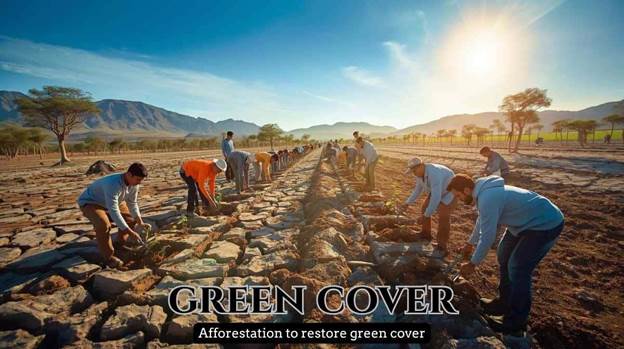
Afforestation refers to the deliberate establishment of forests in areas that were not previously forested. Unlike reforestation, which focuses on replenishing degraded forests, afforestation creates new green zones from scratch. This process directly impacts green cover, improving air quality, enriching soil, and providing natural habitats for wildlife. Historically, afforestation projects were initiated to meet timber needs, but today they serve a broader environmental purpose mitigating global warming and reducing carbon emissions.
Historical Perspective on Green Cover Decline
Human activities such as logging, agriculture, and urban expansion have drastically reduced global green zones. For instance, the loss of forested land in regions like the Amazon, Central Africa, and South Asia has caused severe ecological imbalances. The push for afforestation began in the 20th century as governments recognized the urgent need to restore green cover. Countries like India and China implemented nationwide tree plantation drives to combat desertification and soil degradation, proving the effectiveness of large-scale afforestation initiatives.
Importance of Afforestation for Green Cover
Afforestation is essential not only for increasing tree density but also for supporting environmental resilience. By expanding green cover, afforestation contributes to:
- Reducing carbon dioxide levels in the atmosphere
- Controlling soil erosion and desertification
- Enhancing groundwater recharge and improving water cycles
- Supporting biodiversity by providing habitats for flora and fauna
- Offering livelihoods to communities through sustainable forestry practices
Benefits of Restoring Green Cover through Afforestation
Afforestation brings ecological, social, and economic benefits.
Environmental Benefits
- Increased carbon sequestration to slow climate change
- Better soil fertility and reduced land degradation
- Stabilization of local climates by reducing temperature extremes
Social and Economic Benefits
- Employment generation through plantation and forest management
- Eco-tourism opportunities in newly created green zones
- Sustainable wood and non-timber products for communities
By restoring green cover, afforestation ensures a balanced relationship between human needs and nature’s survival.
Challenges in Expanding Green Cover
Despite its importance, afforestation faces multiple hurdles:
- Land Availability: Urbanization and agricultural demands often leave little land for afforestation.
- Invasive Species: Poorly planned projects may introduce non-native species, harming local ecosystems.
- Funding Issues: Large-scale plantation projects require long-term investment, which can be challenging for developing nations.
- Climate Stress: Rising global temperatures and erratic rainfall patterns threaten the survival of newly planted trees.
Addressing these challenges is crucial for the long-term success of green cover restoration efforts.
Real-World Examples of Afforestation Success
Several countries showcase how afforestation restores green cover effectively:
- China’s Green Great Wall Project: Aimed at combating desertification, it has planted billions of trees across the Gobi Desert.
- India’s Green India Mission: Focused on increasing forest and tree cover by 5 million hectares while improving ecosystem services.
- Ethiopia’s Green Legacy Initiative: In 2019 alone, Ethiopia planted over 350 million trees in one day, setting a global record.
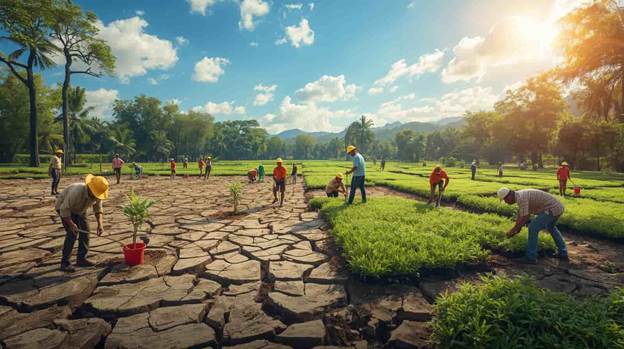
These projects demonstrate how large-scale afforestation can transform barren lands into thriving ecosystems, significantly boosting global green cover.
Future Directions for Green Cover Restoration
The future of afforestation lies in integrating technology, community involvement, and sustainable practices. Using drones for large-scale seed dispersal, leveraging satellite imagery to track progress, and involving local communities in plantation drives ensure long-term results. Moreover, governments and NGOs must collaborate to design eco-friendly policies that prioritize green cover restoration as part of climate action plans.
Conclusion
Afforestation plays a pivotal role in restoring green cover, reversing the damage caused by deforestation and climate change. By creating new forests, improving biodiversity, and strengthening ecosystems, it provides a pathway toward a more sustainable and resilient future. Despite challenges like land scarcity and funding needs, successful examples worldwide prove that afforestation is a viable solution. As individuals and communities, supporting tree plantation efforts and eco-friendly policies can make a lasting difference. Restoring green cover through afforestation is not just an environmental need it is a responsibility we all share to ensure a healthier planet for future generations.
Q1. What is the difference between afforestation and reforestation?
Afforestation creates new forests on non-forested lands, while reforestation restores degraded forests.
Q2. How does afforestation help in restoring green cover?
It increases vegetation, sequesters carbon, prevents soil erosion, and supports biodiversity.
Q3. Which countries have the most successful afforestation programs?
China, India, and Ethiopia lead in large-scale afforestation initiatives.
Q4. What challenges affect the restoration of green cover?
Key challenges include land scarcity, invasive species, funding issues, and climate change impacts.