Microhabitats are small, specialized environments within a larger ecosystem that provide unique living conditions for specific species. These tiny habitats such as leaf litter, tree bark, moss patches, soil layers, or even puddles support immense biodiversity. They play a crucial role in maintaining ecological balance, offering shelter, food, and breeding spaces for countless organisms that might otherwise struggle to survive.
Table of Contents
This article explores how microhabitats contribute to biodiversity, their benefits, the challenges they face, and real-world examples that highlight their ecological significance in preserving life on Earth.
The Concept of Microhabitats in Ecology
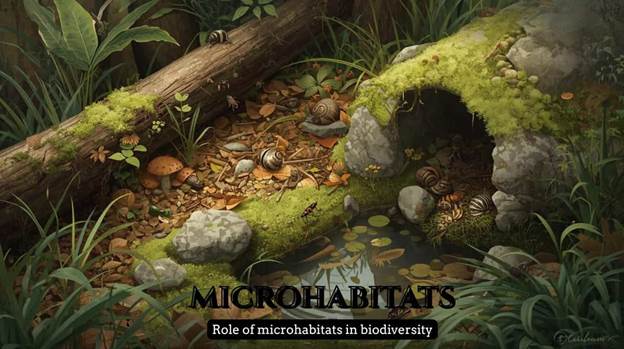
A microhabitat refers to a localized, small-scale environment with specific physical and biological conditions that differ from its surrounding area. These variations in light, moisture, temperature, and nutrients create niches that support diverse organisms. For example, under a fallen log, you might find fungi, beetles, and decomposers thriving in cool, damp conditions.
Historical Background of Microhabitat Research
The study of microhabitats dates back to early ecological observations in the 19th century when scientists noticed that species distribution depended not only on climate and geography but also on micro-level environmental variations. Today, microhabitat research plays a central role in conservation biology, helping ecologists understand how minute environmental changes influence species survival and behavior.
How Microhabitats Support Biodiversity
Microhabitats form the foundation of biodiversity hotspots within ecosystems. They create microclimates that allow species to thrive even under harsh external conditions.
Key Ways Microhabitats Promote Biodiversity
- Shelter and Protection – Microhabitats offer refuge from predators and harsh weather, ensuring the survival of sensitive species.
- Breeding and Nesting Sites – Many amphibians, insects, and birds use microhabitats for safe reproduction.
- Food Availability – Decomposing materials within microhabitats provide nutrients for fungi, microorganisms, and insects.
- Microclimate Stability – Even in changing weather patterns, microhabitats maintain stable conditions crucial for delicate species.
By supporting species across multiple trophic levels, microhabitats enhance ecosystem resilience and prevent biodiversity loss.
Types of Microhabitats Found in Different Ecosystems
Microhabitats exist everywhere from dense forests to urban gardens. Each type supports different species adapted to its conditions.
Common Examples of Microhabitats
- Forest Floors: Leaf litter, fallen logs, and moss patches host decomposers and insects.
- Aquatic Zones: Rock crevices and submerged roots in streams house fish fry and aquatic invertebrates.
- Desert Microhabitats: Shade under rocks or burrows provides cooler spaces for reptiles and insects.
- Urban Microhabitats: Cracks in sidewalks, rooftops, and gardens serve as habitats for small plants, ants, and birds.
These examples show that biodiversity doesn’t only thrive in vast wilderness areas it can flourish in the smallest, often overlooked spaces.
The Ecological Benefits of Microhabitats
Microhabitats are essential to maintaining ecological functions. They act as biodiversity reservoirs, supporting ecosystem health and stability.
Key Benefits
- Pollination Support: Microhabitats attract insects that play a role in pollination.
- Nutrient Recycling: Decomposers within microhabitats help break down organic matter.
- Climate Regulation: By storing moisture and regulating temperature, microhabitats contribute to local climate stability.
- Species Interactions: They foster predator-prey relationships and mutualistic associations that strengthen the food web.
These functions demonstrate that conserving microhabitats means preserving the intricate web of life that sustains ecosystems globally.
Challenges Facing Microhabitats in Modern Environments
Despite their importance, microhabitats are increasingly threatened by human activities and environmental change.
Major Threats
- Urbanization: Expanding cities destroy small habitats such as wetlands and forest understories.
- Deforestation: Logging and agriculture eliminate critical microhabitat structures like fallen logs and underbrush.
- Climate Change: Altered rainfall and temperature patterns disrupt the delicate balance within microhabitats.
- Pollution: Chemicals and plastics degrade soil and water quality, making microhabitats uninhabitable for sensitive species.
Addressing these threats is vital for maintaining biodiversity and preventing species decline.
Real-World Examples of Microhabitats Enhancing Biodiversity
Several regions worldwide showcase how microhabitats contribute to thriving ecosystems.
- Amazon Rainforest: Tree canopies and forest floors host thousands of insect and fungal species within microhabitats.
- Coral Reefs: Coral structures form microhabitats for fish, mollusks, and crustaceans.
- Temperate Forests: Moss-covered stones and decaying logs provide moist refuges for amphibians.
- Urban Green Spaces: Rooftop gardens and green walls create artificial microhabitats that support pollinators and birds.
These examples highlight the adaptive power of nature and the need for conservation strategies that protect microhabitats even in urban environments.
Conservation Strategies for Protecting Microhabitats
Protecting microhabitats is key to sustaining biodiversity. Effective conservation practices include:
- Maintaining natural vegetation and forest debris to preserve soil organisms.
- Creating wildlife corridors that link fragmented habitats.
- Promoting green infrastructure in cities to provide mini-habitats for pollinators.
- Encouraging community-based conservation that involves local participation.
Through these methods, both rural and urban areas can safeguard their natural diversity and ensure long-term ecological health.
Conclusion
Microhabitats may be small, but their role in biodiversity is immense. By providing specialized conditions for countless organisms, they form the backbone of ecological stability and resilience. Preserving these tiny habitats whether in forests, oceans, or cities means protecting the diversity that sustains life itself. To support global biodiversity, individuals, communities, and policymakers must recognize and conserve the microhabitats that hold nature’s most delicate wonders.
Q1: What is a microhabitat?
A microhabitat is a small, specialized environment within a larger ecosystem that provides unique conditions for specific species.
Q2: Why are microhabitats important for biodiversity?
They support diverse species by offering food, shelter, and stable conditions that maintain ecological balance.
Q3: Can microhabitats exist in cities?
Yes, urban gardens, rooftops, and even cracks in walls can serve as microhabitats for plants and small animals.