Understanding Ocean Deoxygenation: The Silent Oxygen Crisis
Ocean deoxygenation is one of the most alarming yet lesser-known consequences of climate change. As global temperatures rise, the ocean’s capacity to hold oxygen declines, creating vast low-oxygen regions known as “dead zones.” These areas threaten marine life, fisheries, and global climate balance. Ocean deoxygenation is not just a scientific concept; it is a critical sign that Earth’s life-supporting systems are under stress.
Table of Contents
This article explores what causes ocean deoxygenation, how it affects marine ecosystems, and why it matters for our planet’s future.
What Is Ocean Deoxygenation?
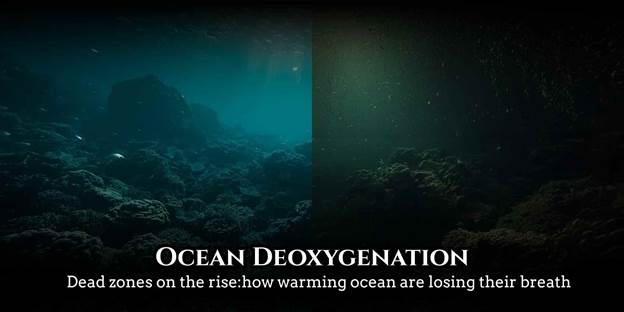
Ocean deoxygenation refers to the reduction of dissolved oxygen in the world’s oceans. Oxygen is essential for the survival of marine organisms, and its decline has devastating effects on underwater ecosystems. The process is driven by multiple factors:
- Rising sea temperatures that reduce oxygen solubility
- Nutrient pollution that triggers excessive algae growth
- Sluggish ocean circulation that limits oxygen mixing
When oxygen levels drop below a certain threshold, marine life suffocates, leading to the formation of “dead zones” areas where few organisms can survive.
The Science Behind Ocean Deoxygenation and Warming Seas
Warmer waters hold less oxygen. As global temperatures increase, oceans absorb more heat from the atmosphere. This warming disrupts the natural circulation that brings oxygen-rich surface waters down to deeper layers. Additionally, climate change alters weather patterns, leading to heavier rainfall and nutrient runoff from land into the sea. This runoff fuels algal blooms, and when these blooms die and decompose, they consume oxygen, further depleting the ocean’s supply.
In essence, ocean deoxygenation and warming are closely linked one feeds the other in a dangerous cycle that suffocates marine ecosystems.
A Historical Perspective: When Did Ocean Deoxygenation Begin?
While the ocean’s oxygen levels have naturally fluctuated throughout history, the rate of decline in recent decades is unprecedented. Scientists estimate that the global ocean has lost around 2% of its oxygen since the 1960s. Coastal dead zones, once rare, now number over 400 worldwide.
The industrial era marked the beginning of significant ocean deoxygenation as greenhouse gas emissions and nutrient pollution increased sharply. Today, the rate of oxygen loss continues to accelerate with global warming.
Why Ocean Deoxygenation Matters for Marine Life
Ocean deoxygenation creates a chain reaction that affects every level of the marine food web.
- Fish and crustaceans flee low-oxygen areas, disrupting migration and breeding patterns
- Coral reefs and seagrass meadows lose their ability to support biodiversity
- Plankton, the foundation of the oceanic food chain, struggle to survive
Species such as tuna, sharks, and marlin known for their high oxygen needs are particularly vulnerable. The result is not only ecosystem collapse but also economic loss for communities that depend on fishing and tourism.
Real-World Examples of Ocean Deoxygenation and Dead Zones
- Gulf of Mexico Dead Zone: One of the world’s largest dead zones, caused by agricultural runoff from the Mississippi River. It spans over 6,000 square miles each summer.
- Baltic Sea: Repeated hypoxic events have turned it into one of the most oxygen-depleted seas on Earth.
- Arabian Sea: Rapid warming and pollution have created expanding low-oxygen layers that threaten local fisheries.
These examples reveal that ocean deoxygenation is not confined to one region it’s a global crisis with local consequences.
The Link Between Ocean Deoxygenation and Global Climate Change
Ocean deoxygenation is both a symptom and a driver of climate change. Low-oxygen zones release greenhouse gases like nitrous oxide, further intensifying global warming. At the same time, the ocean’s reduced capacity to store carbon weakens its role as Earth’s natural climate regulator.
Moreover, the loss of oxygen affects phytoplankton, which produce nearly half of the world’s oxygen. As their populations decline, both the marine and atmospheric oxygen balance are disrupted creating a feedback loop that worsens climate instability.
How Scientists Track Ocean Deoxygenation
Modern technologies have made it easier to monitor and model oxygen loss across the globe. Researchers use:
- Satellite data to analyze sea temperature and chlorophyll levels
- Autonomous underwater gliders to measure oxygen concentrations
- Deep-sea sensors that monitor long-term oxygen trends
These tools help scientists understand where and how ocean deoxygenation is occurring, enabling better climate prediction models and conservation planning.
Can We Reverse Ocean Deoxygenation? Possible Solutions
Reversing ocean deoxygenation requires global cooperation and strong environmental policies. Key actions include:
- Reducing Greenhouse Gas Emissions – Lowering CO₂ emissions will slow ocean warming and help restore oxygen balance.
- Controlling Nutrient Pollution – Implementing better agricultural practices to limit fertilizer runoff can prevent harmful algal blooms.
- Protecting Marine Habitats – Restoring mangroves, seagrasses, and wetlands enhances natural oxygen production and storage.
- Supporting Ocean Research – Continuous monitoring helps policymakers act based on real-time data.
While full reversal may take decades, these actions can stabilize oxygen levels and protect marine biodiversity.
The Future of Our Oceans: A Breathless Warning
If current trends continue, ocean deoxygenation could expand dramatically by 2100. Scientists warn that large portions of tropical and mid-latitude oceans may experience oxygen loss severe enough to reshape entire ecosystems. Preventing this future requires immediate global action to mitigate climate change, reduce pollution, and protect marine life.
Conclusion
Ocean deoxygenation is a silent yet escalating threat that endangers both marine ecosystems and human livelihoods. As the oceans continue to lose their breath, the balance of life on Earth hangs in the balance. Understanding this process is the first step toward change. By supporting cleaner energy, reducing pollution, and valuing ocean health, we can help restore the planet’s blue heart before it’s too late.