Across the world, freshwater resources are under increasing stress from climate change, population growth, and unsustainable management. One of the most pressing threats to water security is salt intrusion, a process where saltwater moves into freshwater systems such as rivers, groundwater aquifers, and deltas.
This problem is particularly severe in coastal regions, where rising sea levels and human activities disturb the delicate balance between saltwater and freshwater. Salt intrusion not only endangers drinking water supplies but also affects agriculture, ecosystems, and infrastructure. Understanding its causes, consequences, and possible solutions is critical for building resilient communities.
What is Salt Intrusion?
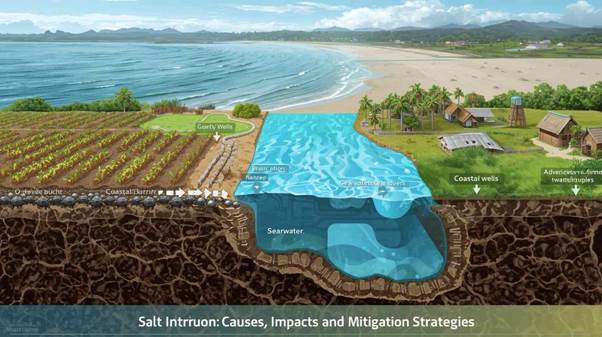
Salt intrusion refers to the encroachment of seawater into freshwater environments. Normally, natural barriers like river flows, soil layers, and pressure differences prevent saltwater from advancing inland. However, when these barriers weaken, saltwater penetrates rivers, reservoirs, or underground aquifers. Salt intrusion makes freshwater unsuitable for drinking, irrigation, and industrial use because of elevated salinity levels. Once saltwater contamination occurs, reversing it is difficult and often requires costly interventions.
Causes of Salt Intrusion
Several factors contribute to salt intrusion, often acting together:
- Sea-level rise: Climate change has accelerated ocean expansion, allowing seawater to move inland.
- Groundwater over-extraction: Pumping too much groundwater reduces pressure in aquifers, creating space for saltwater to infiltrate.
- Reduced river flow: Dams, upstream water withdrawals, and prolonged droughts decrease the freshwater flow that pushes saltwater back.
- Storm surges: Hurricanes and cyclones can temporarily drive seawater into freshwater systems, intensifying salt intrusion.
These drivers demonstrate how both human activity and natural processes contribute to this growing global challenge.
Health and Social Impacts of Salt Intrusion
The presence of salt intrusion in freshwater has direct health consequences. High sodium content in drinking water can increase the risk of hypertension, cardiovascular diseases, and kidney problems. In coastal regions of Bangladesh, for example, studies have linked salt intrusion in groundwater with rising cases of hypertension among rural populations. Beyond health, the scarcity of safe water forces families often women and children to travel long distances to access freshwater, creating social and economic burdens.
Effects on Agriculture and Food Security
Agriculture is one of the most severely affected sectors when salt intrusion occurs. Irrigation water with high salt content damages soil quality by causing salinization, reducing crop yields and even rendering farmland barren over time. Rice, wheat, and vegetable crops are particularly sensitive to salinity, meaning salt intrusion threatens food security in many developing regions. For example, in the Mekong Delta of Vietnam, millions of hectares of farmland have suffered losses due to recurring salt intrusion, forcing farmers to switch crops or abandon agriculture altogether.
Environmental Consequences of Salt Intrusion
The ecological impacts of salt intrusion extend beyond human needs. Freshwater species such as fish, amphibians, and aquatic plants cannot survive in high-salinity environments. As salt intrusion progresses, ecosystems experience biodiversity loss, with freshwater organisms replaced by salt-tolerant species. Wetlands, estuaries, and mangroves may initially adapt but eventually face degradation when salinity levels exceed their natural tolerance. This disrupts fisheries and reduces the ecological services these habitats provide, such as storm protection and carbon storage.
Economic Costs of Salt Intrusion
The economic toll of salt intrusion is far-reaching. Communities incur expenses for water treatment, desalination, or importing freshwater. Farmers lose income due to declining yields, while governments face costs for infrastructure repair and adaptation projects. For industries relying on freshwater, such as food processing and textile production, salt intrusion can disrupt operations and increase production costs. In regions where agriculture and fisheries are the backbone of the economy, salt intrusion undermines livelihoods and fuels migration.
Case Studies of Salt Intrusion
Several global hotspots illustrate the severity of salt intrusion:
- Bangladesh: Rising sea levels and reduced river flows have worsened groundwater salinity, impacting millions of people.
- Mekong Delta, Vietnam: Seasonal salt intrusion has devastated rice production, prompting large-scale agricultural shifts.
- Netherlands: Despite advanced water management systems, low-lying areas remain vulnerable to salt intrusion due to sea-level rise.
These case studies highlight that both developing and developed nations must address the growing risks associated with salt intrusion.
Mitigation and Adaptation Strategies
While completely eliminating salt intrusion is impossible, various strategies can help reduce its effects:
- Sustainable groundwater use: Limiting over-extraction helps maintain aquifer pressure and prevents saltwater encroachment.
- Improved irrigation practices: Techniques such as drip irrigation reduce water demand and minimize salinity buildup in soils.
- Desalination and water treatment: Although expensive, these technologies provide alternatives for safe water supply in affected areas.
- Infrastructure solutions: Building embankments, barrages, and sluice gates can block seawater from entering rivers and farmlands.
- Ecosystem-based approaches: Restoring mangroves and wetlands strengthens natural barriers against salt intrusion while supporting biodiversity.
Preparing for the Future
With climate change accelerating sea-level rise, the risk of salt intrusion will continue to grow. Governments, researchers, and communities must work together to develop long-term strategies that integrate sustainable water use, resilient agriculture, and climate adaptation. International cooperation is also essential, as many river basins cross national borders and require shared solutions. By addressing salt intrusion proactively, societies can safeguard water security, protect ecosystems, and ensure sustainable development.
Conclusion
Salt intrusion is an increasingly urgent global challenge that threatens health, agriculture, ecosystems, and economies. Driven by sea-level rise, over-extraction, and reduced river flows, this issue demands both local and global responses. While the problem cannot be fully reversed, innovative solutions ranging from water management to ecosystem restoration can help communities adapt. Recognizing the scale of salt intrusion and taking action now is key to securing a sustainable future for generations to come.