Solid waste pollution has become a growing concern in urban and rural areas alike, posing serious risks to both human health and the natural ecosystem. From overflowing landfills to improperly disposed plastics, this problem not only contaminates soil and water but also affects air quality, leading to a rise in respiratory and infectious diseases.
In this article, we will explore the major sources of waste accumulation, its direct and indirect impact on public health, and the long-term consequences for the environmental balance. Additionally, practical solutions and preventive measures will be discussed to help communities manage waste more responsibly. By understanding the challenges of solid waste pollution, readers can gain insight into how collective efforts can reduce environmental degradation and promote a healthier, cleaner future.
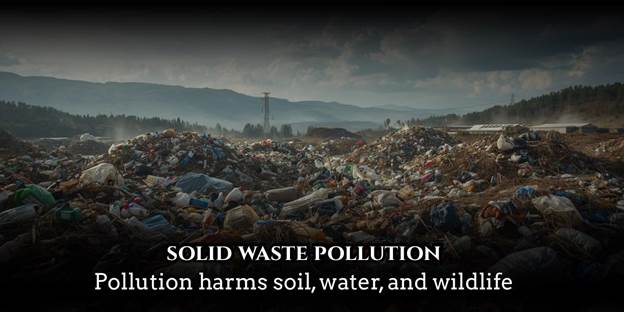
Understanding Solid Waste Pollution
Solid waste pollution is the accumulation of discarded materials from human activities that are improperly managed, contaminating soil, water bodies, and air quality. Everyday waste such as plastics, metals, food scraps, and electronic products contribute to this growing problem. Urbanization, population growth, and industrial expansion have intensified waste production, making proper management essential for environmental sustainability.
Background and History of Waste Management
Historically, communities produced minimal waste that was mostly biodegradable. With industrialization:
•Urban populations grew, generating massive amounts of garbage
•Non-biodegradable materials like plastics became widespread
•Traditional disposal methods such as open dumping created environmental hazards
The development of landfills and incineration provided temporary solutions, but they often caused secondary pollution. Today, sustainable waste management practices are necessary to reduce environmental and health risks.
Health Impacts of Solid Waste
Improper waste disposal directly affects human health. Contaminated soil, water, and air can lead to multiple illnesses.
Common Health Risks
•Waterborne diseases including cholera and dysentery
•Respiratory issues caused by burning waste and air pollutants
•Vector-borne diseases such as malaria and dengue due to stagnant waste attracting mosquitoes
•Long-term exposure can increase the risk of chronic conditions like cancer and neurological disorders
Vulnerable Populations
Children, elderly individuals, and people living near landfills are at greater risk. Implementing community-based waste management programs can minimize these health hazards.
Environmental Consequences
Solid waste pollution has extensive effects on the environment.
Soil and Water Contamination
•Leachate from decomposing waste seeps into groundwater, affecting agriculture
•Toxic chemicals from electronic and industrial waste harm aquatic life
Air Pollution
•Open burning releases harmful gases such as carbon monoxide and dioxins
•Particulate matter lowers air quality, impacting humans and wildlife
Wildlife Impact
Animals ingest plastics and debris, leading to injury or death. Coastal and marine ecosystems are especially vulnerable due to plastic accumulation in oceans.
Challenges in Solid Waste Management
Managing waste remains a complex issue worldwide.
Key Challenges
•Insufficient infrastructure for segregation and recycling
•Limited funding for waste collection services
•Rapid urbanization leading to excessive waste generation
•Low public awareness and minimal community involvement
Global Examples
•Developing countries rely on open dumps with minimal regulation
•Developed countries face challenges with electronic and hazardous waste

Importance and Benefits of Proper Waste Management
Proper management of solid waste provides significant environmental, health, and societal benefits.
Environmental Advantages
•Reduces soil, water, and air contamination
•Conserves natural resources through recycling and composting
•Protects biodiversity by minimizing harm to animals
Health and Social Benefits
•Decreases disease incidence and infections
•Promotes cleaner neighborhoods and improved quality of life
•Encourages community engagement and awareness about responsible waste practices
Solutions and Effective Practices
Combating solid waste pollution requires a combination of strategies:
•Segregating biodegradable and non-biodegradable waste at the source
•Encouraging recycling and upcycling to reduce landfill use
•Using waste-to-energy technologies to generate power
•Conducting awareness campaigns for responsible consumption and disposal
•Implementing strict government regulations for waste management
Successful Global Practices
•Japan’s recycling programs minimize landfill dependency
•Sweden converts nearly half of household waste into energy
•Community-led initiatives in India and Brazil promote plastic-free campaigns
Conclusion
Solid waste pollution is one of the most pressing challenges of our time, affecting public health, ecosystems, and overall quality of life. From contaminated soil and water to the spread of diseases and harm to wildlife, the consequences are far-reaching. Proper waste management practices, including segregation, recycling, and the use of waste-to-energy technologies, play a vital role in mitigating these risks. Community awareness and government regulations are equally important to ensure long-term sustainability.
By adopting responsible disposal habits and supporting eco-friendly initiatives, individuals can contribute to a cleaner and healthier environment. Staying informed about the sources, effects, and solutions of solid waste pollution empowers communities to take meaningful action. Every small effort, whether reducing plastic use, composting organic waste, or participating in local cleanup drives, can collectively make a significant difference. Explore more strategies, learn about innovative waste management solutions, and stay updated on environmental practices to help protect our planet for future generations.