The comparison between stalagmite vs stalactite reveals how water, minerals, and time combine to craft breathtaking underground structures. Hidden deep within caves, nature creates stunning mineral formations that have taken thousands of years to form. While one rises from the cave floor and the other hangs gracefully from the ceiling, both tell a fascinating story of geology and patience.
Table of Contents
This article explores their formation, differences, and unique features, while also touching on topics like cave formations, limestone deposits, and speleology the scientific study of caves and their mesmerizing natural wonders.
Understanding Stalagmite vs Stalactite: Nature’s Slow Masterpieces
Caves are among the most fascinating natural wonders on Earth, shaped by water, rock, and time. Among their most iconic features are stalagmites and stalactites, two formations that often leave visitors in awe. To truly appreciate the beauty of these cave structures, it’s essential to understand how they form, what makes them different, and why they play such an important role in geology and the environment.
Definition and Basic Differences
The comparison of stalagmite vs stalactite begins with their position and direction of growth.
- Stalactites hang from the ceiling of caves, forming as mineral-rich water drips slowly from above.
- Stalagmites grow upward from the floor, building from the mineral deposits left behind when the dripping water lands.
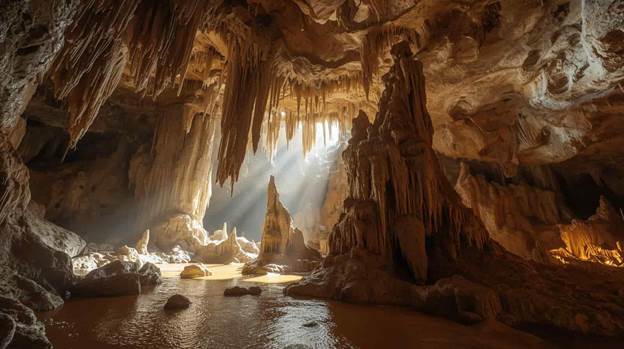
Both stalagmite vs stalactite formations are primarily made of calcium carbonate (CaCO₃), though they may also include minerals like gypsum or salt, depending on the cave’s geology. When a stalactite and stalagmite gradually grow toward each other and eventually connect, they form a single column a breathtaking natural structure that takes centuries or even millennia to develop.
Formation Process of Cave Structures
The formation of stalagmite vs stalactite structures begins with groundwater seeping through the soil. As rainwater absorbs carbon dioxide, it forms a mild carbonic acid that slowly dissolves limestone. When this mineral-rich water drips into a cave and releases carbon dioxide into the air, it deposits small mineral crystals. Over thousands of years, these deposits build up to create the stunning cave formations visible today.
Formation steps:
- Rainwater mixes with carbon dioxide forming carbonic acid
- Acidic water dissolves limestone, carrying calcium carbonate
- Water drips into the cave and releases carbon dioxide
- Minerals are deposited, slowly building formations
This slow but steady process demonstrates how even the tiniest natural actions can lead to monumental geological art.
Historical and Scientific Importance
For centuries, explorers, geologists, and even artists have admired the grandeur of stalactites and stalagmites. Early cave explorers in Europe documented these structures as signs of divine creation, while modern science views them as important geological records.
Researchers use stalagmite vs stalactite studies to understand:
- Past climate changes through the chemical composition of the deposits
- Cave formation timelines, revealing how landscapes evolved
- Water chemistry and its role in shaping subterranean environments
Some stalagmites, such as those found in China’s Sanmenxia Cave, have provided valuable data about rainfall patterns spanning thousands of years, serving as natural archives of Earth’s climate history.
Differences in Appearance and Texture
While both formations are created from similar minerals, their shapes and textures differ noticeably:
- Stalactites are typically thinner, icicle-shaped, and pointed at the tip
- Stalagmites are thicker, rounded, and often shorter
- Color variations result from mineral impurities, giving them hues of brown, orange, or white
The rate of water dripping also influences their shape slow drips create thin stalactites, while faster drips form broader stalagmites.
Environmental and Geological Significance
Beyond their beauty, stalactites and stalagmites play critical roles in understanding Earth’s subsurface ecosystems. They help geologists trace water movement, analyze chemical interactions, and even study microbial life thriving in nutrient-poor conditions.
Moreover, these formations act as natural indicators of environmental stability. Any change in drip rate, color, or growth can signal shifts in local climate or pollution levels.
Famous Examples Around the World
Several caves around the world showcase breathtaking examples of stalagmite vs stalactite formations:
- Carlsbad Caverns (USA): Known for its massive chambers filled with glittering calcite formations
- Postojna Cave (Slovenia): Features stunning white stalactites resembling frozen waterfalls
- Reed Flute Cave (China): Famous for its colorful lighting that highlights crystal-like formations
- Jenolan Caves (Australia): Among the oldest cave systems, showcasing rich mineral diversity
These global landmarks not only attract tourists but also serve as key research sites for speleologists studying underground evolution.
Conservation and Challenges
Despite their resilience, stalagmite vs stalactite formations are extremely fragile and easily damaged by human contact. Even a simple touch or breath can disrupt their natural growth by introducing oils or moisture. Today, conservation programs aim to protect these formations through controlled tourism, monitoring, and public education.
To protect these formations:
- Visitors are encouraged to follow strict cave guidelines
- Scientists monitor humidity and temperature to prevent imbalance
- Awareness programs highlight their ecological value
Preserving these delicate features ensures that future generations can continue to study and admire nature’s underground artistry.
Key Takeaways
The comparison of stalagmite vs stalactite reveals much more than just differences in direction it uncovers a slow, intricate process that reflects Earth’s geological rhythm. From their formation through mineral-laden water to their scientific importance in climate research, these cave structures represent the perfect harmony between time, chemistry, and the natural environment.
Conclusion
The comparison of stalagmite vs stalactite highlights nature’s remarkable ability to shape beauty from patience and time. These cave formations not only decorate underground worlds but also serve as valuable records of Earth’s geological and climatic past. By studying and preserving them, scientists gain insights into water chemistry, mineral processes, and ancient environments. Understanding their formation deepens our appreciation for nature’s artistry. To explore more about cave systems and geological wonders, stay curious and keep discovering the fascinating world beneath our feet.