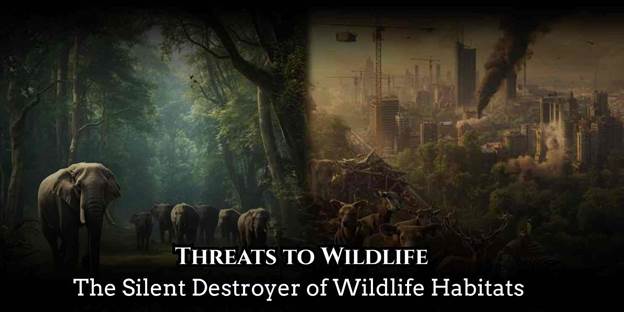
Among the most pressing threats to wildlife, human encroachment stands as one of the most silent yet devastating forces. As cities expand, forests shrink, and industrial zones emerge, countless species lose their homes and struggle to survive. The increasing demand for land and resources has led to deforestation, habitat fragmentation, and the destruction of vital ecosystems.
Table of Contents
In this article, we will explore how human encroachment endangers wildlife, its historical and modern causes, and the irreversible consequences it brings. We will also discuss real-world examples of species affected by habitat loss, the importance of conservation efforts, and possible solutions to restore ecological balance. Understanding the gravity of this issue is the first step toward protecting the planet’s most vulnerable inhabitants from the growing tide of human expansion.
Human Encroachment and Its Impact on Wildlife Habitats
1. Threats to Wildlife: Understanding Human Encroachment (Definition & Overview)
Human encroachment refers to the expansion of human activities into natural environments, resulting in the displacement and destruction of wildlife habitats. This occurs when urban development, agriculture, or infrastructure projects consume forests, wetlands, and grasslands. As a result, animals are forced to migrate, adapt, or perish.
According to the World Wildlife Fund (WWF), more than half of the world’s natural habitats have already been altered by human activities. This ongoing transformation disrupts ecological systems, reduces biodiversity, and pushes countless species toward extinction.
Encroachment can manifest in several ways:
• Deforestation for agriculture and urbanization
• Construction of roads, railways, and housing projects
• Industrial expansion and resource extraction
• Uncontrolled tourism in wildlife zones
In essence, human encroachment is not just physical occupation it’s the systematic replacement of nature with man-made environments.
2. The Historical Roots of Habitat Loss (Background & Causes)
The roots of wildlife habitat destruction can be traced back to the dawn of agriculture thousands of years ago. However, industrialization and population growth in recent centuries have accelerated this process dramatically.
During the Industrial Revolution, forests were cleared for factories, railways, and mining operations. In modern times, expanding cities and agricultural frontiers have become the main drivers of habitat loss.
The main factors fueling this destructive trend include:
• Population growth: Rising populations demand more housing and farmland.
• Urbanization: Cities sprawl into rural and forested areas.
• Industrialization: Mining, logging, and infrastructure developments dominate landscapes.
• Climate change: Warming temperatures make new areas suitable for agriculture and settlement, further stressing wildlife regions.
This historical perspective helps us understand that encroachment is not a sudden crisis it’s a centuries-old pattern that has reached unsustainable levels today.
3. How Human Encroachment Disrupts Ecosystems (Ecological Consequences)
The ecological consequences of encroachment are profound and far-reaching. When humans alter or destroy habitats, the delicate balance of ecosystems collapses. Species that once thrived in harmony now face starvation, predation, or displacement.
Key impacts include:
• Loss of biodiversity: The extinction of species due to loss of habitat.
• Habitat fragmentation: Breaking large habitats into isolated patches, making breeding and migration difficult.
• Altered food chains: Predators lose prey, herbivores lose plants, and entire ecosystems destabilize.
• Increased human-wildlife conflict: As animals move closer to human settlements in search of food or shelter, conflicts rise, often ending in the death of animals.
Encroachment not only threatens wildlife but also the natural systems that provide humans with clean air, water, and climate stability.
4. Real-World Examples: Wildlife at Risk (Examples & Case Studies)
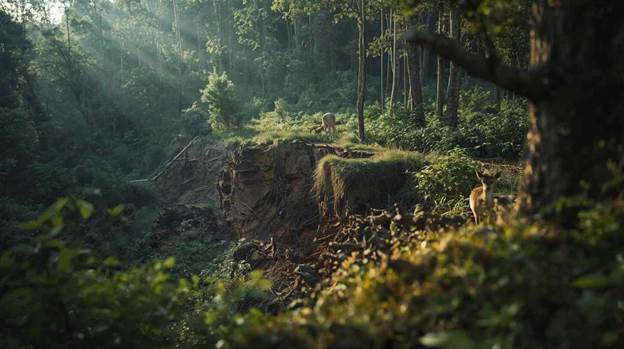
The effects of human encroachment on wildlife are visible across the globe.
• Amazon Rainforest: Deforestation for cattle ranching and soy cultivation has destroyed millions of acres of habitat, endangering species like the jaguar and harpy eagle.
• African Savannas: Expanding agriculture and settlements have reduced elephant migration routes, leading to deadly human-elephant conflicts.
• Sundarbans Mangrove Forest: Rising sea levels and human settlements threaten the Bengal tiger’s last stronghold.
• North America: Urban sprawl and road networks fragment habitats for bears, cougars, and other large mammals.
These examples highlight the urgent need for governments and communities to regulate land use and protect wildlife corridors before it’s too late.
5. Why Wildlife Conservation Matters (Importance & Benefits)
Protecting wildlife habitats is vital not only for animals but for humanity itself. Ecosystems provide essential services such as pollination, water purification, and carbon storage. When wildlife habitats disappear, these natural systems weaken, leading to economic and environmental crises.
The benefits of conservation include:
• Maintaining biodiversity and ecosystem stability
• Preventing soil erosion and climate deterioration
• Supporting eco-tourism and sustainable economies
• Ensuring food and water security for future generations
Preserving habitats is, therefore, not just an environmental duty it’s an investment in our planet’s health and humanity’s future.
6. Overcoming the Challenges of Human Encroachment (Solutions & Actions)
Solving the problem of human encroachment requires collective global effort. Some key strategies include:
• Protected areas: Expanding national parks and wildlife sanctuaries to safeguard natural ecosystems.
• Sustainable urban planning: Designing cities that coexist with nature, including green belts and wildlife crossings.
• Reforestation and restoration: Replanting trees and restoring degraded lands to revive lost habitats.
• Community education: Teaching people the value of biodiversity and how to minimize their ecological footprint.
• Strict policies: Enforcing land-use regulations to limit illegal development and deforestation.
Governments, organizations, and citizens all play crucial roles in curbing human expansion into natural habitats.
7. The Road Ahead: Restoring Harmony Between Humans and Wildlife (Future Outlook)
A future where humans and wildlife coexist harmoniously is possible but only through awareness and action. Advancements in sustainable living, renewable energy, and eco-friendly architecture offer hope for minimizing further encroachment.
Technology such as satellite monitoring, wildlife mapping, and conservation drones can help track habitat loss and enforce protections. By supporting conservation NGOs, participating in reforestation programs, and demanding policy changes, individuals can make a tangible difference.
If we act now, we can restore the balance between human progress and the natural world before irreversible damage occurs.
Conclusion
Human encroachment remains one of the most destructive threats to wildlife, silently dismantling ecosystems that took millennia to evolve. To protect our planet’s biodiversity, we must prioritize sustainable growth, habitat restoration, and stronger conservation policies. Every tree planted, every policy enforced, and every awareness raised brings us closer to a healthier planet. Let’s choose to coexist rather than conquer because saving wildlife means saving ourselves. Explore more about conservation efforts and take a step toward preserving the natural world today.