Water bodies like oceans, seas, and lakes play a vital role in sustaining life on Earth, but one of the growing threats they face is ocean acidification. As carbon dioxide emissions increase globally, large amounts of this gas dissolve into oceans, disrupting the delicate pH balance of marine ecosystems. This silent crisis affects not just marine biodiversity but also global economies, food security, and climate regulation.
Table of Contents
In this article, we will explore the definition of ocean acidification, its background, ecological and economic impacts, key challenges, and real-world examples. By the end, you will understand why ocean acidification in water bodies is one of the most pressing environmental challenges of our time.
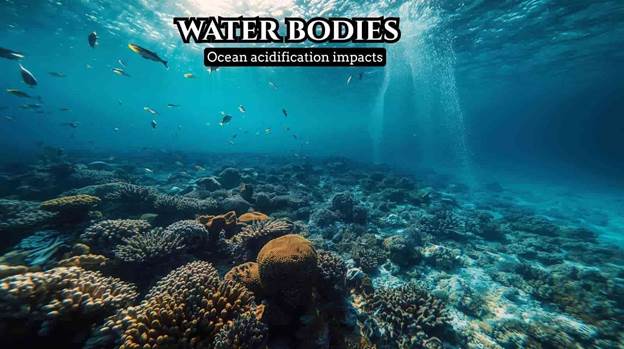
Understanding Ocean Acidification in Water Bodies
What is Ocean Acidification?
Ocean acidification refers to the decrease in ocean pH caused by the absorption of excess atmospheric carbon dioxide into water bodies. When CO₂ dissolves in seawater, it forms carbonic acid, which lowers pH levels. This chemical imbalance disrupts the natural processes that marine organisms depend on for survival.
Historical Context
Historically, water bodies maintained a stable pH, allowing coral reefs, shellfish, and plankton to thrive. However, since the Industrial Revolution, the oceans have absorbed nearly one-third of human-produced CO₂, leading to faster acidification than in any known geological period. This rapid change has severe implications for marine ecosystems and human economies.
Why Ocean Acidification Matters for Marine Ecosystems
Impact on Coral Reefs
Coral reefs, often called the rainforests of the sea, rely on calcium carbonate to build their skeletons. Acidified water bodies reduce calcium availability, causing weaker coral structures and increased bleaching events.
Threats to Shellfish and Fisheries
Shellfish like oysters, mussels, and clams struggle to form protective shells in acidic conditions. This not only affects biodiversity but also jeopardizes the seafood industry, which supports millions of livelihoods worldwide.
Disruption of Food Chains
Plankton, the base of marine food webs, is also sensitive to pH shifts. If plankton populations decline, fish stocks and marine mammals will suffer, creating cascading effects across ecosystems.
Economic and Social Costs of Ocean Acidification
Fisheries and Aquaculture Losses
Coastal communities dependent on fishing face declining harvests. In the United States, the shellfish industry alone risks billions in losses due to ocean acidification in nearby water bodies.
Tourism Decline
Tourism industries tied to coral reefs and marine biodiversity suffer as ecosystems degrade. Locations like the Great Barrier Reef highlight the economic toll of damaged marine attractions.
Global Food Security
Over 3 billion people rely on fish as a major protein source. Acidified water bodies reduce fish populations, threatening food security in developing nations most dependent on the ocean.
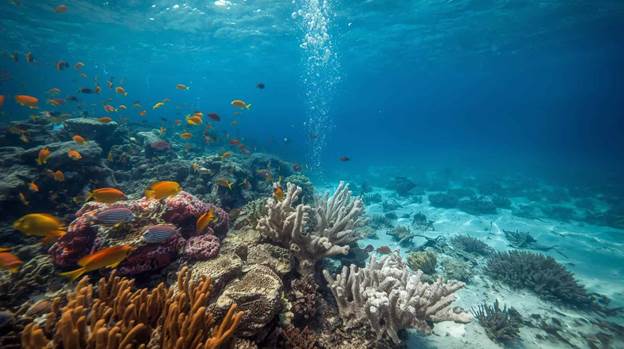
Global Examples of Ocean Acidification Impacts
Pacific Northwest, USA
Oyster hatcheries in Washington and Oregon have experienced mass die-offs due to acidic waters, forcing aquaculture facilities to adopt costly mitigation strategies.
Great Barrier Reef, Australia
One of the most iconic water bodies, the Great Barrier Reef, has seen widespread coral bleaching events linked to acidification and warming seas, costing billions in lost tourism revenue.
Arctic and Polar Regions
Polar water bodies absorb more CO₂ due to their cold temperatures. Acidification threatens species like pteropods, tiny sea snails vital to the food chain, placing polar ecosystems at risk.
Challenges in Combating Ocean Acidification
Rising Carbon Emissions
The primary driver remains unchecked CO₂ emissions. Without significant reductions, acidification will continue to accelerate in all water bodies.
Limited Awareness and Policy Gaps
Many governments and communities are unaware of the economic and ecological impacts. Weak policies and lack of global coordination hinder effective solutions.
High Costs of Adaptation
Developing adaptation measures such as marine protected areas, artificial reefs, or aquaculture innovation requires significant financial investment that poorer nations may not afford.
Strategies for Managing Ocean Acidification in Water Bodies
Reducing Carbon Footprints
Transitioning to renewable energy sources and reducing fossil fuel consumption is the most direct way to slow acidification.
Promoting Blue Carbon Solutions
Mangroves, seagrasses, and salt marshes absorb CO₂ efficiently. Protecting and restoring these ecosystems enhances resilience in coastal water bodies.
Sustainable Fisheries and Aquaculture Practices
Adopting adaptive aquaculture methods and regulating fishing practices can help communities cope with biodiversity losses.
International Collaboration
Global agreements such as the Paris Climate Accord emphasize reducing CO₂ emissions. Stronger commitments are essential to protect vulnerable water bodies from irreversible harm.
Future Outlook of Ocean Acidification
If left unaddressed, ocean acidification will continue to undermine marine ecosystems and economies worldwide. Scientists project that by 2100, many coral reefs will dissolve faster than they can grow, and fisheries could collapse in some regions. However, proactive strategies, carbon reduction, and ecosystem restoration offer hope for maintaining the balance of global water bodies.
Conclusion
Ocean acidification in water bodies is not a distant problem but a present reality affecting marine life, economies, and food systems. From coral reefs to global fisheries, its impacts are widespread and costly. By understanding its causes, challenges, and potential solutions, we can take collective action to reduce risks and protect marine biodiversity.
Q1: What causes ocean acidification in water bodies?
It is mainly caused by the absorption of excess carbon dioxide from the atmosphere into oceans and seas.
Q2: How does ocean acidification affect humans?
It impacts fisheries, tourism, and food security, creating economic losses and reducing access to marine resources.
Q3: Can ocean acidification be reversed?
While reversing is difficult, its pace can be slowed through reduced carbon emissions, ecosystem restoration, and sustainable ocean practices.