
The rapidly shrinking number of untouched places on earth represents humanity’s last remaining connection to pristine wilderness that has existed undisturbed since long before modern civilization began reshaping every landscape across the globe. These extraordinary regions harbor ecosystems, species, and geological formations that scientists have barely begun to document or understand. Yet every year, industrial expansion, climate change, and human encroachment push deeper into territories that once seemed permanently beyond our reach.
This meticulously researched article catalogues untouched places on earth through comprehensive scientific exploration examining remote wilderness preservation, uncontacted indigenous territories, deep ocean unexplored regions, and the critical connection between geographical isolation and biodiversity hotspot protection sustaining ecological balance worldwide.
Recognizing the significance of untouched places on earth is essential for anyone passionate about environmental conservation, adventure exploration, and safeguarding the planet’s most fragile remaining wilderness areas from irreversible destruction.
By completing this thorough analysis, you will discover extraordinary untouched places on earth that continue defying human intrusion and understand what scientifically validated preservation strategies can protect these irreplaceable natural sanctuaries before expanding civilization permanently erases them from existence forever.
Defining What Qualifies as Truly Pristine Wilderness
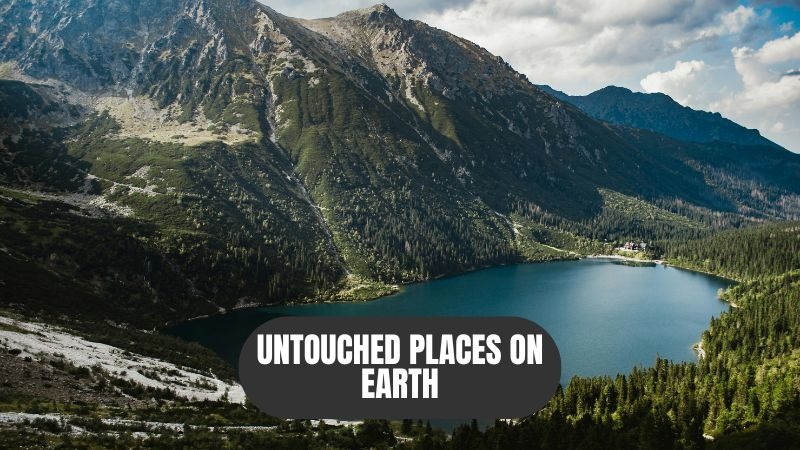
The concept of untouched places on earth refers to regions that have experienced minimal or zero direct human modification throughout recorded history. These extraordinary territories maintain ecological processes, geological formations, and biological communities in states closely resembling their natural condition before industrialization transformed global landscapes. Scientists define true wilderness through multiple criteria including absence of permanent human settlement, lack of infrastructure development, and maintenance of intact native species assemblages functioning without anthropogenic interference.
Research conducted by the Wildlife Conservation Society estimates that only approximately twenty three percent of Earth’s terrestrial surface remains in a condition that qualifies as wilderness. When ocean environments are included, the percentage of untouched places on earth shrinks even further as industrial fishing, shipping lanes, and deep sea mining operations expand into previously inaccessible marine territories. This rapid contraction of pristine environments makes documenting and protecting remaining wilderness areas among the most urgent conservation priorities of our generation.
Historical Perspective on Wilderness Exploration and Discovery
Human fascination with untouched places on earth stretches back to ancient civilizations when explorers ventured beyond known territories seeking resources, knowledge, and spiritual enlightenment. However, systematic scientific cataloguing of remote wilderness preservation areas only began during the eighteenth century when European naturalists launched expeditions into tropical interiors, polar regions, and oceanic archipelagos previously unmapped by Western cartographers.
The twentieth century witnessed an acceleration of exploration technology that dramatically reduced the number of genuinely unknown territories remaining on Earth. Aerial photography, satellite remote sensing, and eventually digital mapping systems revealed the geographical extent of every continent with unprecedented precision. Despite these technological advances, significant regions remain where human presence has never permanently established itself, preserving ecological conditions that provide invaluable scientific reference points for understanding how natural systems function without anthropogenic disturbance.
Terrestrial Regions That Remain Beyond Human Reach
Several remarkable terrestrial environments continue qualifying as untouched places on earth due to extreme geographical isolation, hostile climatic conditions, or deliberate governmental protection from development. These regions represent irreplaceable reservoirs of biodiversity hotspot protection that cannot be replicated or restored once disturbed.
The interior of Papua New Guinea’s highland forests contains valleys so geographically isolated that scientific expeditions regularly discover species completely unknown to Western science. Researchers exploring these regions have documented unique tree kangaroos, previously uncatalogued orchid species, and insect populations exhibiting evolutionary adaptations found nowhere else on the planet. These findings demonstrate why untouched places possess incalculable scientific value that extends far beyond their aesthetic or recreational appeal.
Uncontacted Indigenous Territories as Protected Wilderness
Some of Earth’s most effectively preserved wilderness exists within uncontacted indigenous territories where tribal communities have deliberately maintained isolation from modern civilization for centuries. The Brazilian Amazon alone contains an estimated one hundred uncontacted tribes whose territorial boundaries protect millions of hectares of primary rainforest from external encroachment more effectively than any governmental conservation program.
North Sentinel Island in the Indian Ocean represents perhaps the most famous example of untouched places on earth maintained through indigenous resistance to outside contact. The Sentinelese people have inhabited this island for an estimated sixty thousand years while rejecting every attempt at external communication. Their territorial integrity inadvertently preserves a complete island ecosystem in pristine condition that provides scientists with invaluable baseline data about undisturbed tropical island ecology and biodiversity hotspot protection functioning without modern human interference.
Deep Ocean Unexplored Regions and Their Hidden Ecosystems
While terrestrial wilderness receives the most public attention, deep ocean unexplored regions represent the largest category of untouched places on earth by total area. Over eighty percent of the global ocean floor remains unmapped at high resolution, and less than five percent has been directly observed by human eyes or robotic exploration vehicles. These abyssal environments harbor biological communities adapted to extreme pressure, perpetual darkness, and chemical energy sources completely independent of solar radiation.
Hydrothermal vent ecosystems discovered along mid ocean ridges support complex food webs based entirely on chemosynthetic bacteria rather than photosynthesis. These communities include species found nowhere else in the known biosphere, making deep ocean unexplored regions critical repositories of genetic diversity and evolutionary innovation that science has barely begun cataloguing systematically.
Polar Wilderness and Extreme Climate Refuges
Antarctica remains the most extensively protected wilderness continent on Earth through the Antarctic Treaty System that prohibits military activity, mineral mining, and permanent civilian settlement across its entire fourteen million square kilometer expanse. Interior regions of the Antarctic ice sheet represent untouched places on earth in their purest form, with ice cores revealing atmospheric conditions preserved undisturbed for over eight hundred thousand years.
Arctic wilderness regions across northern Canada, Siberia, and Greenland also maintain vast territories where permanent human presence has never established itself due to extreme climatic conditions. These polar environments serve as critical remote wilderness preservation zones that regulate global climate patterns, store enormous carbon reserves within permafrost soils, and support uniquely adapted species assemblages found nowhere else on the planet.
Critical Challenges Threatening Remaining Pristine Environments
Despite their remoteness, untouched places face mounting pressures from multiple interconnected threats that are progressively reducing the total area of genuinely undisturbed wilderness globally.
- Climate change is altering temperature and precipitation patterns across polar, alpine, and tropical wilderness regions faster than resident species can adapt or migrate to suitable alternative habitats
- Industrial resource extraction including deep sea mining, Arctic drilling, and tropical timber harvesting penetrates increasingly remote territories driven by growing global commodity demand
- Microplastic pollution has contaminated environments from the deepest ocean trenches to the highest mountain peaks, meaning even the most geographically isolated regions experience measurable anthropogenic chemical influence
- Satellite connectivity and social media exposure of previously unknown locations drives adventure tourism into fragile ecosystems unprepared for even minimal human visitation impacts
- Weakening international environmental agreements and inconsistent enforcement of protected area boundaries enables illegal encroachment into remote wilderness preservation zones across multiple continents
These escalating threats explain why untouched places on earth continue shrinking despite growing scientific awareness of their irreplaceable value.

Remarkable Examples of Recently Discovered Pristine Ecosystems
The Mozambique Channel expedition of 2019 discovered an entirely unknown deep sea coral ecosystem thriving at depths exceeding five hundred meters beneath the surface. This pristine underwater environment contained species assemblages never previously documented, demonstrating that significant untouched places on earth remain awaiting discovery even in relatively well studied ocean basins.
In 2013, researchers exploring the Palawan highlands in the Philippines discovered an underground river system extending over eight kilometers through limestone cave formations harboring unique biological communities completely isolated from surface ecosystems. This discovery reinforced scientific understanding that untouched places on earth exist not only in remote geographical extremes but also within hidden subterranean environments beneath apparently well explored landscapes.
Why Preserving Remaining Wilderness Demands Immediate Global Action
Protecting untouched places serves purposes extending far beyond romantic notions of pristine nature into practical scientific, medical, and climate stabilization necessities. Undisturbed ecosystems provide essential baseline data that researchers require for measuring human environmental impacts accurately and biodiversity hotspot protection maintaining genetic reservoirs that may contain solutions to future agricultural, pharmaceutical, and technological challenges.
Expanded satellite monitoring capabilities, international marine protection agreements, and strengthened indigenous territorial rights represent the most effective strategies currently available for remote wilderness preservation across both terrestrial and oceanic environments. Every individual who understands why untouched places on earth possess irreplaceable value becomes a more effective advocate for conservation policies, sustainable consumption practices, and international cooperation frameworks that can safeguard these extraordinary environments before expanding civilization permanently eliminates the last remaining deep ocean unexplored regions and pristine terrestrial wilderness areas from our planet forever.
Conclusion
The extensive scientific evidence explored throughout this article confirms that untouched places on earth represent humanity’s most precious and rapidly vanishing natural heritage demanding immediate global protection. From Papua New Guinea’s isolated highland forests to deep ocean unexplored regions harboring species unknown to science, these pristine environments provide irreplaceable ecological, scientific, and climate regulation services that no human technology can replicate or restore once destroyed.
Climate change, industrial resource extraction, microplastic contamination, and unregulated adventure tourism collectively accelerate the destruction of remote wilderness preservation zones across every continent and ocean basin simultaneously. The remarkable discoveries in Mozambique’s deep sea coral systems and Palawan’s underground river networks remind us that extraordinary biodiversity hotspot protection opportunities still exist within environments we have barely begun exploring.
However, understanding untouched places on earth also empowers meaningful preservation action. Supporting indigenous territorial rights, strengthening international marine protection agreements, and advocating for expanded satellite monitoring programs represent essential steps. Safeguarding untouched places requires urgent collective commitment because protecting these last pristine sanctuaries ultimately means preserving the ecological foundation sustaining all life on our planet.