
Across wetlands and peatlands worldwide, a silent yet destructive force is at work Peat fires. Unlike surface fires that burn vegetation above ground, peat fires smolder deep within the ground, often unnoticed until their impacts become severe.
Table of Contents
These underground fires can last for weeks, months, or even years, releasing massive amounts of carbon dioxide and toxic gases into the atmosphere. Despite their devastating ecological and human impacts, peat fires are less understood than wildfires, making them an urgent environmental challenge that deserves greater global attention.
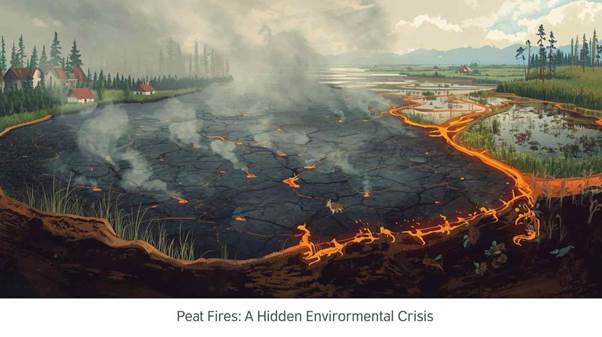
What Are Peat Fires?
Peat fires occur in peatlands, ecosystems rich in partially decomposed plant material that accumulates over thousands of years in waterlogged conditions. When these areas dry out due to drainage, deforestation, or prolonged drought, the organic material becomes highly flammable. Unlike typical forest fires, peat fires ignite below the surface, consuming layers of peat and leaving behind deep pits of ash and smoldering ground.
Because they burn underground, peat fires are difficult to detect and extinguish. They often re-emerge after being thought controlled, making them persistent and highly destructive.
Causes of Peat Fires
Several natural and human factors contribute to the ignition and spread of Peat fires:
- Drainage of peatlands for agriculture or development, which exposes dry peat to oxygen and makes it flammable.
- Deforestation, particularly in tropical regions, which removes the canopy that keeps peatlands moist.
- Drought conditions linked to climate change, reducing groundwater levels and drying out peat.
- Slash-and-burn farming practices, where fire used for land clearing can escape into peat soils.
- Lightning strikes, which can naturally ignite dry peatlands during hot, dry weather.
These causes often overlap, amplifying the intensity and scale of the fires.
Ecological Impacts of Peat Fires
The ecological consequences of Peat fires are profound. Peatlands are biodiversity hotspots, home to unique plants, insects, birds, and mammals. When fires sweep through, they not only destroy habitats but also release centuries’ worth of stored carbon. This loss destabilizes ecosystems and accelerates global warming.
Peatlands also act as natural water regulators. Their destruction through fire disrupts hydrological cycles, leading to reduced water retention, increased flooding, and degraded soil quality. Recovery of these ecosystems can take centuries, making the damage from peat fires nearly irreversible in human timescales.
Human Health and Economic Consequences
The smoke from Peat fires poses serious health risks. It contains fine particulate matter, carbon monoxide, and other toxic gases that contribute to respiratory illnesses, cardiovascular diseases, and reduced air quality. In densely populated regions like Southeast Asia, large peat fires have caused widespread haze events, disrupting schools, flights, and daily life for millions.
Economically, peat fires inflict billions of dollars in damages annually. They destroy farmland, reduce crop yields, and require costly firefighting operations. Tourism also suffers when smoke and haze blanket entire regions. For local communities, the fires often mean displacement, loss of income, and long-term health impacts.
Peat Fires and Climate Change
There is a dangerous cycle between Peat fires and climate change. As temperatures rise and droughts become more frequent, peatlands dry out, making them more vulnerable to ignition. At the same time, peat fires release enormous amounts of greenhouse gases, fueling global warming and further increasing fire risks.
Studies suggest that while peatlands cover only about 3% of Earth’s land area, they store nearly twice as much carbon as all the world’s forests combined. When burned, this carbon is released into the atmosphere, undermining global climate goals.
Global Hotspots of Peat Fires
Peat fires occur in many parts of the world, but some regions are more vulnerable:
- Indonesia: One of the most affected countries, where peatland drainage for palm oil plantations has led to recurring catastrophic fires.
- Russia and Siberia: Vast peat reserves ignite during hot summers, releasing massive amounts of carbon and smoke.
- Canada and Alaska: Northern peatlands increasingly face fire risks due to warming in Arctic regions.
- South America: Countries like Brazil face peatland fires linked to deforestation and agriculture.
These examples highlight the global scale of the problem, cutting across tropical, temperate, and Arctic regions.
Strategies to Prevent and Control Peat Fires
Tackling Peat fires requires both prevention and active management. Some effective strategies include:
- Rewetting drained peatlands to restore natural water levels and reduce fire risks.
- Banning or regulating land clearing by fire, especially in peat-rich regions.
- Community involvement in monitoring and firefighting, ensuring local knowledge guides responses.
- Early warning systems using satellites and drones to detect hotspots before they spread.
- Reforestation and restoration projects, which reestablish vegetation cover and protect peatlands.
Prevention is far more cost-effective than fighting fires once they start, making proactive measures crucial.
Policy and International Cooperation
Since many Peat fires produce cross-border haze and carbon emissions, international cooperation is essential. Agreements between neighboring countries can help manage shared risks, while global organizations support peatland restoration as part of climate mitigation strategies. Stronger laws protecting peatlands and stricter enforcement against illegal land burning are also key to long-term solutions.
At the same time, local communities need education and economic incentives to adopt sustainable practices. Without addressing the root causes such as unsustainable agriculture and peatland drainage peat fires will continue to be a recurring threat.
The Future Outlook
The future of Peat fires will largely depend on how effectively humanity manages peatlands in the face of climate change. If current practices continue, fires will grow in frequency and intensity, releasing more carbon and devastating more ecosystems. However, if global restoration efforts succeed, peatlands can act as powerful carbon sinks, helping to stabilize the climate.
Peatlands are not only valuable ecosystems but also critical allies in the fight against climate change. Protecting them from fire is not just an environmental priority it is a global necessity.
Conclusion
Peat fires are one of the most dangerous yet underrecognized environmental challenges of our time. They threaten biodiversity, human health, economies, and the global climate. While their causes are rooted in human activity and natural factors, solutions are within reach. Through prevention, restoration, and cooperation, societies can significantly reduce the risk of peat fires and safeguard these vital ecosystems.
Addressing peat fires is not simply about fighting underground blazes it is about protecting the Earth’s carbon reserves, ensuring clean air for millions, and creating a sustainable future in an era of climate uncertainty.