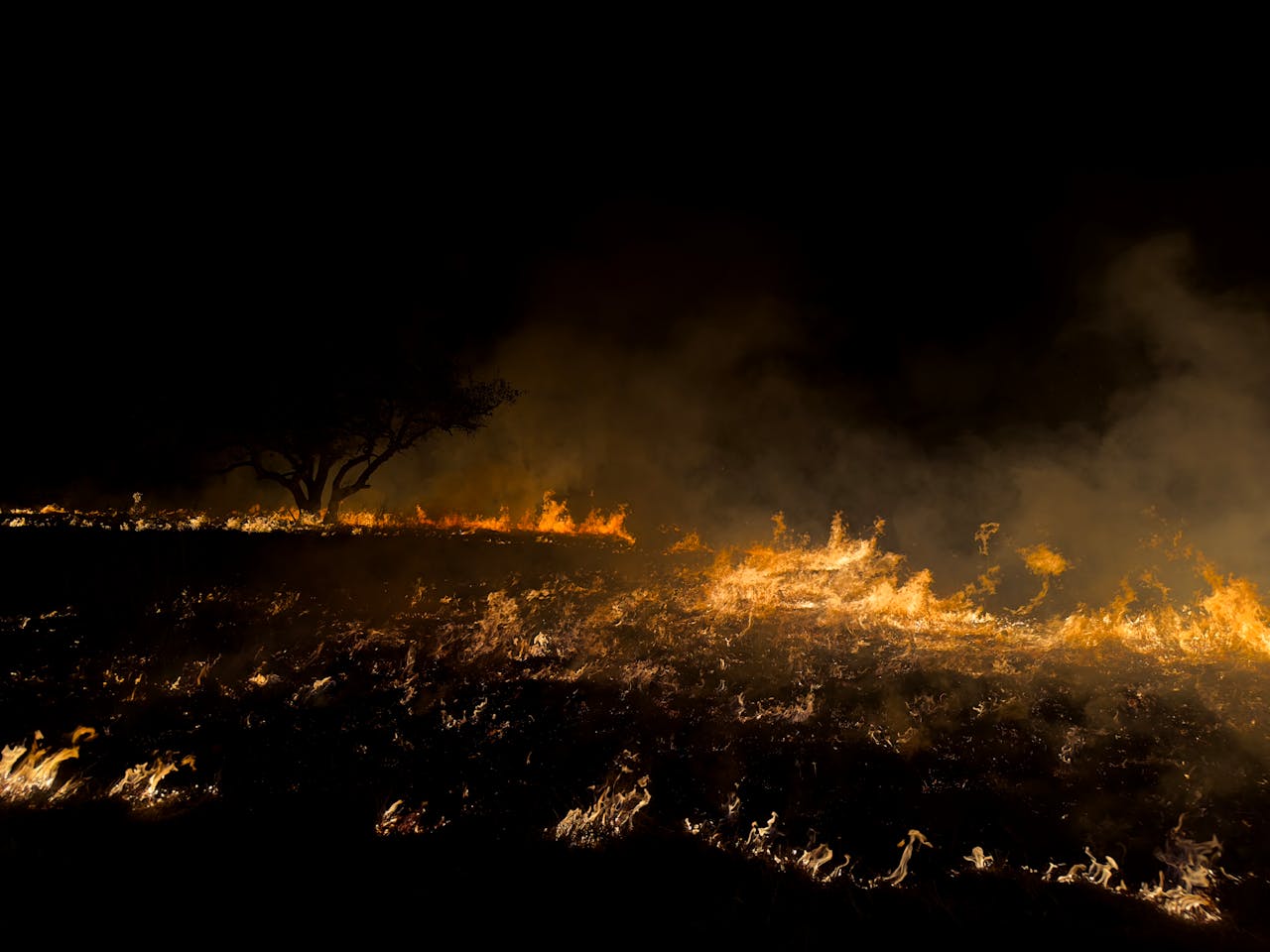
Peat fires are slow burning underground blazes that smolder through layers of carbon rich soil, often persisting for weeks, months, or even years without a visible flame. Unlike the towering wildfires that dominate news coverage, these ground level fires operate silently beneath the surface, consuming organic material that took thousands of years to accumulate. They release enormous volumes of greenhouse gases, choke entire regions with toxic haze, and destroy ecosystems that cannot recover within a human lifetime.
Table of Contents
According to the United Nations Environment Programme (UNEP), peatlands cover roughly 3% of Earth’s land surface but store twice as much carbon as all of the world’s forests combined. When those peatlands catch fire, the consequences ripple across continents.
This guide breaks down the science behind smoldering ground fires, explains why they are accelerating under climate change, and examines what can be done to stop them.
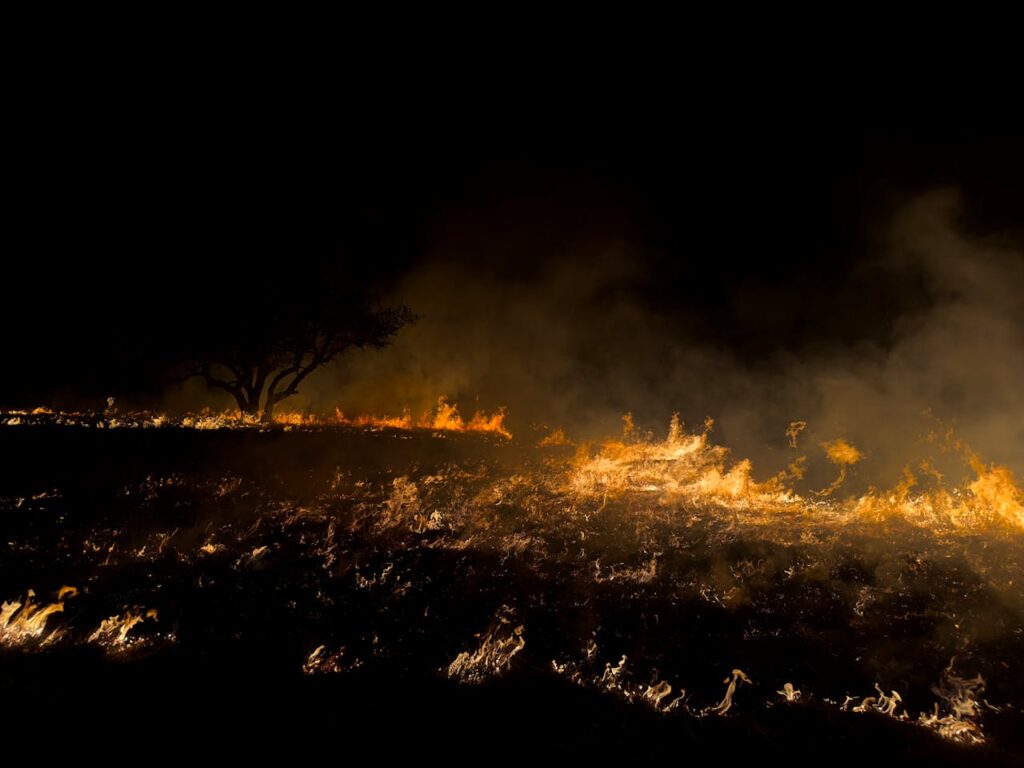
What Exactly Are Peat Fires and How Do They Start?
Peat fires are combustion events that occur within peatlands, which are wetland ecosystems where partially decomposed plant material has built up over millennia under waterlogged, oxygen poor conditions. When that waterlogged ground dries out through drainage, drought, or deforestation, the organic material becomes fuel.
What makes these fires distinct from surface wildfires is their combustion type. Peat fires are smoldering fires, meaning they burn at lower temperatures (around 500°C compared to 1,000°C+ for flaming fires) but consume far more organic mass per square meter. A 2026 study published in Science Advances by researchers at Lund University found that underground peat combustion in boreal forests can be underestimated by as much as 50% in satellite based fire databases because the burning happens beneath the visible surface.
Key triggers that ignite peat fires:
- Artificial drainage of peatlands for agriculture or palm oil plantations, which lowers the water table and exposes dry peat to oxygen
- Slash and burn land clearing, where surface fires escape downward into peat layers
- Prolonged drought, often intensified by El Niño events, which removes the moisture barrier protecting peat
- Rising temperatures from climate change, creating drier conditions across boreal and tropical peatlands
- Lightning strikes during extreme heat, which can ignite exposed dry peat in remote areas
These causes frequently overlap. In Southeast Asia, drainage canals dug for palm oil plantations make fires nearly five times more likely, according to research published in Nature Communications.
Why Are Peat Fires a Climate Emergency?
Peat fires are a climate emergency because peatlands are the planet’s largest terrestrial carbon vault, and burning them releases millennia of stored carbon in a matter of weeks.
Project Drawdown estimates that peatlands hold between 500 and 600 gigatons of carbon, making them second only to oceans as a carbon reservoir. Degraded peatlands already release close to 3 gigatons of CO₂ equivalent per year, which accounts for more than 10% of global fossil fuel emissions.
When fire enters the equation, the numbers spike dramatically. A 2025 study in Environmental Research Letters from the University of Cambridge found that in the United Kingdom alone, peatland fires caused up to 90% of the country’s total wildfire driven carbon emissions between 2001 and 2021, despite peatlands accounting for only about a quarter of the total area burned. The same study projected that peatland fire emissions would increase by at least 60% if global temperatures rise by 2°C.
Peat fires vs. forest fires: carbon impact comparison
| Factor | Peat Fires | Surface Forest Fires |
| Combustion type | Smoldering (underground) | Flaming (above ground) |
| Duration | Weeks to years | Hours to days |
| Carbon source | Millennia old organic soil | Living vegetation and litter |
| Detectability | Low (invisible to satellites) | High (visible flames and smoke) |
| Recovery timeline | Centuries to millennia | Decades |
| Methane output | Up to 10x higher | Lower |
The World Resources Institute has noted that peat fires may emit up to ten times more methane than fires on other land types, and that the combined warming impact of peat fires can be over 200 times greater than fires on non peat soils.
The 2015 Indonesia Peat Fire Catastrophe: A Case Study
The single most devastating peat fire event in recent history struck Indonesia in 2015, offering a stark illustration of what happens when peatland mismanagement collides with extreme drought.
During that year’s severe El Niño driven dry season, fires tore across 2.6 million hectares of Indonesian land, with more than half of the burning concentrated on drained peatlands in Sumatra and Kalimantan. A study published in Nature Communications estimated total economic losses at US$28 billion, equivalent to 3.3% of Indonesia’s GDP that year. The damages broke down to roughly 33% from land cover destruction, 40% from the cost of CO₂ emissions, and 26% from long term health impacts.
At the peak of the crisis, daily greenhouse gas emissions from Indonesia’s fires exceeded the daily output of the entire United States economy on 26 separate days, according to data from the Global Fire Emissions Database analyzed by the World Resources Institute.
What the 2015 Indonesia fires caused:
- Toxic transboundary haze that blanketed Singapore, Malaysia, and Thailand for months
- An estimated 12,000 premature deaths from fine particulate matter (PM2.5) exposure, based on modeling by researchers at the University of Leeds
- Over US$93.9 billion in cumulative economic losses across six major fire events between 2004 and 2015
- The establishment of Indonesia’s Peatland Restoration Agency (BRG) in 2016, tasked with restoring 2.49 million hectares of degraded peatland
The World Bank estimated the direct economic damage at US$16.1 billion, more than double what Indonesia spent on reconstruction after the 2004 tsunami.
How Peat Fires Affect Human Health
The health consequences of peat fires extend far beyond the immediate fire zone. Because smoldering peat generates thick, low lying smoke packed with fine particulate matter (PM2.5), carbon monoxide, methane, and ammonia, the health toll can affect populations hundreds of kilometers from the fire source.
A field study measuring emissions from Malaysian peat fires, summarized by Eos, found that researchers detected 12 distinct toxic gases in the smoke plumes, with emission intensity varying based on peat density and degradation level. Degraded peatlands, which have higher soil density from compaction, burn hotter and release more methane than intact peat ecosystems.
Documented health impacts from peat fire smoke:
- Respiratory illness: sharp increases in asthma, bronchitis, and pneumonia cases during haze events
- Cardiovascular stress: elevated rates of heart attacks and stroke linked to prolonged PM2.5 exposure
- Child and infant vulnerability: children exposed to peat fire haze show higher rates of acute respiratory infections
- Mental health effects: anxiety, depression, and economic stress among displaced communities
- Disruption of daily life: school closures, flight cancellations, and indoor confinement lasting weeks or months across affected regions
In regions like Southeast Asia, where tens of millions of people live within the smoke footprint of recurring peat fires, these health effects represent a slow moving public health crisis that receives far less attention than it warrants.
Ecological Destruction: What Peat Fires Leave Behind
Peat fires do not just burn fuel. They erase entire ecosystems that took millennia to form, and the damage is functionally irreversible on any timescale that matters to conservation planning.
Healthy peatlands act as biodiversity refuges, supporting specialized plant communities, migratory bird populations, freshwater fish species, and mammals like orangutans in tropical regions. They also function as natural sponges, regulating water flow by absorbing rainfall during wet seasons and releasing it slowly during dry periods.
When smoldering ground fires tear through these landscapes, the consequences cascade:
- Habitat collapse: unique bog and swamp forest species lose their only viable habitat, with no nearby ecosystem to migrate into
- Hydrological disruption: burned peatlands lose their water retention capacity, increasing downstream flooding during rains and worsening drought conditions in dry periods
- Soil loss: each fire event removes centimeters of peat that accumulated over hundreds of years, lowering the ground surface permanently
- Carbon feedback: destroyed peatlands shift from carbon sinks to carbon sources, continuing to release CO₂ for decades after the fire itself is extinguished
A 2026 study published in ScienceDaily, based on research from the University of Exeter, found that tropical peatland fires have now surged to their highest levels in at least 2,000 years. The researchers analyzed charcoal records preserved in peat across multiple continents and discovered that fire activity had actually been declining for over a millennium before human land use reversed the trend sharply in the 20th century.
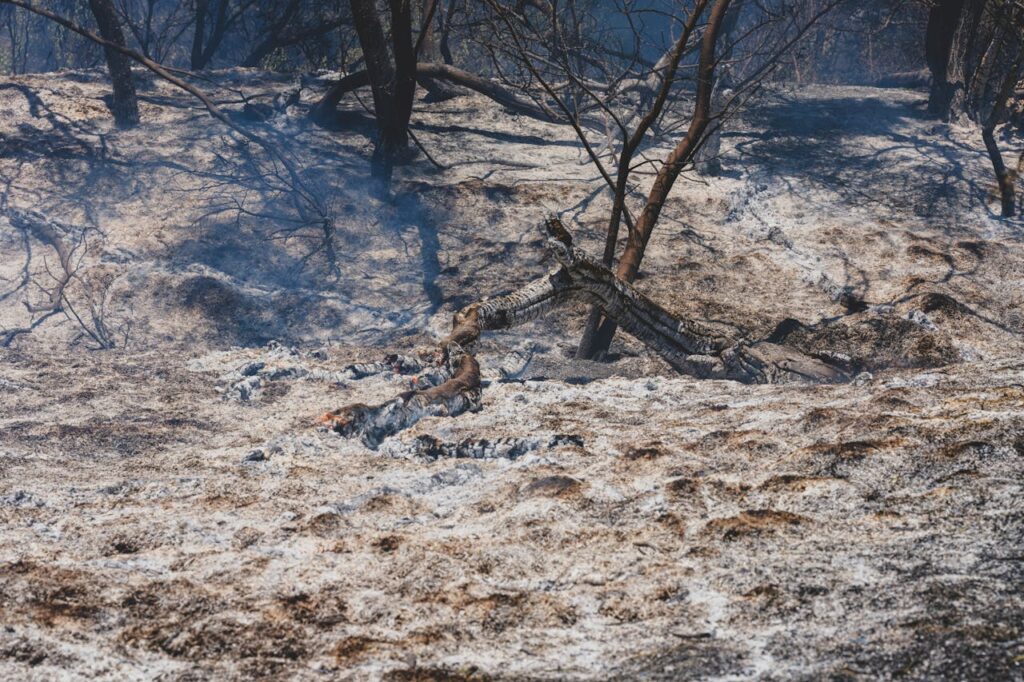
Global Peat Fire Hotspots Beyond Indonesia
While Indonesia dominates the headlines, peat fires are a worldwide phenomenon affecting boreal, temperate, and tropical regions alike.
Siberia and the Russian Arctic
A 2026 study in Science Advances mapped Siberian fire activity from 2001 to 2023 and found that peat fires accounted for up to one third of the total area burned. These fires released an estimated 1.24 petagrams of carbon, far exceeding what conventional fire databases had reported. Overwintering fires from the 2020 season contributed significantly to the massive 2021 fire year.
Canada
Canada holds roughly a quarter of the world’s peatlands. A 2024 model developed by Environment and Climate Change Canada, reported by CBC, estimated annual fire related peatland emissions at approximately 11.5 million tonnes, though individual severe seasons like 2021 saw emissions explode to 270 million tonnes. Critically, these peatland emissions are not yet included in Canada’s official wildfire statistics.
United Kingdom
Despite its small land area, the UK has experienced significant peat fire events. The University of Cambridge study referenced earlier estimated that 800,000 tonnes of carbon were emitted from UK peatland fires between 2001 and 2021, with single events like the 2019 Flow Country fire alone releasing 96,000 tonnes.
How to Prevent and Control Peat Fires
Prevention is overwhelmingly more effective than suppression when it comes to smoldering ground fires, because once peat ignites underground, it becomes extraordinarily difficult and expensive to extinguish.
Proven prevention strategies:
- Rewetting degraded peatlands by blocking drainage canals to raise water tables back to natural levels, which removes the conditions needed for ignition
- Banning fire based land clearing on peat soils and enforcing penalties for violations, particularly in palm oil producing regions
- Deploying early detection systems using satellite thermal imaging, drone surveillance, and soil moisture sensors to identify hotspots before they spread
- Engaging local communities in fire patrols and sustainable agriculture training, since smallholder farmers often lack affordable alternatives to burning
- Restoring native vegetation to re establish the canopy cover that keeps peatlands cool and moist
The Nature Communications study on Indonesian restoration modeled a scenario where 2.49 million hectares of degraded peatland had been restored before the 2015 fires. The results showed that restoration would have reduced the burned area by 6%, cut CO₂ emissions by 18%, lowered PM2.5 pollution by 24%, and prevented an estimated 12,000 premature deaths. The cost of that restoration program was projected at US$3.2 to 7 billion, a fraction of the US$28 billion in damages the fires actually caused.
Policy, Cooperation, and the Path Forward
Peat fire smoke does not respect national borders. The recurring transboundary haze crises in Southeast Asia have demonstrated that no single country can solve this problem alone. Regional frameworks like the ASEAN Agreement on Transboundary Haze Pollution exist, but enforcement remains inconsistent.
At the global level, organizations like the Global Peatlands Initiative, coordinated by UNEP, are working to bring countries together around peatland conservation as a core climate mitigation strategy. Project Drawdown ranks peatland protection and rewetting among the most impactful climate solutions available, estimating a potential emissions reduction of 25 to 40 gigatons of CO₂ equivalent by 2050 depending on adoption rates.
The path forward requires three things simultaneously: stronger legal protections for intact peatlands, significant investment in restoring degraded ones, and economic alternatives for communities that currently depend on drainage based agriculture.
Conclusion
Peat fires represent one of the most underestimated threats in the global climate and environmental landscape. They burn invisibly, persist for months, release carbon that took thousands of years to store, and devastate the health of millions of people living downwind. The science is now unambiguous: protecting peatlands is not optional if the world intends to meet its climate goals.
The encouraging reality is that solutions already exist. Rewetting programs work. Early detection technology is improving. And the economic case for prevention over suppression is overwhelming, as Indonesia’s US$28 billion lesson demonstrated in 2015.
What remains is political will and public awareness. If you found this guide valuable, consider sharing it to help more people understand why these invisible underground fires deserve the same urgency we give to the wildfires we can see.
How long can a peat fire burn?
Peat fires can smolder underground for weeks, months, or even years because they consume densely packed organic soil that burns slowly at low temperatures. Some boreal peat fires have been documented surviving through winter beneath snow cover and reigniting the following spring, a phenomenon researchers call “overwintering” or “zombie fires.”
Why are peat fires so hard to put out?
Because smoldering combustion happens below the ground surface, water applied from above often fails to penetrate deeply enough to reach the burning layer. Firefighters must saturate the soil to a significant depth, which requires enormous volumes of water that are rarely available in the remote, drained landscapes where peat fires typically occur.
What is the difference between a peat fire and a wildfire?
A wildfire burns vegetation above ground through flaming combustion, producing visible fire that spreads quickly and typically lasts hours to days. A peat fire burns organic soil underground through smoldering combustion, producing heavy smoke with no visible flame, and can persist for months while releasing far more carbon per unit of area burned.
Are peat fires getting worse because of climate change?
Yes. Rising global temperatures are causing longer and more severe droughts, which dry out peatlands and make them vulnerable to ignition. A 2025 University of Cambridge study projected that UK peatland fire emissions alone would increase by at least 60% under a 2°C warming scenario, and similar trends are observed across boreal and tropical peatlands worldwide.
Where do the worst peat fires occur?
The most destructive peat fires have occurred in Indonesia, where drainage for palm oil plantations has made vast peatland areas highly flammable. Siberia, Canada, and the United Kingdom are also major hotspots, with boreal and Arctic peatlands facing increasing fire risk as northern latitudes warm faster than the global average.
Can damaged peatlands recover after a fire?
Recovery is extremely slow. Unlike heathland or grassland that can regenerate within years, burned peatland takes centuries to millennia to reaccumulate the organic material lost in a single fire event. This is why prevention and rewetting are considered far more effective strategies than post fire restoration alone.