Arctic wildlife is under siege from the fastest regional warming event in recorded human history. Polar bears, ringed seals, caribou, walruses, and millions of migratory birds now confront habitat conditions that are shifting faster than any generation of these species has ever experienced.
The short answer to “how bad is it?” the National Oceanic and Atmospheric Administration (NOAA) confirmed in its 2025 Arctic Report Card, compiled by 112 researchers across 13 countries, that the twelve months ending September 2025 were the hottest the Arctic has recorded in over a century of climate monitoring.
This is not a forecast. It is a measurement.
Table of Contents
As someone who has tracked polar ecosystem research for over a decade, I wrote this guide to translate the latest peer-reviewed science into a clear picture of where Arctic species stand today, what projections suggest for coming decades, and which conservation strategies offer genuine hope.
How Rapidly Is the Arctic Changing Right Now?
The Arctic is warming roughly four times faster than the global average, making it the most rapidly destabilizing biome on Earth. March 2025 set a new record for the lowest maximum sea ice extent in the entire 47-year satellite record, according to NOAA’s Arctic Report Card.
Since the 1980s, the oldest and thickest sea ice formations that survived more than four years has declined by over 95%. Only fragmented remnants persist between northern Greenland and Canada’s high Arctic islands.
Simultaneously, warmer Atlantic currents are penetrating hundreds of miles deeper into the central polar ocean than historical norms allowed. This intrusion destabilizes the cold water layers that once insulated ice from below, accelerating melt from underneath.
Which Arctic Animals Are Most Threatened by Climate Change?
Ice-dependent species face the most immediate survival pressure. Polar bears, the most recognized symbol of Arctic fauna, rely on frozen ocean platforms to hunt, breed, shelter, and raise cubs. Research cited in the NOAA report shows that bears in Canada’s Baffin Bay region now spend an additional month stranded on shore compared to conditions three decades ago a direct consequence of ice forming later and breaking apart earlier.
The crisis extends well beyond bears. Here is a snapshot of the species facing the steepest declines:
| Species | Primary Threat | Observed Impact |
| Polar bears | Shortened ice-hunting seasons | Longer fasting periods, declining body condition |
| Ringed seals | Unstable pupping platforms | Increased pup mortality from premature ice breakup |
| Walruses | Loss of offshore ice haul-outs | Mass shore crowding causing calf trampling deaths |
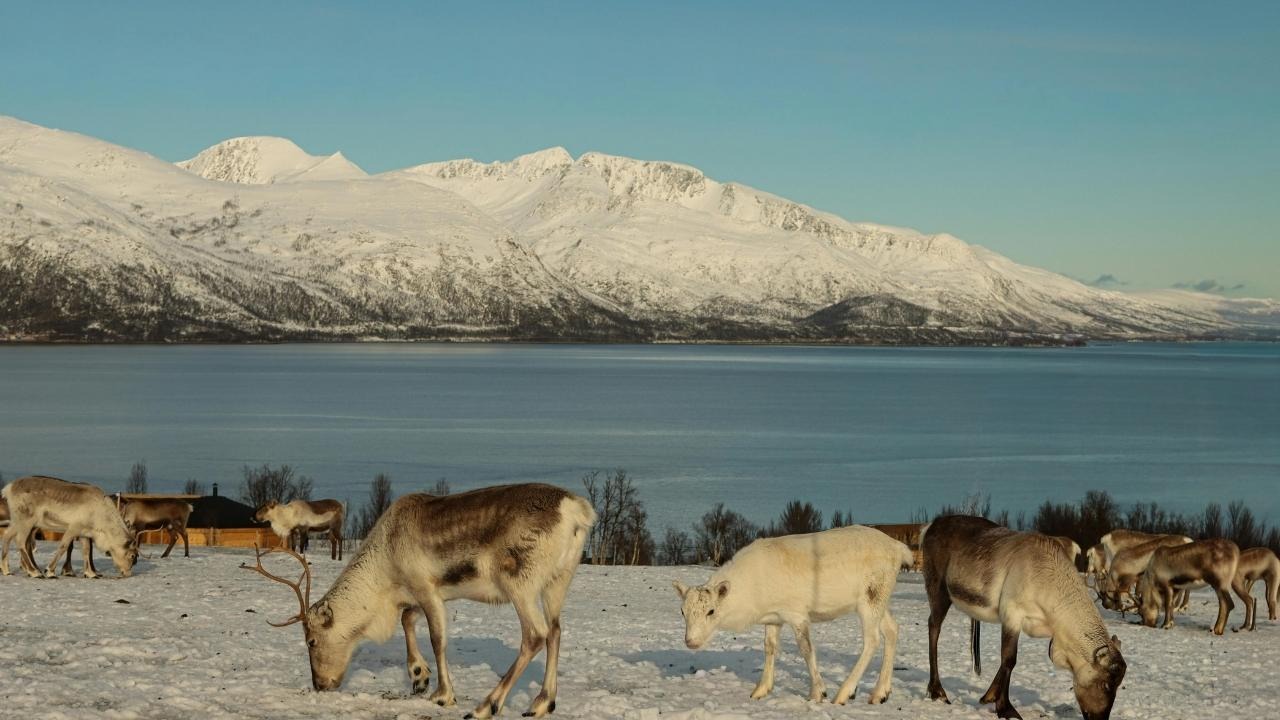
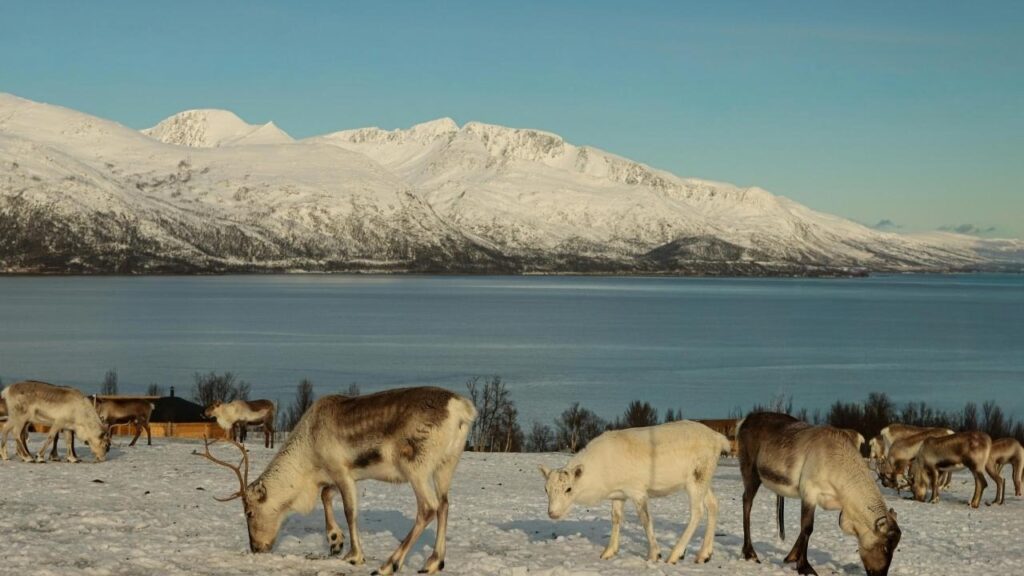
| Caribou/Reindeer | Rain-on-snow icing events | Herds declined over 50% since early 2000s per NOAA |
| Arctic foxes | Prey scarcity and habitat competition | Red foxes expanding northward into traditional range |
| Lemmings | Reduced protective snow cover | Higher predation rates destabilizing tundra food webs |
In the northern Bering and Chukchi seas, populations of native cold-water species have dropped by between one-half and two-thirds, while southern species steadily colonize these warming waters a phenomenon ecologists term “borealization.”
What Do Scientific Models Predict for Arctic Wildlife?
Leading climate projections suggest the Arctic could experience its first ice-free summer within the next ten to thirty years. Some models place that milestone before 2040.
Climate scientist Julienne Stroeve has warned that if global temperatures rise by 2.7°C above pre-industrial baselines, the polar north will face cascading consequences: permanent summer ice loss, accelerated Greenland glacier melt, and vast permafrost thaw releasing stored methane and carbon dioxide.
Food web modeling reveals that even small disruptions to zooplankton and crustacean populations could trigger outsized declines among apex predators like polar bears. These cascade dynamics make the Arctic ecosystem disproportionately fragile relative to its apparent vastness.
Under moderate emission scenarios, certain polar bear subpopulations face regional disappearance before 2100. Under aggressive decarbonization pathways, however, outcomes improve dramatically reinforcing that policy decisions made today directly determine which species survive.
What Conservation Strategies Are Protecting Polar Species?
Effective Arctic conservation now blends Indigenous ecological knowledge with satellite technology, genetic monitoring, and international policy coordination.
- Marine protected area networks are expanding across Arctic waters to shield critical feeding and breeding zones from industrial encroachment.
- Indigenous-led monitoring programs integrate generations of observational knowledge with modern data collection, producing richer ecological baselines than either approach achieves alone.
- Legislative habitat protections including proposed U.S. legislation to grant the Arctic National Wildlife Refuge the highest federal conservation status aim to block industrial development in irreplaceable breeding grounds.
- International shipping regulations coordinated through the International Maritime Organization (IMO) seek to reduce pollution, noise, and collision risk as newly ice-free routes attract commercial traffic.
- Targeted grant funding from organizations like the World Wildlife Fund (WWF) now supports on-the-ground research and stewardship projects protecting polar bears, walruses, seals, beluga whales, and seabird colonies across Alaska’s coast.
The Convention on Biological Diversity framework calls on nations to protect at least 30% of all land, ocean, and freshwater ecosystems by 2030 a target with direct implications for Arctic habitat preservation.
How Much Does Every Fraction of a Degree Matter?
Enormously. Holding global warming to 1.5°C above pre-industrial levels would preserve critical summer sea ice, maintaining hunting platforms for polar bears and pupping habitat for seals. Allowing temperatures to reach 2°C or beyond virtually guarantees routine ice-free summers and the ecological upheaval that follows.
Without dramatic emissions cuts, Arctic precipitation could increase 30–60% by 2100, temperatures could climb 13–15°C above current norms, and Greenland’s ice sheet could experience surface melting across four times more area than pre-industrial conditions according to projections compiled in the IPCC Sixth Assessment Report.
Conclusion: The Arctic’s Future Depends on Decisions Made Now
Arctic wildlife stands at a genuine inflection point. The science is unambiguous ice is vanishing, species ranges are shifting, and food webs are unraveling at a pace that outstrips most organisms’ capacity to adapt. Yet the research is equally clear that aggressive emissions reductions, expanded protected areas, and Indigenous-led stewardship can preserve functioning polar ecosystems.
Supporting organizations like WWF,Ocean Conservancy, and Defenders of Wildlife channels resources directly to field research and habitat protection. Reducing personal carbon output through transportation, energy, and dietary choices addresses the root driver of Arctic warming. Contacting elected officials about climate and conservation legislation multiplies individual impact into systemic change.
If this piece deepened your understanding of what Arctic species face, share it with someone who cares about wildlife. Informed conversations are where policy momentum begins.
How does climate change affect arctic wildlife?
Climate change shrinks sea ice that polar bears, seals, and walruses depend on for hunting, breeding, and resting. It also alters precipitation patterns, shifts prey availability, and allows southern species to invade traditional Arctic habitats, creating competition that native species are poorly equipped to handle.
Which arctic animals are most endangered by global warming?
Polar bears, ringed seals, and walruses face the most acute threats because their life cycles are directly tied to sea ice. Caribou herds have also declined by over 50% since the early 2000s due to icing events that block access to forage beneath snow.
What is borealization in the Arctic?
Borealization describes the northward expansion of subarctic and temperate species into polar waters and tundra as temperatures rise. This shift displaces native cold-adapted wildlife and fundamentally restructures food webs that evolved over thousands of years.
Can arctic wildlife adapt to a warming climate?
Some species show limited behavioral flexibility, but the pace of Arctic warming far exceeds the rate at which most polar organisms can evolve physiological or behavioral adaptations. Species with longer generation times, like polar bears and walruses, are especially vulnerable.
What can individuals do to help protect arctic ecosystems?
Reducing personal carbon emissions, supporting credible conservation organizations, and advocating for strong climate policy all contribute meaningfully. Even modest donations fund satellite tracking, habitat protection, and community-based research programs operating across the Arctic.
Will the Arctic become completely ice-free?
Scientific models project the Arctic could experience its first ice-free summer within ten to thirty years. Whether this becomes a permanent seasonal condition depends heavily on how quickly global greenhouse gas emissions decline over the next two decades.