
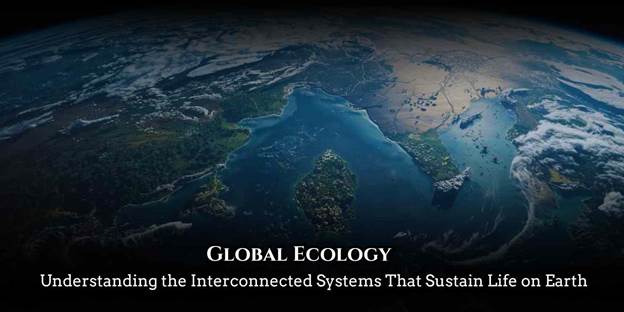
From the depths of the ocean to the highest mountain peaks, global ecology reveals how every living organism and natural system on Earth is intricately connected. It’s the scientific study of how ecosystems across continents, oceans, and the atmosphere interact to sustain life. In an era marked by climate change, biodiversity loss, and environmental degradation, understanding global ecology is more critical than ever.
This article explores how these interconnected systems function, why they matter, and what challenges threaten their balance. We’ll uncover the history, benefits, and real-world examples that show how ecological awareness can drive sustainability. By the end, you’ll see that global ecology is not just a scientific concept it’s the foundation of our planet’s resilience and future survival.
1. Global Ecology Defined: The Web That Connects All Life
At its core, global ecology studies the relationships among living organisms and their environments on a planetary scale. It bridges disciplines such as climate science, biodiversity, and ecosystem management to analyze how local actions affect global outcomes.
This field emerged from ecological and environmental research in the 20th century, expanding as scientists recognized that no ecosystem exists in isolation. For instance, deforestation in the Amazon influences rainfall patterns in Africa, while ocean currents affect global temperature and weather systems.
Understanding global ecology helps researchers predict how these interdependent systems respond to natural and human-made changes, allowing us to design strategies for a sustainable future.
2. A Brief History of Global Ecological Awareness
The idea of global ecology gained traction in the 1970s when environmental scientists began warning about planetary limits. Reports like The Limits to Growth and global summits such as the 1992 Earth Summit in Rio de Janeiro highlighted how industrial activities were straining ecosystems worldwide.
Key milestones include:
- The 1987 Montreal Protocol addressing ozone depletion
- The 2015 Paris Agreement focusing on climate stabilization
- The emergence of the UN Sustainable Development Goals (SDGs)
These initiatives reflect humanity’s growing understanding that protecting global ecology is essential for long-term economic and social stability.
3. Importance of Global Ecology in Today’s World
The study of global ecology plays a vital role in shaping sustainable development. It helps policymakers, scientists, and communities make informed decisions that balance human needs with environmental preservation.
Here’s why it matters:
- Biodiversity conservation: Maintaining species diversity ensures ecosystem resilience.
- Climate regulation: Forests, oceans, and wetlands act as carbon sinks.
- Resource management: Understanding ecological systems guides responsible use of water, land, and energy.
By embracing principles, nations can mitigate disasters, restore habitats, and build sustainable economies grounded in environmental balance.
4. Key Components of Global Ecological Systems
Every aspect of global ecology is built on interconnected subsystems that support planetary health. These include:
- Atmosphere – Regulates temperature and weather.
- Hydrosphere – Provides water cycles essential for all life.
- Biosphere – Encompasses all living organisms.
- Lithosphere – Supplies minerals and supports terrestrial ecosystems.
These systems interact constantly, forming an intricate feedback loop. When one element is disrupted such as by pollution or deforestation it ripples through the entire global ecology network.
5. Benefits of a Balanced Global Ecology
When the Earth’s ecosystems remain balanced, everyone benefits. The advantages of a stable global ecology include:
- Cleaner air and water for human health
- Stable food supplies through pollination and soil fertility
- Natural disaster mitigation through forests and wetlands
- Economic benefits from eco-tourism and renewable resources
In essence, a thriving global ecology enhances both environmental and societal well-being.

6. Major Challenges Facing Global Ecology Today
Despite its importance, global ecology faces escalating threats from human activities.
The main challenges include:
- Climate change causing temperature shifts and melting ice caps
- Deforestation disrupting carbon absorption and wildlife habitats
- Pollution poisoning land and marine ecosystems
- Biodiversity loss threatening food chains and ecological stability
Each challenge is interconnected, amplifying the urgency for coordinated global action. Addressing these issues requires innovative technology, conservation policies, and a cultural shift toward sustainability.
7. Real-World Examples of Global Ecological Cooperation
There are inspiring examples where countries and organizations have united to protect it.
- The Great Green Wall Project in Africa combats desertification by restoring degraded land.
- The Coral Triangle Initiative in Southeast Asia safeguards marine biodiversity.
- The European Green Deal promotes carbon neutrality and renewable energy transitions.
These efforts highlight how international collaboration can foster ecological resilience on a global scale.
8. The Future of Global Ecology and Sustainable Innovation
The future of global ecology depends on merging science, policy, and technology. Innovations such as AI-driven conservation tools, renewable energy systems, and satellite-based ecosystem monitoring are transforming how we protect the planet.
By integrating sustainable development and climate action, humanity can ensure that ecological balance remains intact for generations. Education and awareness will also play pivotal roles in motivating individuals and communities to act responsibly.
Conclusion
In summary, global ecology reminds us that life on Earth is bound by shared systems and mutual dependence. Protecting these interconnected networks ensures the planet’s resilience against environmental and human challenges. From biodiversity to climate balance, every choice we make affects the Earth’s living web. To safeguard our collective future, we must continue exploring and supporting global ecology through research, innovation, and conscious living. Learn more, take action, and become part of the global effort to sustain life on our extraordinary planet.