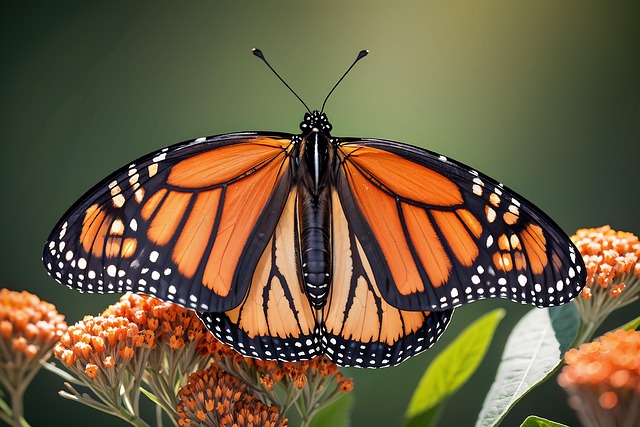
When people see the bright orange and black wings of monarch butterflies, the first thoughts that come to mind are beauty, transformation, and migration. However, another fascinating question often arises: Are monarch butterflies poisonous? The short answer is yes, monarch butterflies are indeed poisonous but not in a way that harms humans. Instead, their toxicity is nature’s built-in protection against predators, making them one of the most unique and resilient insects in the animal kingdom.
This article explores how monarch butterflies become poisonous, why it matters, and what role their toxicity plays in the balance of ecosystems.
How Do Monarch Butterflies Become Poisonous?
Monarch butterflies are not born poisonous on their own. Instead, they acquire their toxicity through their diet during the caterpillar stage. Monarch caterpillars feed almost exclusively on milkweed plants, which contain toxic chemical compounds known as cardenolides (or cardiac glycosides).
Related Article: Butterfly Wings: Nature’s Colorful Marvels
These compounds are bitter-tasting and can disrupt the heart function of animals that ingest them. While many insects cannot tolerate milkweed’s toxins, monarch caterpillars have evolved the ability to not only eat these plants safely but also store the toxins in their bodies.
As they grow and metamorphose into butterflies, the toxins remain in their tissues, making both the caterpillar and the adult butterfly poisonous to potential predators.
Are Monarch Butterflies Dangerous to Humans?
While monarchs are poisonous, they are not harmful to humans. Their toxins are stored in very small amounts, making them more of a deterrent to birds, frogs, lizards, and other insect-eating predators.
For people, touching or even accidentally handling a monarch butterfly does not pose a health risk. Unlike venomous creatures such as snakes or spiders, monarchs cannot inject toxins. In rare cases, if someone were to eat a monarch butterfly (which is highly unlikely), the toxins could cause mild nausea, vomiting, or an upset stomach.
So, to put it simply: monarch butterflies are poisonous to their predators but harmless to us.
Why Do Monarch Butterflies Need to Be Poisonous?
The toxicity of monarch butterflies serves as a critical survival strategy. Being slow flyers and relatively defenseless, monarchs would otherwise make easy meals for birds and other predators. The bitter taste and poisonous compounds stored in their bodies teach predators to stay away.
Birds, for instance, quickly learn to associate the bright orange-and-black wing pattern of monarchs with an unpleasant experience. After a few bad encounters, they usually avoid monarch butterflies altogether. This defense mechanism is known as aposematism, where bright colors serve as warning signs of danger or toxicity.
Monarch Butterflies and Mimicry
Interestingly, monarchs are not the only butterflies to benefit from this poisonous reputation.The viceroy butterfly has an orange and black pattern that makes it look very similar to the monarch.However, viceroys are not as toxic. By mimicking the monarch’s appearance, they gain protection, since predators often confuse them with their poisonous look-alikes.
This natural phenomenon, known as Batesian mimicry, is a powerful example of how evolution shapes survival strategies across species.
Do All Monarchs Have the Same Level of Poison?
Not all monarch butterflies carry the same amount of toxins. The level of poison in their bodies depends on the type of milkweed they consumed as caterpillars.
· Some species of milkweed have higher concentrations of cardiac glycosides, making monarchs that fed on them more toxic.
· Monarchs feeding on less toxic varieties may still deter predators, but their defense is weaker compared to those raised on stronger milkweed.
This variation in toxicity shows how interconnected monarch survival is with the plants they depend on.
What Happens to Predators That Eat Monarchs?
When predators, such as birds, attempt to eat a monarch butterfly, they usually spit it out after tasting the bitterness. In some cases, the toxins cause mild poisoning symptoms like vomiting or lethargy. This experience is often enough to prevent predators from attacking monarchs again.
Over time, the local wildlife learns to avoid monarch butterflies entirely, which increases the chances of survival for the entire population.
The Role of Monarchs in the Ecosystem
Even though monarch butterflies are poisonous, they play a vital role in ecosystems. They are important pollinators, helping plants reproduce by transferring pollen as they feed on nectar. Their long migrations across North America also contribute to biodiversity by supporting various habitats.
Furthermore, monarchs serve as an example of how delicate natural systems are. Their reliance on milkweed for both food and protection highlights the importance of preserving natural habitats for the survival of species.

Conservation Concerns
Despite their unique defense mechanisms, monarch butterflies face serious challenges today. Habitat destruction, climate change, and the widespread use of pesticides are reducing the availability of milkweed, threatening the monarch’s life cycle.
If milkweed populations decline further, monarchs may lose their primary source of poison and protection, making them even more vulnerable to predators. Protecting monarchs and their habitats is not just about saving a butterfly it’s about maintaining balance in nature.
Final Thoughts: Are Monarch Butterflies Poisonous?
So, are monarch butterflies poisonous? Yes, they are but only in a way that protects them from predators, not in a way that endangers humans. Their ability to store toxins from milkweed plants is a fascinating survival adaptation, showcasing the wonders of nature’s design.
To humans, monarchs represent harmless symbols of grace, migration, and endurance.. Their toxicity is simply another reminder of how every species has a unique role to play in the natural world. By protecting monarchs and their habitats, we ensure that future generations can continue to marvel at these incredible creatures.