In today’s rapidly changing world, renewable resources are reshaping how industries operate, innovate, and grow. From energy and transportation to agriculture and manufacturing, businesses across the globe are embracing renewable resources to cut costs, enhance efficiency, and reduce carbon emissions. As climate change pressures mount and sustainability becomes a competitive advantage, renewable resources are no longer an option they’re a necessity.
Table of Contents
This article explores how renewable resources are transforming global industries, their historical rise, economic importance, and the benefits they offer. We’ll also look at key challenges and real-world examples that highlight how renewable resources are driving industrial evolution. Whether you’re an entrepreneur, policymaker, or sustainability enthusiast, understanding this green revolution will show how renewable resources are powering a cleaner, smarter, and more resilient global economy.
1. Renewable Resources Defined: The Foundation of Sustainable Growth
(from section: Definition and Overview)
Renewable resources refer to natural energy sources that regenerate over time like solar, wind, water, and biomass. Unlike fossil fuels, which deplete and pollute, renewable resources provide an endless, eco-friendly energy supply.
Examples of Major Renewable Resources:
• Solar power from sunlight
• Wind energy from air movement
• Hydropower from water flow
• Biomass energy from organic matter
• Geothermal heat from the Earth’s core
These renewable resources are the backbone of industrial transformation, enabling companies to replace polluting fuels with clean, sustainable alternatives that protect the planet while ensuring long-term energy security.
2. Historical Evolution: From Fossil Dependence to Renewable Innovation
(from section: Background and Development)
The industrial world was built on coal and oil, but as environmental and economic costs grew, renewable resources emerged as a sustainable alternative. The 20th century saw early investments in solar and hydropower, but true transformation began in the 21st century with technological breakthroughs and global climate policies.
Key Milestones in Renewable Energy Development:
• 1970s: The oil crisis sparked interest in alternative energy.
• 1990s: Renewable technologies began gaining efficiency and affordability.
• 2010s: Solar and wind power achieved cost parity with fossil fuels.
• 2020s: Major corporations commit to 100% renewable energy goals.
This evolution illustrates how renewable resources shifted from experimental concepts to the driving force behind industrial sustainability and innovation.
3. Importance of Renewable Resources in Global Industries
(from section: Importance and Relevance)
Today, industries rely on renewable resources to meet sustainability goals, reduce costs, and gain market trust. Renewable energy adoption supports both environmental protection and long-term economic resilience.
Why Renewable Resources Matter:
• Reduce greenhouse gas emissions and air pollution
• Enhance energy security by diversifying supply sources
• Create new economic opportunities and green jobs
• Boost brand reputation and consumer trust
From manufacturing to transportation, renewable resources play a vital role in achieving a balanced, sustainable economy where productivity and ecology coexist.

4. Renewable Resources in Action: Transforming Key Industries
Manufacturing Industry
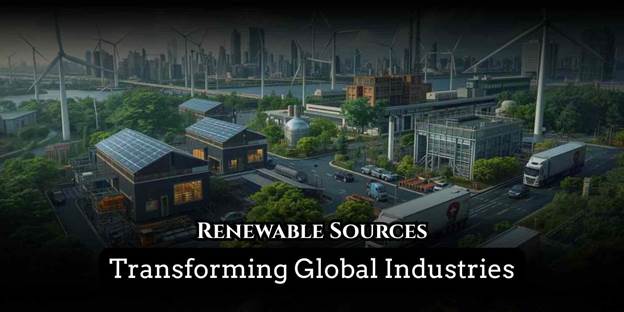
Factories are integrating renewable resources such as solar panels and wind turbines to power production lines. This shift not only lowers operational costs but also aligns with sustainability standards demanded by consumers and investors.
Transportation Sector
Electric vehicles (EVs) powered by renewable energy are revolutionizing global transportation. Biofuels derived from renewable resources like corn, sugarcane, and algae are also replacing traditional fossil fuels.
Agriculture
Farms now rely on solar irrigation, biomass energy, and wind-powered machinery, enabling eco-friendly food production while minimizing environmental impact.
Technology and Data Centers
Tech giants like Google and Apple have adopted renewable resources to power their massive data centers, aiming for carbon neutrality across their global operations.
These examples demonstrate that renewable resources are transforming industrial infrastructure, reshaping how the world works and produces energy.
5. Benefits of Renewable Resources in Industry Transformation
(from section: Benefits and Opportunities)
The rise of renewable resources offers profound benefits for industries and societies alike.
Major Advantages:
- Environmental Protection: Cleaner air and reduced emissions.
- Cost Efficiency: Long-term savings from lower energy expenses.
- Job Creation: Millions of green energy jobs worldwide.
- Innovation Catalyst: New technologies emerging across sectors.
- Global Competitiveness: Businesses gain credibility and market share through sustainability.
By investing in renewable resources, industries are not only cutting costs but also leading the global push toward a sustainable, future-ready economy.
6. Challenges in Adopting Renewable Resources
(from section: Challenges and Barriers)
Despite their benefits, industries face obstacles in fully transitioning to renewable resources.
Key Challenges:
• Initial Investment Costs: Building solar or wind facilities requires substantial capital.
• Intermittent Supply: Sunlight and wind availability vary by region and season.
• Infrastructure Gaps: Aging grids and inadequate storage limit renewable integration.
• Policy and Regulation: Inconsistent government incentives can slow progress.
Overcoming these barriers demands global cooperation, public-private partnerships, and continued innovation to make renewable resources more accessible and reliable worldwide.
7. The Future of Renewable Resources: Innovation and Expansion Ahead
(from section: Future Trends and Technological Advances)
The future of renewable resources looks promising as industries adopt cutting-edge technologies to maximize efficiency and accessibility.
Emerging Trends Driving the Future:
• Green Hydrogen: A cleaner fuel alternative transforming heavy industries.
• AI and Smart Grids: Optimizing energy distribution and reducing waste.
• Advanced Battery Storage: Solving the problem of energy intermittency.
• Circular Economy Models: Recycling and reusing renewable materials for sustainability.
As these innovations mature, renewable resources will continue to redefine industrial landscapes creating a smarter, greener, and more sustainable global economy.
Conclusion
The transformation powered by renewable resources is revolutionizing global industries. From energy and transport to manufacturing and technology, every sector is rethinking operations through the lens of sustainability. While challenges remain, the growing commitment to renewable resources ensures a cleaner and more resilient future. The industries that invest now will lead tomorrow’s green revolution. Stay informed, support sustainable initiatives, and embrace the renewable era the world’s next industrial evolution depends on it.