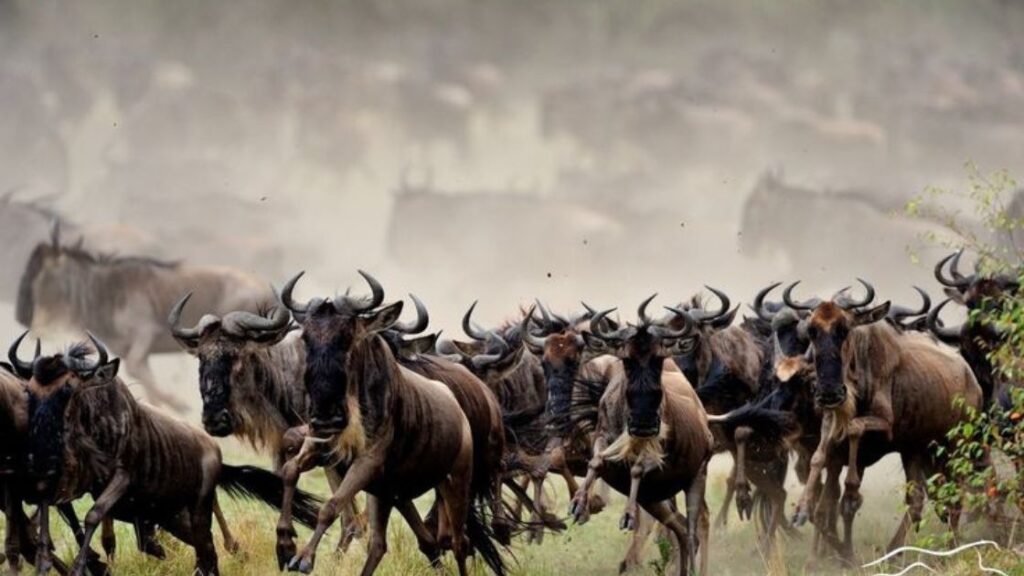
Every year, over 1.5 million wildebeest begin their legendary wild beast migration across the Serengeti-Mara ecosystem, creating one of nature’s most breathtaking spectacles. But have you ever wondered why these animals follow the exact same path, year after year, across hundreds of kilometers of African savanna?
As a wildlife biologist who has studied this phenomenon for decades, I can tell you the answer lies in a fascinating combination of ancient instincts, seasonal rainfall patterns, and the endless search for fresh grazing lands. This annual journey is not random it follows a precise route dictated by survival.
In this article, we will explore the science behind the great wildebeest movement, examine the Serengeti migration cycle, understand river crossing dangers, and discover how climate patterns influence this incredible African wildlife safari experience.
What Is the Wild Beast Migration?
The wild beast migration refers to the annual circular movement of approximately 1.5 million wildebeest, along with hundreds of thousands of zebras and gazelles, across the Serengeti National Park in Tanzania and Kenya’s renowned Masai Mara National Reserve. This remarkable journey covers nearly 800 kilometers and is driven by the animals’ instinctive search for fresh pastures and water sources.
Unlike seasonal migrations of birds that travel from one continent to another, this African wildlife phenomenon is a continuous clockwise movement. The herds never truly stop moving, making it the largest overland migration on Earth. Scientists consider this event a living example of how ecosystems function when left undisturbed by human interference.
Historical Background of This Natural Phenomenon
The wildebeest migration has been occurring for thousands of years, long before humans began documenting it. Archaeological evidence suggests that these animals have followed similar routes since the Pleistocene era. Early Maasai tribes witnessed this spectacle and incorporated it into their cultural traditions and seasonal calendars.
European explorers first documented the wild beast migration in the late 1800s, though they initially underestimated its scale. It was not until aerial surveys in the 1950s that researchers truly understood the magnitude of this annual movement. Today, conservation efforts protect these ancient pathways from development and human encroachment.
Why Do Wildebeest Follow This Specific Route?
The Role of Seasonal Rainfall Patterns
Rainfall is the primary driver behind the migration route. Wildebeest possess an extraordinary ability to detect thunderstorms from distances exceeding 50 kilometers. Their keen senses guide them toward areas where rain has recently fallen, ensuring access to nutritious new grass growth.
The Serengeti ecosystem experiences two distinct rainy seasons. The short rains arrive between November and December, while the long rains fall from March through May. These precipitation patterns create a predictable cycle of grass growth that the herds follow with remarkable precision.
Grazing Lands and Nutritional Needs
Wildebeest require specific nutrients found in young grass shoots, particularly phosphorus and nitrogen. The migration route takes them through areas where soil composition and rainfall timing produce the most nutritious vegetation. Pregnant females especially need these minerals during calving season in the southern Serengeti plains.
The wild beast migration timing ensures that herds arrive at each location when grass quality peaks. This biological synchronization has evolved over millennia, creating a perfect balance between animal movement and vegetation regeneration cycles.
The Annual Migration Cycle Explained
Understanding the complete Serengeti migration cycle helps visitors plan their safari experiences effectively. The complete migration cycle moves through distinct seasonal phases:
- January to March brings calving season in the southern Serengeti where over 500,000 calves are born within weeks of each other on the nutrient rich plains.
- April to May sees the herds beginning their northward movement as southern grasses dry out and the long rains shift precipitation patterns.
- June to July features the dramatic Grumeti River crossings where crocodiles await and many animals face their greatest dangers.
- August to October brings the famous Mara River crossings as herds enter Kenya’s Masai Mara seeking fresh grazing lands.
- November to December marks the return journey southward as short rains trigger new grass growth in Tanzania once again.
Key Challenges Facing the Migration
Natural Predators and River Crossings
The journey presents numerous life threatening obstacles. Lions, cheetahs, leopards, and hyenas follow the herds constantly, picking off weak or young animals. However, river crossings pose the greatest single danger during the wild beast migration experience.
The Mara River alone claims thousands of wildebeest annually. Strong currents, steep banks, and massive Nile crocodiles create deadly bottlenecks. Yet these crossings also demonstrate remarkable herd behavior, as animals work together to find safe passages.
Human Impact and Conservation Concerns
Modern challenges increasingly threaten this ancient phenomenon. Expanding agriculture, new roads, and proposed developments could fragment the migration corridor. Climate change also affects rainfall predictability, potentially disrupting the delicate timing that makes this wild beast migration possible.
Conservation organizations work tirelessly to protect critical pathways and maintain wildlife corridors between protected areas. Their efforts ensure future generations can witness this extraordinary natural spectacle.
Conclusion
The wild beast migration stands as one of nature’s most extraordinary spectacles, demonstrating the powerful connection between wildlife and their environment. Throughout this article, we explored how seasonal rainfall patterns, nutritional needs, and ancient instincts guide over 1.5 million wildebeest across the Serengeti Mara ecosystem each year.
Understanding this remarkable African wildlife phenomenon helps us appreciate why conservation efforts remain crucial. Protecting migration corridors, river crossing points, and grazing lands ensures this wild beast migration continues for generations. Whether you plan a safari adventure or simply admire from afar, this natural wonder reminds us of Earth’s incredible biodiversity and the delicate balance sustaining it.