Whale migration season is arguably the most dramatic wildlife spectacle the ocean has to offer. Every year, millions of travelers search for the best time to see whales, the top cetacean viewing destinations, and responsible ways to witness humpbacks, grays, blues, and southern rights as they navigate ancient oceanic corridors between polar feeding grounds and tropical breeding waters.
This guide is built on verified marine science, firsthand observation, and data from leading conservation bodies everything you need to plan a whale watching trip that’s both unforgettable and ecologically responsible.
Table of Contents
The core driver behind annual whale migration is a biological balancing act. Cold, high-latitude seas near the Arctic and Antarctic teem with krill and schooling fish during summer, giving whales the energy reserves they need. Warmer tropical and subtropical waters, by contrast, provide calmer, predator-scarce nurseries where females can safely deliver and nurse newborn calves.
According to NOAA’s National Marine Fisheries Service, North Pacific humpback populations routinely swim approximately 3,000 miles one way between Alaskan feeding zones and Hawaiian breeding lagoons. The eastern Pacific gray whale pushes that range even further the American Cetacean Society documents round-trip journeys of roughly 10,000 to 12,000 miles, ranking it among the longest mammal migrations ever recorded on Earth.
A 2025 study published in the journal Ecology and co-authored by Dr. Olaf Meynecke of Griffith University found that traditional satellite tracking methods may underestimate actual whale travel distances by up to 20 percent once Earth’s curvature is factored in. That means some humpback whales migrating between South American breeding grounds and Antarctic feeding areas could cover as much as 14,000 kilometers in a single season.
Researchers at Oregon State University’s Marine Mammal Institute suggest whales navigate using a sophisticated blend of Earth’s magnetic field, ocean temperature gradients, underwater topography, and possibly even celestial cues a natural GPS system refined over millions of years of evolution.
How to Identify Key Whale Species During Migration
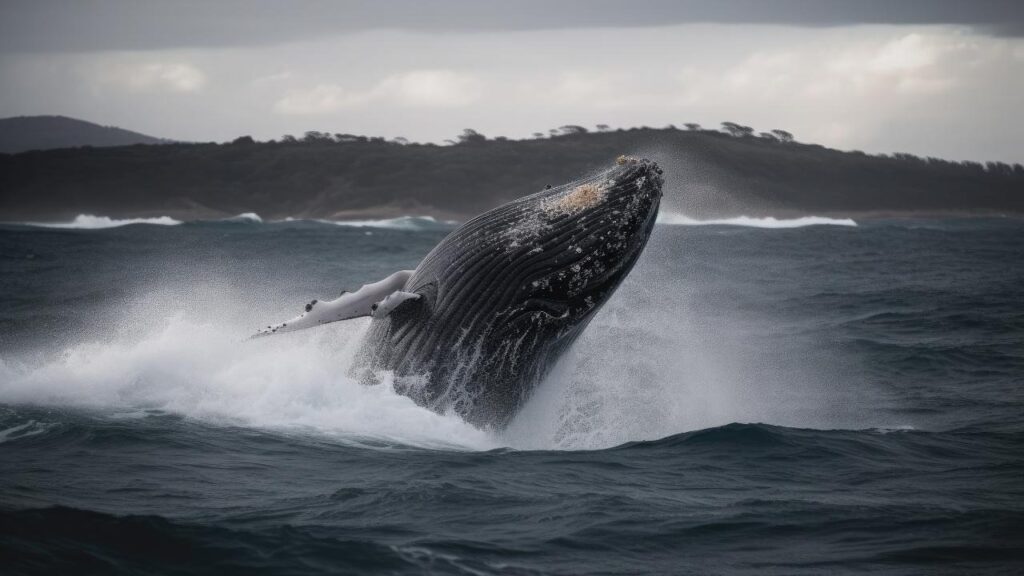
Knowing what you’re looking at transforms a good sighting into a great one. The table below provides a quick visual identification reference for the five species most commonly encountered during whale migration season.
| Species | Average Adult Length | Blow Shape | Key Visual Feature | Typical Migration Distance |
| Humpback whale | 40–52 ft | Bushy, balloon-shaped | Long white pectoral fins, knobby head | ~6,000 miles round trip |
| Gray whale | 43–49 ft | Heart-shaped (twin blowholes) | Mottled gray skin with barnacle patches | ~10,000–12,000 miles round trip |
| Blue whale | 70–90 ft | Tall, narrow column (up to 30 ft) | Mottled blue-gray body, tiny dorsal fin | ~4,000–5,000 miles round trip |
| Southern right whale | 45–55 ft | V-shaped (widely spaced blowholes) | White callosities on head, no dorsal fin | ~3,000–5,000 miles round trip |
| Orca (killer whale) | 20–26 ft | Low, bushy puff | Black-and-white coloring, tall dorsal fin | Variable food-driven, not fixed route |
Recognizing blow patterns from a distance is often the fastest way to identify a species before the animal fully surfaces a practical tip that experienced naturalist guides emphasize on every tour.
When Is Peak Whale Watching Season? A Month-by-Month Breakdown
Timing is the single biggest factor separating a successful cetacean encounter from an empty horizon. The seasonal calendar below maps each major destination to its peak activity window, primary species, and recommended viewing format.
| Destination | Peak Months | Key Species | Best Viewing Style |
| Maui & Big Island, Hawaii | Dec – Apr | Humpback whale | Boat tour, shore-based overlook |
| Monterey Bay, California | Jun – Sep (blue/humpback); Dec – Apr (gray) | Blue, humpback, gray whale | Marine biologist-led boat tour |
| San Ignacio Lagoon, Baja Mexico | Jan – Mar | Gray whale | Small panga boat (close encounters) |
| Inside Passage, Alaska | May – Sep | Humpback, orca | Cruise ship, sea kayak |
| Hermanus, South Africa | Jun – Nov | Southern right whale | Cliff-top trail, boat tour |
| East Coast, Australia | May – Nov | Humpback whale | Headland lookout, boat tour |
| Kaikoura, New Zealand | Year-round (sperm); Jun–Jul (humpback) | Sperm, humpback whale | Boat tour, scenic flight |
| Húsavík, Iceland | Apr – Oct | Humpback, minke, blue whale | Traditional oak sailing vessel |
Shoulder weeks on either edge of peak season often deliver memorable sightings with fewer crowds and lower tour prices a budget-friendly approach worth considering.
Top Five Whale Migration Destinations Ranked by Experience Quality
- Hawaii (Maui Nui Basin) The shallow, warm channel between Maui, Lānaʻi, and Kahoʻolawe functions as a nursery for an estimated 10,000 humpbacks each winter, according to the Hawaiian Islands Humpback Whale National Marine Sanctuary. During my own February visit, shore-based viewing from Papawai Point produced over a dozen breaches in a single hour without setting foot on a boat proof that world-class sightings don’t always require a tour ticket.
- Baja California, Mexico Gray whale mothers in San Ignacio Lagoon regularly approach small panga boats, a behavior marine biologists describe as “friendly whale” interaction. Holding still while a curious calf surfaces inches from the hull is an encounter that fundamentally changes how you see these animals.
- Hermanus, South Africa A dedicated whale crier patrols the town’s Walker Bay cliffs daily during season, alerting visitors by blowing a kelp horn when southern right whales surface. South African Tourism consistently ranks Hermanus among the world’s finest land-based cetacean observation points.
- Monterey Bay, California Seasonal upwelling along the Monterey Submarine Canyon creates one of the planet’s richest marine feeding zones, attracting blue whales the largest animals ever to exist. The Monterey Bay National Marine Sanctuary protects this biodiversity engine.
- Húsavík, Iceland Often called Europe’s whale watching capital, Húsavík delivers humpback, minke, and occasional blue whale sightings against volcanic fjord backdrops, with tour operators reporting sighting success rates above 95 percent during peak summer months.
Understanding Major Whale Migration Routes
Marine scientists and the WWF-backed BlueCorridors.org platform which combines over 3.2 million kilometers of satellite tracking data from more than 1,400 individually tagged whales have identified several critical migratory highways:
| Migration Corridor | Route Description | Primary Species |
| Eastern Pacific Gray Whale Route | Arctic Alaska → Baja California, Mexico (coastal) | Gray whale |
| North Pacific Humpback Corridor | Alaska → Hawaii / Mexico / Central America | Humpback whale |
| Southern Ocean Humpback Passage | Antarctic Peninsula → Ecuador / Colombia / Costa Rica | Humpback whale |
| Western Indian Ocean Pathway | Antarctic waters → Madagascar / Mozambique | Humpback whale |
| South Atlantic Right Whale Arc | Sub-Antarctic feeding zones → South Africa / Argentina | Southern right whale |
The BlueCorridors initiative, launched ahead of the 2025 UN Ocean Conference, reveals how human threats like ship strikes, fishing gear entanglement, and underwater noise pollution overlap dangerously with these corridors making conservation-conscious travel choices more important than ever.
How Much Does Whale Watching Cost? A Destination Price Guide
Budget is a real factor in planning any wildlife trip. The table below provides approximate adult ticket ranges based on publicly listed 2025–2026 operator pricing across major destinations.
| Destination | Typical Adult Price Range | Tour Duration | Notes |
| Oahu / Maui, Hawaii | $49 – $150 | 1.5 – 3 hours | Peak season (Jan–Mar) sells out fast |
| Monterey Bay, California | $65 – $125 | 3 – 5 hours | Marine biologist-led tours at higher end |
| Seattle / San Juan Islands, WA | $129 – $155 | 4 – 5 hours | Whale sighting guarantees common |
| Dana Point, California | $55 – $185 | 2 – 3.5 hours | Unique underwater viewing pod option |
| Baja California, Mexico | $150 – $350 | Half-day to full-day | Includes panga boat lagoon access |
| Hermanus, South Africa | $40 – $90 | 2 hours | Land-based viewing is free |
| Húsavík, Iceland | $80 – $130 | 3 hours | Traditional sailing vessel tours available |
Shorter cruises in the $50–$100 range suit families with young children, while extended half-day excursions deliver more time on the water and higher odds of multiple species sightings.
Selecting an Ethical, High-Quality Tour Operator
Responsible marine wildlife tourism directly funds cetacean conservation. The International Whaling Commission’s whale watching handbook provides science-based standards including minimum approach distances, vessel speed restrictions near pods, and maximum encounter durations.
When comparing operators, evaluate these factors:
| Selection Criteria | What to Verify |
| Certification | Eco-label, marine sanctuary partnership, or government permit |
| Vessel capacity | Smaller boats (under 30 passengers) reduce noise disturbance |
| Onboard expertise | Licensed marine naturalist or biologist providing live narration |
| Regulatory compliance | Adherence to national marine mammal protection statutes |
| Sighting guarantee | Free rebooking or partial refund if no cetaceans are observed |
| Conservation contribution | Portion of ticket price directed toward research or habitat protection |
Choosing certified operators channels tourism revenue into population monitoring, acoustic research, and habitat restoration tangible benefits that extend well beyond your tour.
Essential Gear and Preparation Checklist
Proper preparation elevates a good whale watching excursion into a memorable one. Ocean conditions consistently feel 10–15 degrees cooler than onshore temperatures, so layered clothing and a windproof, waterproof outer jacket are essential.
Polarized sunglasses dramatically cut surface glare and make distant spouts far easier to detect. Binoculars in the 8×42 range offer the best balance of magnification and image stability on a moving vessel. For photography, a camera body paired with a 100–400 mm zoom lens captures breaches and tail flukes in sharp detail though experienced whale watchers universally recommend putting devices down periodically to absorb the moment with your own senses.
Motion sickness can undermine even the most enthusiastic traveler. Taking an over-the-counter antiemetic 30 to 60 minutes before departure, staying hydrated, eating a light meal, and focusing on the horizon are simple, effective prevention strategies.
Conservation Context: Why Your Travel Choices Matter
Seven of the world’s 14 great whale species remain classified as endangered or vulnerable, according to the IUCN Red List, despite decades of protection following the 1986 commercial whaling moratorium. Ongoing threats ship strikes, entanglement in fishing gear, ocean noise pollution, plastic contamination, and climate-driven prey shifts continue to challenge recovery.
A coalition led by WWF and over 50 global research groups launched the BlueCorridors.org platform in 2025 to digitally map, animate, and publicly share the migratory highways that connect critical whale habitats across ocean basins. Their data shows that well-managed whale watching industries generate substantial economic value for coastal communities often eclipsing historical whaling revenues while actively supporting the species rather than depleting them.
Every ticket you purchase from a responsible operator contributes to satellite tagging programs, acoustic monitoring networks, and marine protected area advocacy. Responsible whale watching tourism is conservation with a front-row seat.
Conclusion
Whale migration season opens a brief, powerful window into one of the natural world’s most extraordinary cycles. By choosing the right destination and timing, identifying the species you want to encounter, booking with an ethically certified operator, budgeting wisely, and arriving well-prepared, you set yourself up for a genuinely transformative wildlife experience.
Beyond the thrill of witnessing breaches, spy-hops, and mother-calf bonds in open water, every responsible trip channels direct support into the scientific research and habitat protection these recovering populations urgently depend on.
Share this guide with someone who belongs on the ocean, bookmark it for your next trip planning session, or drop a comment below with your most memorable whale encounter your story could inspire another traveler to take the leap.
What is the best month to see whales migrating?
The optimal month depends on your destination and target species. For humpback whales in Hawaii, January through March delivers the densest concentration of activity. Gray whale enthusiasts visiting Baja California should aim for February when calving lagoons reach peak occupancy. Southern Hemisphere destinations like Hermanus peak between August and October.
How close can whale watching boats legally approach whales?
Most jurisdictions enforce a minimum approach distance of approximately 100 yards or 91 meters. In Hawaiian waters, federal regulations under NOAA’s marine mammal protection framework prohibit vessels from closing within 100 yards of humpback whales. Penalties for violations can be significant, which is why certified operators strictly respect these boundaries.
Are whale populations actually recovering from commercial whaling?
Many species show encouraging growth. North Pacific humpback numbers have rebounded substantially since the 1986 international whaling moratorium, and some populations have been downlisted from endangered to least concern. However, the IUCN still classifies seven of the 14 great whale species as vulnerable or endangered due to ship strikes, entanglement, and climate-related prey disruption.
Can I see whales from shore without booking a boat tour?
Yes several world-class destinations offer excellent land-based whale observation. Hermanus in South Africa, Papawai Point on Maui, Cabrillo National Monument in San Diego, and various headlands along Australia’s east coast provide reliable shore-based sightings during peak migration windows, often completely free of charge.
What whale species travels the farthest during migration?
The gray whale holds the record for the longest confirmed mammalian migration, covering an estimated 10,000 to 12,000 miles round trip between Arctic feeding grounds and Mexican calving lagoons annually. A 2025 Griffith University study suggests actual distances may be up to 20 percent greater than traditional tracking methods have estimated.
How much does a whale watching tour typically cost?
Prices vary widely by destination and tour length. In Hawaii, most adult tickets for a standard 1.5-to-3-hour tour range from $49 to $150. Baja California panga boat experiences run $150 to $350 for a half-day. Budget-conscious travelers can find excellent options in the $50–$100 range at destinations like Hermanus, where land-based viewing is entirely free.