
In evolutionary biology, reproductive isolation is considered one of the most critical mechanisms that explain how new species emerge and how biodiversity is preserved. It refers to the barriers that prevent different species or populations from interbreeding successfully. These barriers can appear before fertilization, preventing mating or fertilization altogether, or after fertilization, when the resulting hybrid fails to survive or reproduce. Without reproductive isolation, the boundaries between species would blur, and the diversity of life we see today would not have evolved in such a structured way.
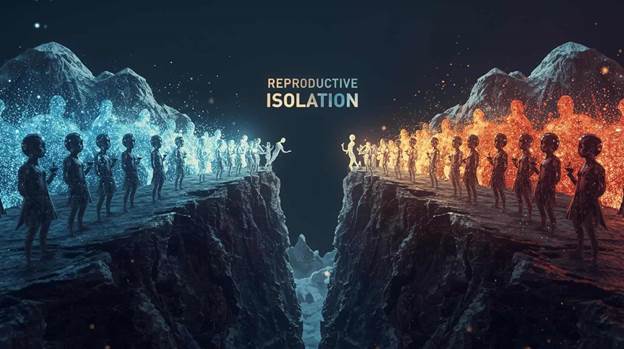
What Does Reproductive Isolation Mean?
At its core, reproductive isolation ensures that genetic material remains within a particular group or species, reducing the chances of mixing with other populations. When reproductive isolation occurs, gene flow between populations is restricted, allowing them to diverge genetically. Over time, this genetic divergence may result in speciation, which is the process of forming entirely new species.
For example, while lions and tigers can produce hybrids such as ligers, these hybrids are often sterile. This infertility demonstrates a postzygotic form of reproductive isolation that maintains the distinct identities of lions and tigers.
Types of Reproductive Isolation
Reproductive isolation is generally divided into prezygotic and postzygotic mechanisms, both of which play vital roles in keeping species distinct.
Prezygotic Reproductive Isolation
This type occurs before fertilization and prevents the formation of a zygote. Examples include:
- Temporal isolation: Two species breed at different times of the day, season, or year. For instance, some orchid species release pollen in different months, making cross-pollination unlikely.
- Behavioral isolation: Differences in mating rituals, such as bird songs or insect dances, prevent species from recognizing each other as potential mates.
- Mechanical isolation: Structural differences in reproductive organs prevent successful mating, as seen in many insects.
- Gametic isolation: Even if mating occurs, sperm and eggs may be chemically incompatible, preventing fertilization.
Postzygotic Reproductive Isolation
This occurs after fertilization and affects the survival or fertility of hybrids. Examples include:
- Hybrid inviability: The zygote forms but fails to develop properly, leading to early death.
- Hybrid sterility: Hybrids survive but are sterile, such as mules from horse-donkey crosses.
- Hybrid breakdown: Hybrids may be fertile in the first generation, but their offspring are weak or sterile in later generations.
Both forms of reproductive isolation are essential for maintaining species boundaries and ensuring evolutionary pathways remain distinct.
Causes of Reproductive Isolation
Several factors contribute to the development of reproductive isolation, including:
- Geographic isolation (allopatric speciation) – When populations are separated by physical barriers like rivers, mountains, or oceans, they evolve independently. Over time, differences accumulate, leading to reproductive isolation.
- Behavioral differences – Courtship rituals, mating calls, and pheromones evolve differently, reducing compatibility.
- Genetic divergence – Mutations, genetic drift, and natural selection create differences that make populations reproductively incompatible.
- Ecological niches – Populations may adapt to different ecological roles, creating barriers to interbreeding.
- Chromosomal changes – Variations in chromosome number or structure can result in mismatched genetic material, leading to sterility or inviability.
Why Reproductive Isolation Is Important
The role of reproductive isolation in evolution is immense. It ensures that populations do not merge into a single genetic pool, allowing them to adapt independently to their environments. This independence fosters biodiversity, which is critical for ecological balance and survival.
Darwin’s finches from the Galápagos Islands are an excellent example. Each species of finch developed unique beak shapes suited for specific diets. Their inability to interbreed freely reinforced reproductive isolation, enabling them to evolve as separate species despite living in close proximity.

Reproductive Isolation in Plants and Animals
Reproductive isolation is widespread across the plant and animal kingdoms.
- In plants, reproductive isolation is often driven by pollination mechanisms. Some flowers attract specific pollinators, such as bees or birds, while others bloom at different times, ensuring cross-pollination does not occur.
- In animals, courtship behaviors, physical barriers, and timing of reproduction act as isolating mechanisms. For example, two frog species may live in the same pond but call at different times of the night, ensuring reproductive isolation.
Human Impact on Reproductive Isolation
Human activities significantly influence reproductive isolation in both positive and negative ways.
- Negative impacts: Habitat destruction, deforestation, and climate change force species into overlapping territories, sometimes breaking down reproductive isolation and causing hybridization. Invasive species introduced by humans also interfere with natural reproductive barriers.
- Positive impacts: Conservation biology often relies on reproductive isolation principles. Breeding programs for endangered species ensure that hybrids do not dilute the genetic purity of rare populations, helping them survive and recover.
Examples in Everyday Life
- The offspring of horses and donkeys, known as mules, are viable but infertile.
- Dogs and wolves: Though genetically close, behavioral and selective breeding create reproductive barriers.
- Fish species: Many cichlids in African lakes evolved reproductive isolation through unique coloration and mating dances.
These examples showcase how reproductive isolation operates in different ways across species.
Conclusion
Reproductive isolation is the cornerstone of speciation and a key driver of biodiversity. By creating barriers that prevent interbreeding, it allows populations to evolve independently and adapt to their unique environments. Both prezygotic and postzygotic reproductive isolation mechanisms work together to ensure that species remain distinct over time.
From plants and animals to human-managed conservation programs, reproductive isolation plays an essential role in shaping life on Earth. Understanding it not only deepens our knowledge of evolution but also helps us protect the delicate balance of ecosystems in an era of rapid environmental change.
In essence, reproductive isolation is the invisible but powerful force that explains why the planet is filled with such an extraordinary variety of life forms, each with its own evolutionary story.