Reproductive isolation is the collection of biological barriers that prevent members of different populations or species from producing viable, fertile offspring together. It is the single most important mechanism behind the formation of new species and the preservation of biodiversity on Earth.
Table of Contents
If two groups of organisms cannot successfully exchange genes, they walk separate evolutionary paths. Over generations, those paths diverge far enough that two entirely distinct species emerge. This process, called speciation, would be impossible without reproductive isolation acting as the gatekeeper of genetic boundaries.
According to a 2022 review published in the journal Evolution Letters, reproductive isolation has been the central focus of speciation research since the modern evolutionary synthesis of the 1930s and 1940s and remains the foundation upon which the Biological Species Concept is built.
This guide breaks down every major type and cause of reproductive isolation, walks through real world examples from plants and animals, and explains why understanding these barriers matters for conservation, agriculture, and our broader grasp of how life diversifies.
What Is Reproductive Isolation in Simple Terms?
Reproductive isolation is any biological mechanism that stops two populations from interbreeding or from producing healthy, fertile hybrid offspring. These mechanisms block or reduce gene flow, which is the movement of genetic material between populations.
Think of it as a series of locks on a door. Some locks prevent mating from happening at all. Others allow mating but cause the offspring to fail at some stage, whether during development, at birth, or when those offspring try to reproduce themselves. Each lock is a different isolating barrier, and together they keep species genetically separate.
Two broad categories exist:
| Category | When It Acts | What It Prevents |
| Prezygotic isolation | Before fertilization | Formation of a hybrid zygote |
| Postzygotic isolation | After fertilization | Survival or fertility of the hybrid |
Both categories work together. In many real world cases, multiple barriers overlap, creating what researchers call “total reproductive isolation” between two lineages.
Prezygotic Barriers: Isolation Before Fertilization
Prezygotic reproductive isolation includes every barrier that reduces the chance of a hybrid zygote forming in the first place. These are considered the most energy efficient barriers because organisms do not waste resources producing offspring that will fail later.
Five major prezygotic mechanisms are recognized in evolutionary biology.
Habitat (Ecological) Isolation
Two species living in the same broad geographic area may occupy completely different microhabitats. One population of insect might feed exclusively on oak trees while a closely related population feeds only on maple trees. Because they never encounter each other during mating season, gene flow between them drops to zero.
Research from the University of California, Berkeley’s Understanding Evolution project highlights how fruit fly populations that develop preferences for different food sources can become reproductively isolated simply because mates are found where food is found.
Temporal (Seasonal) Isolation
Even when two species share the same habitat, they may breed at different times of day, different seasons, or different years. This timing mismatch alone can be enough to block interbreeding entirely.
A well known example involves certain orchid species that release pollen in different months. Despite growing in close proximity, they never exchange genetic material because their reproductive windows do not overlap.
Behavioral Isolation
Differences in courtship displays, mating calls, pheromone signals, or visual cues prevent species from recognizing one another as suitable mates. This is one of the most powerful prezygotic barriers in the animal kingdom.
Male bowerbirds, for instance, construct elaborate decorated structures to attract females. Different bowerbird species build distinct types of bowers and use different color decorations. A female attracted to blue ornaments will ignore a bower decorated with charcoal, effectively sealing the reproductive boundary between those species.
Mechanical Isolation
Physical incompatibility between reproductive structures prevents successful mating even when two species attempt to breed. This is especially common among insects, where slight differences in genital morphology can make copulation physically impossible.
In flowering plants, mechanical isolation often involves flower shape. A bloom shaped to fit a hummingbird’s beak will not transfer pollen effectively to a species pollinated by large bees, keeping those plant lineages separate.
Gametic Isolation
When mating does occur between two species, the sperm and egg may still fail to combine. Chemical signals on the surface of egg cells may not recognize foreign sperm, or the sperm may be unable to survive in the reproductive tract of a different species.
This form of isolation is particularly important in aquatic species that release eggs and sperm directly into the water. Sea urchins, for example, rely heavily on species specific protein recognition between sperm and egg to prevent cross fertilization in open ocean environments.
Postzygotic Barriers: Isolation After Fertilization
Even when prezygotic mechanisms fail and a hybrid zygote forms, postzygotic reproductive isolation can still prevent successful gene flow. These barriers act on the hybrid itself, reducing its viability or fertility.
Hybrid Inviability
The hybrid embryo begins developing but encounters genetic incompatibilities that cause it to die before reaching maturity. Genes from the two parent species may interact poorly, disrupting critical developmental pathways.
Crosses between certain species of Drosophila fruit flies produce embryos where only one sex survives. According to research on the Drosophila melanogaster species group, hybridized females between D. simulans and D. melanogaster die early in development, leaving only male offspring, most of which are themselves inviable or sterile.
Hybrid Sterility
The hybrid organism survives to adulthood but cannot produce its own offspring. The most familiar example is the mule, a cross between a horse and a donkey. Mules are healthy, strong animals, but they are almost always sterile because the mismatched chromosome numbers from their parents prevent normal gamete formation during meiosis.
This barrier is significant because it means that even if two species can mate and produce living young, no genes actually pass to the next generation. The genetic dead end keeps both parent species intact.
Hybrid Breakdown: The Delayed Barrier
Hybrid breakdown occurs when first generation hybrids appear healthy and fertile, but their descendants in the second or third generation become weak, sterile, or inviable. This is a subtle but powerful form of postzygotic reproductive isolation because it is not immediately visible.
The genetic explanation is straightforward. Certain gene combinations inherited from two different parent species may function adequately in the first hybrid generation. However, when those hybrids reproduce among themselves, recombination shuffles the parental genes into new combinations that are incompatible. The result is a gradual collapse in fitness across subsequent generations.
Hybrid breakdown has been documented in several crop plant crosses and in wild populations of sunflowers and rice, making it relevant not only to evolutionary biology but also to agriculture and plant breeding programs.
What Causes Reproductive Isolation to Develop?
Reproductive isolation develops when populations accumulate enough genetic, behavioral, or ecological differences that interbreeding becomes impossible or unsuccessful. The main drivers include geographic separation, natural selection, sexual selection, and random genetic changes.
Geographic Isolation and Allopatric Speciation
Physical barriers such as mountain ranges, rivers, ocean channels, or even newly formed roads can split a single population into two groups. Once separated, each group experiences different environmental pressures, accumulates unique mutations, and drifts genetically. Over thousands or millions of generations, the two groups become so different that they can no longer interbreed even if the barrier disappears.
This process is called allopatric speciation, and it is considered the most common pathway to new species formation. A 2024 paper in the Evolutionary Journal of the Linnean Society notes that the duration of speciation can range from roughly 100,000 years in fruit flies to over 10 million years in birds, depending on how quickly reproductive barriers accumulate.
Ecological Speciation Without Geographic Barriers
Reproductive isolation does not always require physical separation. In ecological speciation, natural selection itself generates barriers as populations adapt to different niches within the same environment. A 2019 study published in PNAS demonstrated this by transferring feather feeding lice from one pigeon host to differently sized pigeons. Within just a few generations, the lice evolved size differences that reduced their ability to mate with lice from other host birds, showing how adaptation alone can trigger reproductive isolation rapidly.
Reinforcement: Strengthening Barriers in Shared Territories
When two partially isolated species come back into contact and produce low fitness hybrids, natural selection can actively favor individuals that avoid mating with the other species. This process, known as reinforcement or the Wallace effect, strengthens prezygotic barriers in areas where both species coexist.
Evidence for reinforcement has been found in Drosophila fruit flies, where populations living in overlapping ranges show stronger mate discrimination than populations from geographically distant regions.
The Speciation Continuum: Isolation Is Not an On/Off Switch
Modern evolutionary biology views reproductive isolation not as a binary state but as a continuum. Populations can sit anywhere along a gradient from full gene flow to complete genetic separation.
At one end, populations exchange genes freely. At the other end, they are fully isolated species. In between lies a vast gray zone of partially isolated populations, some of which will eventually become new species and others that will merge back together. A 2020 review in Philosophical Transactions of the Royal Society B emphasizes that very little research has focused on how populations transition from partial to complete reproductive isolation, making this one of the most active frontiers in speciation science.
How Human Activity Affects Reproductive Isolation
Human actions are reshaping reproductive barriers across the planet in two opposing directions.
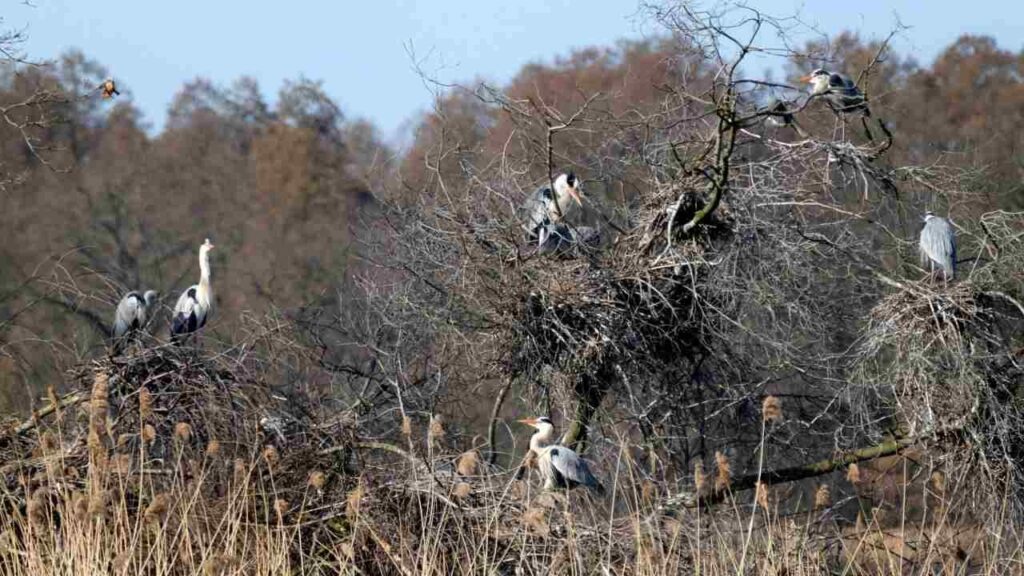
Breaking barriers down: Habitat destruction, climate change, and the introduction of invasive species force previously separated populations into contact. When species that evolved in isolation suddenly share territory, hybridization can occur, sometimes threatening the genetic identity of rare or endangered species. A well documented case involves hybridization between invasive mallard ducks and native species in New Zealand and Hawaii, where gene flow from mallards is eroding the distinctiveness of local duck populations.
Building new barriers: Urbanization, dam construction, and agricultural land conversion fragment habitats, isolating populations that were once connected. Over time, these human created barriers may accelerate genetic divergence and potentially lead to new instances of reproductive isolation.
Conservation biologists now routinely factor reproductive isolation into species management plans. Captive breeding programs for endangered species, for example, are carefully designed to prevent hybridization with closely related species while maintaining genetic diversity within the target population.
Topical Coverage (continued): reinforcement, Wallace effect, speciation continuum, ecological speciation, habitat fragmentation, hybridization threats, conservation genetics, captive breeding, gene flow disruption.
Conclusion
Reproductive isolation is the engine that generates the extraordinary diversity of life on this planet. From the chemical incompatibility of sea urchin gametes to the elaborate courtship dances of bowerbirds, every barrier that prevents gene flow between populations opens a new evolutionary pathway.
Understanding these mechanisms matters far beyond academic biology. Conservation programs depend on reproductive isolation principles to protect endangered species. Agricultural scientists work with isolating barriers when developing new crop varieties. And as climate change reshuffles ecosystems at an unprecedented pace, predicting how reproductive barriers will hold up or break down becomes critical for protecting biodiversity.
Whether you are a biology student preparing for an exam or a curious reader exploring how evolution actually works, grasping reproductive isolation gives you a clearer lens for understanding why the natural world looks the way it does.
What is reproductive isolation in biology?
Reproductive isolation refers to the biological mechanisms that prevent two populations or species from interbreeding successfully. These barriers block gene flow, allowing each group to evolve independently and eventually become separate species.
What are the two main types of reproductive isolation?
The two main types are prezygotic isolation, which prevents fertilization from occurring, and postzygotic isolation, which reduces the survival or fertility of hybrid offspring after fertilization has taken place.
What is an example of reproductive isolation in real life?
The mule is one of the most widely recognized examples. Horses and donkeys can mate and produce a living mule, but the mule is almost always sterile due to mismatched chromosome numbers, which is a clear case of postzygotic hybrid sterility.
How does geographic isolation lead to reproductive isolation?
When a physical barrier such as a mountain range or river separates a population into two groups, each group evolves independently under different conditions. Over many generations, genetic differences accumulate until the two groups can no longer interbreed, even if the barrier is removed.
Can reproductive isolation happen without geographic separation?
Yes. Through ecological speciation or sympatric speciation, populations can develop reproductive barriers while living in the same area. Differences in diet, habitat preference, mating timing, or courtship behavior can reduce gene flow enough to trigger genetic divergence without any physical separation.
Why is reproductive isolation important for biodiversity?
Without reproductive isolation, distinct species would merge into blended populations, erasing the specialized adaptations that allow organisms to thrive in specific ecological niches. Reproductive barriers preserve genetic uniqueness and allow natural selection to drive the formation of new species, sustaining the variety of life across ecosystems.