A MBBR sewage treatment plant is an innovative and eco-friendly technology designed to purify wastewater efficiently. Using a biological process that supports the growth of microorganisms on biofilm carriers, this system breaks down organic pollutants and ensures cleaner water discharge. Unlike conventional methods, MBBR technology offers high treatment efficiency, low maintenance, and compact design making it ideal for both industrial and municipal applications.
In this article, we’ll explore how this advanced system works, its key benefits, and why it’s becoming a preferred choice in wastewater management. From reducing operational costs to promoting environmental sustainability, the biological treatment process in MBBR systems represents a significant step forward in achieving sustainable clean water solutions for the future.
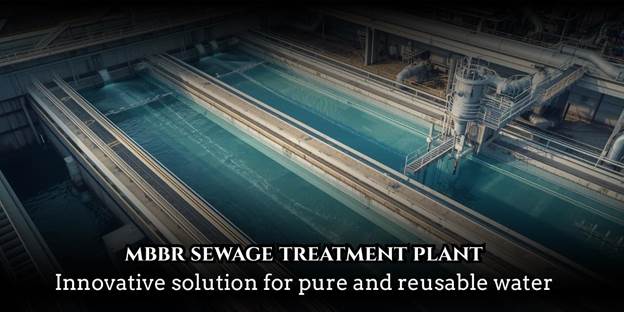
Understanding the MBBR Sewage Treatment Plant
A MBBR sewage treatment plant (Moving Bed Biofilm Reactor) is a modern and efficient biological system designed to treat domestic and industrial wastewater. It combines the benefits of traditional activated sludge processes and fixed-film systems to ensure better organic matter removal and wastewater purification. In this process, specially designed plastic carriers provide surface area for microorganisms to grow, forming a biofilm that actively breaks down pollutants.
The MBBR system has become one of the most popular biological wastewater treatment methods because of its simplicity, flexibility, and high efficiency. It is ideal for upgrading existing treatment plants or setting up new installations in limited spaces.
Background and Evolution of MBBR sewage treatment plant
The MBBR sewage treatment plant concept was first developed in Norway during the late 1980s. Engineers aimed to design a technology that offered the reliability of biofilm processes with the simplicity of aerobic treatment systems. Over time, it gained global recognition due to its ability to handle varying loads and produce consistent results.
Today, MBBR technology is widely used in:
• Municipal sewage treatment plants
• Industrial wastewater treatment facilities
• Decentralized and small-scale treatment units
The method’s adaptability to different types of wastewater makes it a preferred solution for both developed and developing regions.
How the MBBR System Works
The Core Mechanism
At the heart of every MBBR sewage treatment plant are biofilm carriers small, durable plastic media that float freely in the aeration tank. These carriers provide a large surface area where microorganisms attach and grow.
The Treatment Process of mbbr sewage treatment plant
The process generally includes the following steps:
- Pre-treatment: Removal of large solids and grit from wastewater.
- Biological treatment: Wastewater enters the MBBR reactor where aeration and mixing promote microorganism growth on carriers.
- Biofilm activity: Microorganisms degrade organic matter and biodegradable pollutants.
- Sedimentation: The treated water moves to a settling tank where solids are separated.
- Disinfection: Final treatment ensures removal of harmful pathogens before discharge or reuse.
Role of Aeration
Aeration is a critical part of this system. By maintaining dissolved oxygen levels, it supports aerobic microorganismsthat break down organic matter effectively. This makes the process energy-efficient and sustainable.
Importance of MBBR Technology in Modern Wastewater Treatment
The rising demand for clean water and the increasing volume of wastewater have made technologies like MBBR essential.
Its design ensures:
• Compact footprint for urban and industrial areas
• Consistent treatment quality even under load fluctuations
• Easy scalability and integration with secondary treatment processes
Moreover, as industries focus on environmental compliance, MBBR technology helps meet effluent quality standardswithout complex modifications.
Benefits of MBBR Sewage Treatment Plant
The advantages of this system make it stand out among other wastewater treatment technologies.
Key Benefits Include:
• High efficiency: Ensures maximum removal of organic pollutants.
• Low sludge production: Reduces disposal costs and environmental burden.
• Compact design: Suitable for limited space installations.
• Low maintenance: Requires minimal supervision and operational expertise.
• Flexible operation: Adapts easily to variations in wastewater composition.
Environmental Benefits
• Reduces environmental contamination
• Enhances water reuse potential
• Supports sustainable wastewater recycling programs
These benefits make MBBR systems an attractive choice for industries such as food processing, pharmaceuticals, and textiles.
Challenges in Implementing MBBR Systems
While MBBR technology offers several benefits, some challenges exist in implementation and operation.
Common Challenges
• Cost considerations: The initial investment may be higher compared to traditional systems.
• Media clogging: Inadequate mixing or aeration can lead to media accumulation.
• Temperature sensitivity: Microbial activity may decrease in colder climates.
• Regular monitoring: Requires periodic checks for oxygen levels and media movement.
However, with proper design and maintenance, these challenges can be minimized, ensuring long-term performance and reliability.
Real-World Applications and Examples
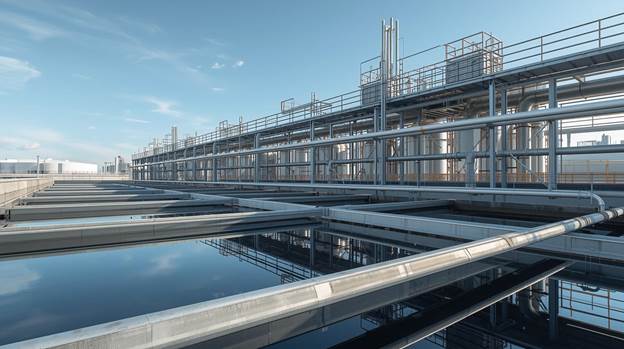
MBBR sewage treatment plants are now implemented across various sectors due to their efficiency and adaptability.
Industrial Applications
• Food and beverage industries: For treating high-organic wastewater.
• Pharmaceuticals: For removing complex chemical compounds.
• Textiles: For reducing color and organic load before discharge.
Municipal and Residential Use
• Small towns: Compact MBBR systems are ideal for decentralized sewage treatment.
• Residential complexes: Provide efficient wastewater management with low energy consumption.
These applications highlight the system’s ability to maintain high treatment performance under diverse conditions.
Future of MBBR Technology
The future of the MBBR sewage treatment plant looks promising as environmental regulations become stricter and water reuse becomes essential. Research continues to enhance carrier design, improve energy efficiency, and integrate advanced biological processes for better results.
Upcoming innovations may include hybrid MBBR-MBR systems, smart monitoring, and AI-based process optimization to ensure continuous improvement. With these advancements, MBBR technology is set to play a crucial role in achieving global clean water goals and sustainable wastewater management.
Conclusion
In summary, the MBBR sewage treatment plant provides an innovative and sustainable approach to wastewater purification. By utilizing advanced biological treatment methods, it effectively removes pollutants while minimizing maintenance and operational costs. Its compact design and high efficiency make it suitable for both municipal and industrial use. As water conservation becomes increasingly vital, adopting MBBR systems can help communities and industries achieve cleaner water and environmental compliance. To stay ahead in sustainable wastewater management, explore more about the benefits and advancements of MBBR technology today.