MBBR sewage treatment plant systems are rapidly becoming the gold standard in biological wastewater treatment worldwide. Whether you manage a municipal sewer network, run a food processing factory, or oversee a residential housing complex, understanding this moving bed biofilm reactor technology can help you choose a cost-effective, space-saving, and environmentally responsible sewage purification solution.
Table of Contents
What Is an MBBR Sewage Treatment Plant?
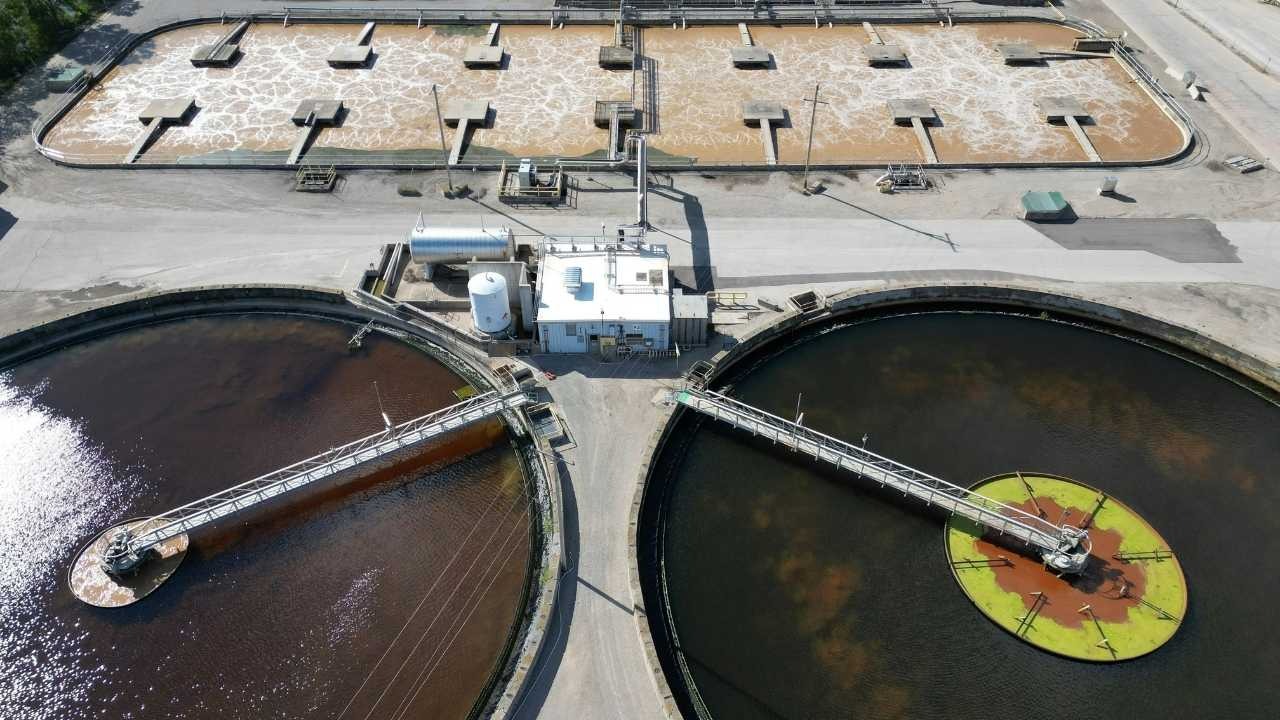
An MBBR sewage treatment plant short for Moving Bed Biofilm Reactor is an advanced biological wastewater treatment system that merges the reliability of fixed-film reactors with the flexibility of activated sludge processes. Inside an aerated reactor tank, thousands of specially engineered plastic biofilm carriers float freely, providing a protected surface area where beneficial microorganisms colonize and form a living biofilm layer.
This biofilm actively degrades organic pollutants, ammonia, and biodegradable contaminants as sewage flows continuously through the reactor. The result is high-efficiency wastewater purification with minimal sludge recirculation a major advantage over conventional methods.
The concept originated in Norway during the late 1980s and has since been adopted by treatment facilities on every continent, according to research published by IWA Publishing.
How Does an MBBR System Work? (Step-by-Step Process)
Understanding the treatment mechanism clarifies why this biofilm-based sewage system outperforms many legacy alternatives.
- Screening and pre-treatment Coarse bar screens and grit chambers remove large solids, rags, and inorganic debris before the biological stage.
- Biological reactor stage Wastewater enters the MBBR reactor where it mixes with freely moving plastic carrier media. Continuous aeration maintains dissolved oxygen (DO) levels between 2–4 mg/L, supporting aerobic microbial activity.
- Biofilm degradation Microorganisms attached to carrier surfaces break down BOD (biochemical oxygen demand) and COD (chemical oxygen demand) at high rates due to the large specific surface area of media, typically ranging from 500–1,200 m²/m³.
- Secondary clarification Treated water flows into a settling tank or clarifier where residual suspended solids separate by gravity.
- Disinfection and discharge A final chlorination or UV treatment step eliminates pathogens, making the effluent safe for reuse or environmental discharge.
Key design parameters that engineers specify: hydraulic retention time (HRT) of 4–6 hours, carrier fill ratio of 40–67% of reactor volume, and MLSS concentrations between 3,000–5,000 mg/L. These numbers reflect standard practice guidelines referenced by the Central Pollution Control Board (CPCB), India.
MBBR vs SBR vs MBR: Which Technology Should You Choose?
One of the most common questions from plant operators is how MBBR stacks up against SBR (Sequencing Batch Reactor) and MBR (Membrane Bioreactor). Here is a head-to-head comparison:
| Parameter | MBBR | SBR | MBR |
| Operation mode | Continuous flow | Batch cycles | Continuous flow |
| Footprint | Compact (up to 50% smaller) | Moderate | Smallest (50–70% smaller than SBR) |
| Sludge recirculation | Not required | Required | Required |
| Effluent quality | High (BOD < 10 mg/L achievable) | High | Highest (reuse-grade) |
| Operator skill needed | Low to moderate | Moderate to high | High |
| Capital cost per KLD | ₹35,000–₹70,000 | ₹25,000–₹45,000 | ₹80,000–₹1,50,000 |
| Energy consumption | 1.2–2.0 kWh per KLD | 1.0–1.5 kWh per KLD | 2.0–3.5 kWh per KLD |
| Best suited for | Variable loads, limited space, low staffing | Small-medium plants with trained operators | Premium reuse applications |
Cost data sourced from V Aqua Water Treatment’s 2026 pricing guideandAquacaresee Pvt. Ltd.
MBBR wins when your facility needs a robust, self-regulating system that tolerates shock loads and requires minimal trained supervision. SBR suits sites where batch processing flexibility matters. MBR is ideal when treated water must meet stringent reuse standards and budget permits higher capital expenditure.
Estimated MBBR Sewage Treatment Plant Cost
Budget planning is critical. Here is a general cost breakdown by plant capacity, reflecting current Indian market trends:
| Plant Capacity (KLD) | Approximate Equipment Cost (INR) | Cost per KLD (INR) |
| 5 KLD | ₹2.5–₹3.5 Lakhs | ₹50,000–₹70,000 |
| 10 KLD | ₹4–₹7 Lakhs | ₹40,000–₹70,000 |
| 50 KLD | ₹17–₹25 Lakhs | ₹35,000–₹50,000 |
| 100 KLD | ₹25–₹40 Lakhs | ₹25,000–₹40,000 |
Larger plants benefit from economies of scale. According to a Susbio cost analysis, a well-designed 50–100 KLD MBBR system can recover its investment within 18–24 months through water reuse savings alone.
Monthly operational costs (power, chemicals, labour, sludge handling) for a 50–100 KLD plant typically range from ₹30,000 to ₹60,000.
Key Benefits of an MBBR Sewage Treatment Plant
High pollutant removal efficiency Properly designed MBBR reactors routinely achieve over 90% COD and BOD removal, as confirmed by multiple case studies indexed on ResearchGate.
Minimal sludge generation The attached biofilm process produces significantly less excess sludge than suspended-growth systems, reducing disposal frequency and cost.
Small physical footprint Reactor tanks occupy up to 50% less land than conventional extended aeration systems, making MBBR ideal for urban sites and factory premises with space constraints.
Self-regulating operation Microorganisms on the carriers naturally adjust to fluctuations in organic loading, which means fewer process upsets and less operator intervention.
Easy retrofitting Existing activated sludge tanks can often be converted to MBBR by simply adding carrier media and upgrading the aeration grid, avoiding expensive civil construction.
Real-World Applications Across Industries
From our direct project experience, MBBR sewage treatment plants deliver consistent results in diverse settings:
Food and beverage manufacturing High-organic-strength effluent from dairies, breweries, and meat processing plants responds exceptionally well to MBBR biological treatment.
Pharmaceutical wastewater MBBR reactors effectively degrade complex organic compounds when paired with appropriate pre-treatment.
Textile industry Dye-house effluent with elevated colour and COD loads is treated effectively, helping mills comply with zero liquid discharge (ZLD) mandates.
Municipal and residential sewage Compact packaged MBBR units serve apartment complexes, small towns, and decentralized communities where centralized sewer networks do not exist. In one documented Indian textile plant case, COD reduction exceeded 90% while operational energy costs dropped by roughly 25%, per data cited in CPCB monitoring reports.
Challenges and How to Solve Them
Media clogging Insufficient aeration or mixing causes carriers to accumulate. Solution: maintain recommended air flow rates and install coarse-bubble diffusers at the tank base.
Cold-climate performance dips Microbial activity slows below 10°C. Solution: insulate reactor tanks or use supplemental heating in extreme climates.

Biofilm detachment during shock loads Sudden organic spikes can strip biofilm from carriers temporarily. Solution: equalization tanks upstream buffer peak flows.
Energy costs from continuous aeration Blowers account for 40–50% of operational expenditure in most STPs, according to Susbio’s operational cost analysis. Solution: variable-frequency drive (VFD) blowers and DO-based automated controls cut power use by up to 30%.
The Future of MBBR Technology
Innovation continues to push MBBR capabilities forward. Hybrid MBBR-MBR systems combine biofilm efficiency with membrane filtration for reuse-grade effluent. AI-powered dissolved oxygen monitoring and predictive maintenance platforms are entering the market. Next-generation carrier media with surface areas exceeding 1,200 m²/m³ are being tested in pilot plants globally.
The United Nations Environment Programme (UNEP) highlights smart sensor integration in wastewater infrastructure as one of the fastest-growing trends in sustainable water management. As global water stress intensifies, efficient biological sewage treatment like MBBR will become even more essential.
Conclusion
The MBBR sewage treatment plant is a proven, flexible, and cost-efficient biological wastewater treatment solution suitable for industries, municipalities, and residential developments alike. Its compact footprint, low sludge output, self-regulating biofilm process, and easy retrofitting make it one of the smartest investments in modern wastewater management.
Whether you are planning a new installation or upgrading an ageing activated sludge system, MBBR technology deserves a place at the top of your evaluation list. If this guide helped you understand moving bed biofilm reactor systems better, share it with your engineering team or drop a comment below with your specific project questions we are happy to help.
What does MBBR stand for in sewage treatment?
MBBR stands for Moving Bed Biofilm Reactor. It is a continuous-flow biological treatment process that uses thousands of small plastic carriers inside an aerated tank, allowing microorganisms to form a biofilm that degrades organic pollutants in wastewater efficiently.
How much does an MBBR sewage treatment plant cost?
In India, equipment costs typically range from ₹35,000 to ₹70,000 per KLD depending on plant capacity, automation level, and design specifications. Larger plants benefit from lower per-KLD pricing due to economies of scale.
What is the difference between MBBR and SBR sewage treatment?
MBBR operates continuously with biofilm-attached carriers, while SBR works in timed batch cycles within a single tank. MBBR requires less operator expertise and handles variable loads more naturally, whereas SBR offers greater process control flexibility for trained operators.
Can MBBR be used for residential apartment sewage treatment?
Yes, compact packaged MBBR units are widely used in housing societies, gated communities, and small townships. Their low maintenance needs and small footprint make them practical where centralized sewer infrastructure is unavailable.
How long do MBBR biofilm carriers last?
High-quality polyethylene or polypropylene carriers typically last 15 to 25 years under standard operating conditions, making them one of the most durable components of the entire treatment system.
Is MBBR better than conventional activated sludge process?
For most applications requiring compact design and operational simplicity, yes. MBBR eliminates sludge recirculation, handles shock loads better, and occupies significantly less space. However, activated sludge may still suit very large municipal plants where land is not a constraint and operating budgets are tight.