The captivating existence of unexplored islands on earth proves that even in our hyper connected modern world, mysterious landmasses remain completely untouched by human civilization, preserving ecological wonders that science has never documented or studied. Scattered across vast oceanic expanses far beyond regular shipping routes and aviation corridors, these isolated territories maintain pristine environments where unique species evolve without any anthropogenic interference whatsoever. Their very inaccessibility has become their greatest protective shield against the relentless expansion of human development.
This comprehensively researched article reveals unexplored islands on earth through advanced remote sensing technology examining isolated oceanic archipelagos, volcanic island formation zones, remote Pacific territories, and the critical connection between geographical isolation and endemic species preservation sustaining irreplaceable marine biodiversity worldwide.
Recognizing the extraordinary significance of unexplored islands on earth is essential for anyone passionate about maritime exploration, island ecosystem conservation, and protecting our planet’s last remaining pristine coastal environments from irreversible destruction.
By completing this detailed analysis, you will discover remarkable unexplored islands on earth that continue resisting human contact and understand what geographical, environmental, and scientific factors keep these extraordinary island ecosystems permanently hidden beyond civilization’s expanding reach.
Defining What Makes an Island Truly Unexplored
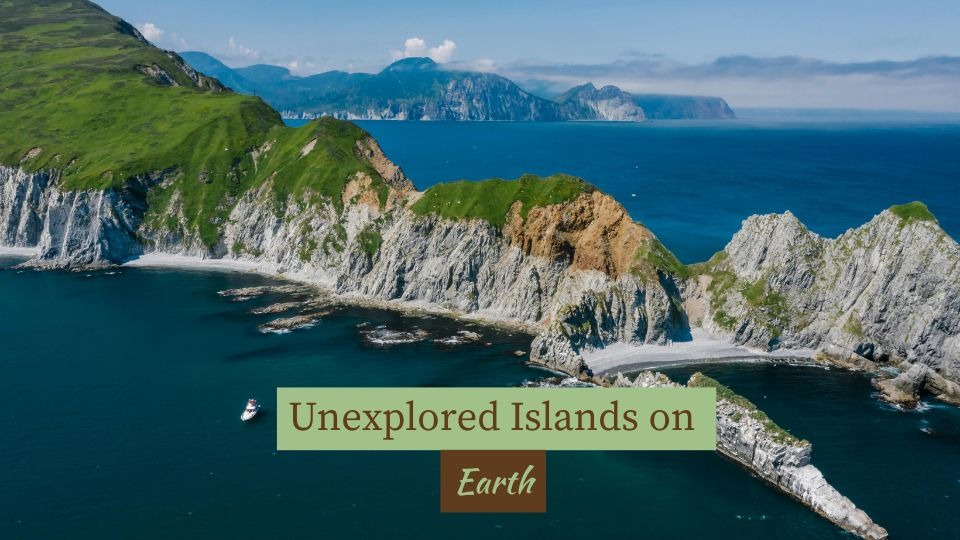
The concept of unexplored islands on earth refers to landmasses surrounded by water that have never experienced permanent human habitation, comprehensive scientific survey, or sustained physical exploration by any documented expedition. These extraordinary territories exist primarily in remote oceanic regions where extreme distance from continental coastlines, hazardous maritime conditions, and absence of freshwater resources have prevented human establishment throughout recorded history.
Scientists estimate that thousands of islands across the Pacific, Southern, and Indian Oceans remain inadequately surveyed despite appearing on modern maps generated through satellite imagery. Appearing on a map does not equate to being explored, as many unexplored islands on earth have only been observed from orbit or passing vessels without any researcher ever setting foot on their shores. These isolated oceanic archipelagos preserve ecological conditions undisturbed by human activity, functioning as natural laboratories where evolutionary processes continue operating exactly as they have for millennia without anthropogenic interference.
Historical Context of Island Discovery and Exploration
Human exploration of oceanic islands began thousands of years ago when Polynesian navigators crossed vast Pacific distances using celestial navigation techniques to discover and settle hundreds of previously uninhabited landmasses. European maritime expansion during the fifteenth through eighteenth centuries further expanded the catalogue of known islands as sailing vessels charted increasingly remote oceanic territories during circumnavigation expeditions.
Despite centuries of maritime exploration, the sheer vastness of Earth’s oceans ensured that numerous unexplored islands on earth escaped documentation until satellite technology became available during the late twentieth century. Remote sensing technology revealed previously unknown landmasses in subantarctic waters, equatorial reef systems, and volcanic island formation zones where geological activity continuously creates new territory that has never experienced human contact since emerging from beneath the ocean surface.
Isolated Oceanic Archipelagos Beyond Human Reach
Several remarkable island groups qualify as unexplored islands on earth due to their extreme geographical isolation placing them thousands of kilometers from the nearest inhabited territory. The southern Indian Ocean contains volcanic islands so remote that supply vessels require weeks of continuous sailing through some of the most dangerous maritime conditions on the planet to approach their coastlines.
The Heard and McDonald Islands represent outstanding examples of isolated oceanic archipelagos that remain virtually unexplored despite being Australian territory. Located approximately four thousand kilometers southwest of Perth, these volcanic islands experience perpetual storms, subzero temperatures, and seas so treacherous that fewer scientific expeditions have visited them than have summited Mount Everest. Their extreme inaccessibility preserves endemic species preservation conditions found nowhere else in the southern hemisphere marine environment.
Volcanic Island Formation Zones Creating New Territory
Earth’s geological processes continuously generate new landmasses through submarine volcanic activity that periodically breaks the ocean surface to create entirely fresh islands where no life has previously existed. These volcanic island formation zones represent the most literally unexplored islands on earth because they emerge as completely sterile environments awaiting colonization by marine transported organisms arriving through wind, waves, and bird dispersal mechanisms.
The ongoing volcanic eruption that created Hunga Tonga in the Pacific provided scientists with an extraordinary opportunity to observe primary ecological succession on newly formed land. Before its partial destruction during a massive eruption in 2022, researchers documented pioneering plant species, nesting seabirds, and invertebrate communities establishing themselves on terrain that had not existed just years earlier. These observations demonstrate why unexplored islands on earth possess unparalleled scientific value for understanding how ecosystems develop from absolute zero without human influence.
Remote Pacific Territories Preserving Pristine Marine Ecosystems
The vast Pacific Ocean contains the highest concentration of unexplored islands on earth due to its enormous geographic expanse covering approximately one third of the planet’s total surface area. Scattered across this immense water body, countless atolls, reef islands, and volcanic remnants remain unvisited by scientific expeditions despite their identification through remote sensing technology surveys conducted from orbital platforms.
The Phoenix Islands in the central Pacific represent one of the largest marine protected areas on Earth, encompassing environments where endemic species preservation operates without measurable human impact. Surrounding reef ecosystems support fish populations, coral assemblages, and invertebrate communities at densities that have vanished from every human accessible marine environment, providing researchers with invaluable baseline data revealing what healthy ocean ecosystems looked like before industrial fishing and coastal development transformed global marine biodiversity irreversibly.
Subantarctic Islands and Their Unique Biological Communities
The remote waters surrounding Antarctica contain numerous islands that qualify as unexplored islands on earth due to extreme weather conditions, treacherous seas, and their extraordinary distance from any inhabited territory. The South Sandwich Islands, Balleny Islands, and Scott Island represent subantarctic territories where comprehensive ground surveys have never been completed despite their existence being known for over a century.
These subantarctic environments support unique biological communities including massive seabird colonies, specialized invertebrate assemblages, and marine mammal populations that have never experienced direct human disturbance. Their isolation makes them critical reference sites for marine biodiversity conservation research measuring how pristine ecosystems function compared to human impacted environments across similar latitudinal zones elsewhere on the planet.
Critical Challenges Preventing Comprehensive Island Exploration
Despite remarkable advances in maritime and remote sensing technology, systematically exploring unexplored islands on earth faces significant interconnected obstacles that continue limiting scientific access to these extraordinary environments.
- Extreme oceanic distances separating isolated oceanic archipelagos from research ports require expedition vessels capable of weeks long voyages through some of Earth’s most dangerous maritime conditions
- Unpredictable volcanic activity within volcanic island formation zones creates lethal hazards including toxic gas emissions, lava flows, and explosive eruptions that threaten expedition safety
- International funding for remote island exploration consistently falls far short of requirements needed for systematic endemic species preservation documentation across uncharted territories
- Climate change is altering ocean currents, sea levels, and storm patterns threatening low lying unexplored islands on earth with submersion before scientific teams can document their unique ecosystems
- Strict environmental protection regulations rightfully limit human access to pristine island environments, creating tension between scientific curiosity and marine biodiversity conservation responsibilities
These compounding challenges explain why comprehensive exploration of Earth’s remaining unknown islands progresses at frustratingly slow rates despite growing technological capabilities.
Remarkable Examples of Recently Investigated Remote Islands
The 2019 scientific expedition to Bouvet Island in the South Atlantic provided groundbreaking observations of one of the most isolated unexplored islands on earth. Located approximately 1,700 kilometers from the nearest continental coastline, this Norwegian territory is almost entirely covered by glacial ice and supports biological communities adapted to conditions among the most extreme found anywhere on the planet’s surface.
Japanese researchers recently documented the emergence of Niijima, a new volcanic island that surfaced near the Ogasawara archipelago in the western Pacific. This remarkable event provided scientists with an unprecedented opportunity to study primary colonization processes on genuinely virgin territory where endemic species preservation mechanisms begin operating from the very first moment biological organisms arrive on freshly formed volcanic substrate.
Why Protecting Earth’s Unknown Islands Demands Urgent Global Action
Studying unexplored islands serves purposes extending far beyond adventure narratives into practical scientific necessities affecting global marine biodiversity conservation, climate change understanding, and pharmaceutical discovery potential. Isolated oceanic archipelagos harbor organisms producing unique biochemical compounds evolved over millions of years of independent adaptation that could revolutionize medical science if documented before habitat destruction eliminates them permanently.
Conclusion
The remarkable scientific evidence presented throughout this article confirms that unexplored islands represent some of our planet’s most valuable yet vulnerable natural treasures demanding both investigation and immediate protection. From the storm battered Heard and McDonald Islands to newly formed volcanic territories emerging from Pacific waters, these isolated landmasses preserve ecological conditions that have vanished from every human accessible environment worldwide.
Extreme geographical isolation, treacherous maritime conditions, volcanic hazards, and climate change collectively create both protective barriers and existential threats for isolated oceanic archipelagos harboring irreplaceable endemic species preservation opportunities. The groundbreaking expeditions to Bouvet Island and discoveries surrounding Niijima demonstrate that extraordinary scientific revelations await within territories civilization has never reached.
Understanding unexplored islands on earth inspires both exploration ambition and conservation urgency. Supporting international marine biodiversity conservation agreements, funding remote sensing technology development, and strengthening environmental protection frameworks represent essential steps. Safeguarding unexplored islands on earth requires unified global commitment because protecting these pristine island ecosystems ultimately means preserving irreplaceable biological heritage and scientific discovery potential for future generations to explore responsibly.