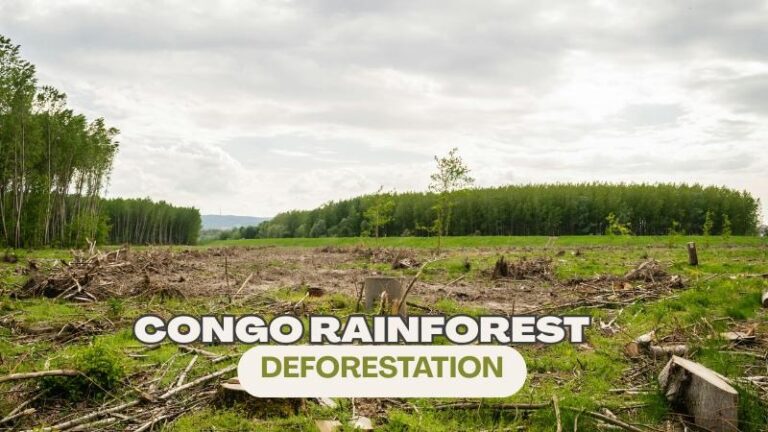
What causes blood rain is a question that has puzzled humanity for thousands of years. Blood rain is a rare atmospheric phenomenon where rainfall appears red, orange, or brown instead of clear. Despite its alarming name, this event has nothing to do with actual blood. Scientists have confirmed that the red coloration comes from airborne particles such as desert dust, algae spores, or industrial pollutants mixing with rainwater as it falls to the ground. According to research published in the journal Applied and Environmental Microbiology, most documented cases of red-colored rainfall can be traced to identifiable natural or man-made sources (Applied and Environmental Microbiology – American Society for Microbiology).
This comprehensive guide explores the science, history, health effects, and environmental impact of blood rain, giving you everything you need to understand this fascinating natural event.
Ancient Myths and Cultural Beliefs About Red Rain
Before modern science could explain what causes blood rain, civilizations around the world interpreted it through religion and superstition. Ancient Roman historians, including Livy and Plutarch, documented episodes of red-colored rainfall and classified them as prodigies supernatural omens warning of war, plague, or political upheaval. These accounts are preserved in historical records such as Livy’s “Ab Urbe Condita,” where blood rain is mentioned alongside other unusual signs observed before major conflicts (Titus Livius, Ab Urbe Condita – Perseus Digital Library).
In South Asia, communities in India and Sri Lanka historically viewed crimson rainfall as divine communication. The color red carries deep spiritual significance in Hindu culture, and unusual red rain was often treated as a message from the gods requiring ritual response.
During the European Middle Ages, chroniclers described blood rain as a harbinger of famine, disease, or divine punishment. Without any understanding of atmospheric chemistry, people had no framework to explain the phenomenon except through fear and faith.
These cultural narratives persisted for centuries and are a key reason why blood rain still captures public imagination today, even though science now provides clear answers.
What Causes Blood Rain? Three Scientifically Proven Explanations
Modern atmospheric science has identified three primary causes of red-colored rainfall. Each one explains how foreign particles enter the atmosphere and mix with precipitation before reaching the ground.
1. Saharan and Desert Dust Transport
The most common cause of blood rain worldwide is the long-distance transport of mineral-rich dust from arid regions, particularly the Sahara Desert. According to NASA’s Earth Observatory, the Sahara produces an estimated 60 to 200 million tons of dust annually, and prevailing winds can carry fine particles across the Mediterranean Sea into southern and central Europe within 3 to 5 days (NASA Earth Observatory – Saharan Dust). When this iron-oxide-rich dust encounters rain clouds over countries like Spain, Italy, Greece, or the United Kingdom, the resulting rainfall takes on a reddish, orange, or muddy brown appearance. The iron content in the dust is what gives the rain its characteristic blood-like tint.
European meteorological agencies, including Spain’s AEMET and the UK Met Office, regularly track Saharan dust plumes using satellite imagery and issue public advisories when red rain events are expected (UK Met Office – Saharan Dust).
2. Biological Organisms : Algae and Fungal Spores
The second scientifically documented cause involves microscopic biological material becoming airborne and mixing with rainfall. The most significant modern case occurred in Kerala, India, between July and September 2001, when residents experienced weeks of vividly red rain that stained clothing, walls, and rooftops.
Physicist Godfrey Louis and researcher A. Santhosh Kumar from Mahatma Gandhi University collected and analyzed the rainwater samples. Their 2006 study, published in the journal Astrophysics and Space Science, found that the red particles were biological cells approximately 4 to 10 micrometers in size. The cells were later identified as spores of Trentepohlia annulata, an aerial species of green algae that produces a red pigment (Louis & Kumar, 2006 – Astrophysics and Space Science). Although Louis initially proposed a panspermia hypothesis suggesting extraterrestrial origins, subsequent independent analysis confirmed the spores were terrestrial organisms.
A follow-up study published in 2015 by researchers at the Centre for Earth Science Studies in Thiruvananthapuram further confirmed the algal origin and ruled out any meteoritic connection (Raghu et al., 2015 – CESS Study).
3. Industrial Pollution and Airborne Contaminants
In heavily industrialized regions, airborne pollutants can also cause discolored rainfall. Iron-rich particles from steel manufacturing, soot from coal combustion, and chemical byproducts from factories can become suspended in the lower atmosphere. When these contaminants are washed out by rain, the water can appear reddish, brownish, or even dark grey.
The World Health Organization has documented how industrial air pollution affects precipitation quality in urban and industrial zones, noting that particulate matter with a diameter of 2.5 micrometers or smaller (PM2.5) can travel significant distances before settling (WHO – Ambient Air Pollution).
Understanding these three causes makes the answer to what causes blood rain entirely clear. It is always a physical or biological process, never a supernatural one.
What Does Blood Rain Actually Look Like?
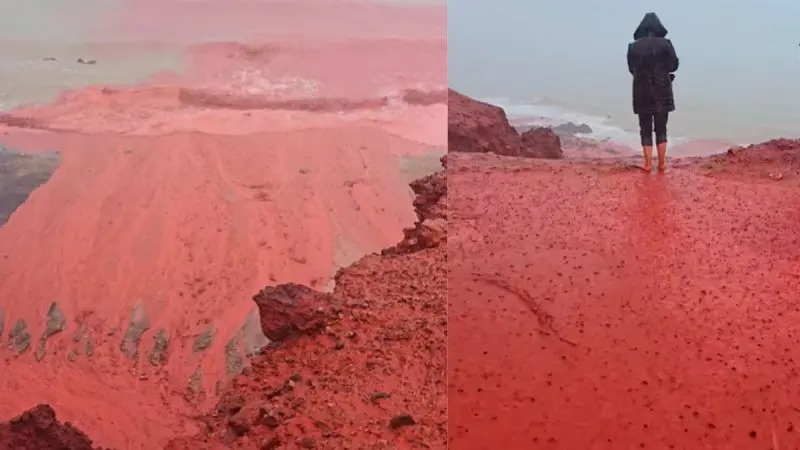
Blood rain does not fall as thick red droplets the way Hollywood might portray it. In reality, it appears as lightly tinted reddish or brownish rainwater that is often only noticeable when it collects on surfaces. Puddles may look muddy or pinkish. Cars, windows, and outdoor furniture may develop a fine reddish residue after the rain dries.
The intensity of the color depends on the concentration of particles in the atmosphere. During heavy Saharan dust events in Europe, the discoloration can be quite striking, while lighter episodes may produce barely noticeable tinting. In the Kerala incident, however, the red color was vivid enough to alarm residents and was clearly visible in collected water samples even to the naked eye.
Documented Blood Rain Events Around the World
Blood rain has been recorded on every inhabited continent. Here are some of the most notable documented cases.
In 2001, Kerala, India experienced weeks of intense red rain caused by Trentepohlia algae spores, making it the most studied modern case. In 2014, residents in Zamora, Spain reported red-tinted rainfall that Spain’s meteorological agency AEMET traced directly to a Saharan dust plume crossing the Mediterranean. In 2015, parts of Siberia, Russia experienced red and orange snow attributed to iron-rich desert dust transported from Central Asian arid regions. In 2018, red rainfall in parts of Kerala returned briefly, and scientists confirmed the same algal mechanism as the 2001 event. In 2020, multiple countries across southern Europe including Italy, France, and Greece reported orange and red rainfall during a major Saharan dust storm that was visible from space in NASA satellite imagery.
These events confirm that blood rain is not confined to one region. It occurs wherever atmospheric conditions allow dust, spores, or pollutants to mix with precipitation.
Is Blood Rain Dangerous to Human Health?
After understanding what causes blood rain, the next logical concern is whether it poses health risks. For the vast majority of people, the answer is no. Blood rain is not toxic, corrosive, or infectious. However, there are specific scenarios where it can cause minor health issues.
Dust-related red rain can carry fine particulate matter that may aggravate pre-existing respiratory conditions. People with asthma, chronic bronchitis, or severe seasonal allergies may experience increased symptoms during or after a red rain event. The European Environment Agency has noted that Saharan dust intrusions can temporarily raise PM10 and PM2.5 levels in affected regions, contributing to reduced air quality (EEA – Saharan Dust and Air Quality).
If red-colored rainwater is collected in tanks or barrels for household use, it should be filtered and tested before drinking. The discoloration itself indicates the presence of foreign particles that may not be safe for consumption without treatment.
In rare cases involving biological spores, sensitive individuals may experience mild skin irritation or slight respiratory discomfort. However, the algae spores found in the Kerala rain were not pathogenic and posed no serious health threat according to the published studies.
So is blood rain dangerous in any serious or life-threatening way? Based on all available scientific evidence, no. Reasonable precautions are sufficient to handle any minor effects.
Environmental Impact of Blood Rain
Blood rain affects the environment in both beneficial and harmful ways, depending on its source.
When desert dust is the cause, the deposited minerals can actually benefit ecosystems. Saharan dust is rich in iron and phosphorus, nutrients that are essential for plant growth and ocean productivity. NASA research has shown that dust carried from the Sahara plays a critical role in fertilizing the Amazon rainforest by replenishing phosphorus lost through rainfall and flooding (NASA – Sahara Fertilizes Amazon).
However, when industrial pollution is responsible for the red coloration, the environmental impact is negative. Contaminated rainfall can pollute freshwater sources including rivers, lakes, and groundwater. Aquatic ecosystems can be disrupted by the introduction of heavy metals or chemical pollutants. Agricultural land irrigated with contaminated rainwater may also suffer over time.
Heavy dust loads during major red rain events can reduce atmospheric visibility, creating hazards for aviation and road transportation. Fine dust deposits on solar panels can reduce their efficiency until cleaned.
How Do Scientists Study and Track Blood Rain?
Modern scientific investigation of blood rain involves multiple techniques. When a red rain event is reported, researchers collect water samples from multiple locations and analyze them in laboratories using optical microscopy, scanning electron microscopy, and energy-dispersive X-ray spectroscopy (EDX) to identify the chemical and biological composition of the particles.
Satellite monitoring plays a critical role in tracking dust storms and predicting red rain events before they occur. NASA’s MODIS (Moderate Resolution Imaging Spectroradiometer) and CALIPSO (Cloud-Aerosol Lidar and Infrared Pathfinder Satellite Observation) instruments provide real-time data on aerosol concentrations and dust plume trajectories (NASA – CALIPSO Mission).
The European Copernicus Atmosphere Monitoring Service (CAMS) also provides forecasts of Saharan dust transport that help meteorological agencies in Europe issue advance warnings to the public (Copernicus CAMS).
These combined efforts mean that most blood rain events can now be predicted, tracked, and explained within days of their occurrence.
Blood Rain and Climate Change: Will It Become More Common?
Climate scientists have raised the possibility that blood rain events may increase in frequency as global warming alters atmospheric patterns. There are several reasons for this concern.
Desertification is accelerating across parts of Africa, Central Asia, and the Middle East, which means more dust is available for atmospheric transport. A 2020 study published in Nature Reviews Earth and Environment found that global dust emissions have increased over recent decades and are projected to continue rising under most climate scenarios (Kok et al., 2023 – Nature Reviews Earth & Environment).
More intense and erratic storm systems caused by climate change can transport dust and biological material over greater distances than previously observed. Rising industrial emissions in rapidly developing regions add another potential source of discolored rainfall.
Understanding what causes blood rain is therefore not just a matter of curiosity. It connects directly to broader environmental monitoring and climate adaptation efforts.
Safety Precautions During a Blood Rain Event
If you ever experience red-colored rainfall, follow these practical steps to stay safe. Avoid drinking or using untreated rainwater that appears discolored. If you have asthma, allergies, or any chronic respiratory condition, stay indoors and keep windows closed during the event. After the rain stops, clean vehicles, outdoor furniture, solar panels, and rooftop surfaces to remove dust or residue. Monitor local air quality reports and follow any advisories issued by health or meteorological authorities. If you collect rainwater for household use, have it tested before consumption.
These simple measures are more than adequate to handle any blood rain event safely.
Conclusion
What causes blood rain is no longer a mystery. Centuries of fear, superstition, and wild speculation have been replaced by solid scientific understanding. Whether the red coloration comes from Saharan dust crossing the Mediterranean, algae spores blooming in tropical air, or industrial particles washing out of polluted skies, the explanation is always natural and well documented.
Is blood rain dangerous? For the overwhelming majority of people and situations, no. Basic precautions like avoiding untreated rainwater and staying indoors during heavy episodes are all that is needed.
The real value of understanding this phenomenon lies in what it reveals about our atmosphere, our climate, and the invisible connections between distant deserts, microscopic organisms, and the rain that falls on our cities. Blood rain is not an omen. It is science, and it is remarkable.
What causes blood rain to appear red?
Blood rain appears red because of airborne particles that mix with rainwater as it falls. The most common culprit is iron-oxide-rich desert dust from the Sahara. Microscopic algae spores and industrial pollutants can also produce red, orange, or brown discoloration in rainfall.
Is blood rain dangerous to drink?
Blood rain is not poisonous, but drinking untreated red-colored rainwater is not recommended. The discoloration indicates the presence of foreign particles such as dust, spores, or pollutants. Filtering and testing the water before consumption is always the safe approach.
Where does blood rain occur most often?
Blood rain is most frequently reported in southern Europe, particularly Spain, Italy, and Greece, due to their proximity to the Sahara Desert. It has also been documented in India (Kerala), Russia (Siberia), the United Kingdom, and parts of the Caribbean.
Is the Kerala red rain from outer space?
No. While physicist Godfrey Louis initially proposed an extraterrestrial hypothesis for the 2001 Kerala red rain, multiple independent studies confirmed that the red particles were spores of Trentepohlia annulata, a terrestrial algae species. There is no credible scientific evidence supporting an extraterrestrial origin.
Can blood rain harm plants or crops?
In most cases, blood rain does not harm vegetation. Desert dust actually enriches soil with minerals like iron and phosphorus. However, if the rain contains industrial pollutants or heavy metals, repeated exposure could negatively affect soil quality and crop health over time.
Will climate change make blood rain more common?
It is likely. Increasing desertification, stronger dust storms, and rising pollution levels all contribute to conditions that produce red-colored rainfall. Climate researchers expect these events to become more frequent in vulnerable regions over the coming decades.
Is blood rain the same as acid rain?
No. Blood rain is colored by physical particles like dust or spores and is generally harmless. Acid rain is caused by sulfur dioxide and nitrogen oxide emissions dissolving in atmospheric moisture to form sulfuric and nitric acids, which can damage ecosystems, buildings, and water sources. They are completely different phenomena.