Unexplored islands on earth challenge the common belief that every corner of our planet has been mapped, visited, and catalogued. In reality, dozens of remote uninhabited islands scattered across the Pacific, Indian, and Southern Oceans have never felt a human footstep. These uncharted landmasses preserve wildlife, marine habitats, and geological formations that modern science has barely begun to understand.
Table of Contents
According to the National Oceanic and Atmospheric Administration (NOAA), more than 80 percent of the global ocean remains unobserved and unmapped at high resolution. That staggering gap means entire island ecosystems exist in scientific darkness visible only through satellite imagery but never physically surveyed.
This in-depth guide examines which islands no human has ever visited, what keeps them inaccessible, how their ecosystems differ from inhabited territories, and why safeguarding these pristine island environments ranks among the most urgent conservation priorities of our generation.
What Qualifies an Island as Truly Unexplored?
Not every uninhabited island is unexplored. The distinction matters for conservation science, marine biodiversity research, and geographical accuracy. A truly unexplored island meets specific criteria that separate it from territories that are simply empty of permanent residents.
| Classification Factor | Uninhabited Island | Truly Unexplored Island |
| Human presence | No current residents but previously visited | No recorded human landing or habitation |
| Scientific documentation | Partial surveys completed | No ground-level biological or geological study |
| Biodiversity records | Some species catalogued | Ecosystems entirely undocumented |
| Satellite visibility | Mapped and photographed | Visible from orbit but never physically accessed |
| Accessibility | Difficult but achievable | Practically unreachable due to distance or hazards |
Understanding this distinction matters because appearing on a satellite map does not equal exploration. Many isolated oceanic archipelagos have only been observed from thousands of kilometers above their soil, species, and shorelines remain completely unknown at ground level.
The World’s Most Remote Undiscovered Islands: A Comprehensive Overview
Several remarkable island groups stand out as the most compelling examples of unexplored islands on earth. Each one owes its isolation to a unique combination of geographical distance, extreme weather, and volcanic activity.
Heard and McDonald Islands Indian Ocean
Situated approximately 4,000 kilometers southwest of mainland Australia, the Heard and McDonald Islands are among the most isolated uninhabited islands in the Southern Hemisphere. The Australian Antarctic Division reports that Big Ben, the active volcano on Heard Island, rises over 2,700 meters above sea level and remains one of the most volcanically active peaks in Australian territory.
Perpetual gale-force winds, subzero temperatures year-round, and seas so violent that ship landings succeed only a handful of times per decade make these islands practically unreachable. Fewer organized scientific teams have set foot here than have summited the tallest Himalayan peaks. The wildlife including massive colonies of king penguins, elephant seals, and seabirds thrives entirely without human interference.
Bouvet Island South Atlantic Ocean
Administered by Norway, Bouvet Island holds the distinction of being the most remote uninhabited island on Earth, located roughly 1,700 kilometers from the nearest continental coastline in Antarctica. Nearly 93 percent of its surface sits beneath permanent glacial ice, and its steep volcanic cliffs make coastal landings extraordinarily dangerous.
A rare scientific expedition in 2019 collected ecological samples that revealed microbial communities and invertebrate species adapted to conditions found almost nowhere else on the planet’s surface. Bouvet remains one of the least-visited landmasses in recorded exploration history.
South Sandwich Islands Southern Ocean
This volcanic archipelago, a British Overseas Territory, stretches across roughly 350 kilometers of some of the most turbulent waters on Earth. No comprehensive ground-level biological survey has ever been completed across the entire chain. Active volcanic vents, extreme cold, and unpredictable eruptions have prevented sustained scientific access for over a century since their discovery.
Despite this, remote sensing data analyzed by the British Antarctic Survey indicates that these islands support enormous seabird breeding colonies, unique invertebrate populations, and marine mammal communities that function as living baselines for understanding undisturbed Southern Ocean ecosystems.
Phoenix Islands Central Pacific Ocean
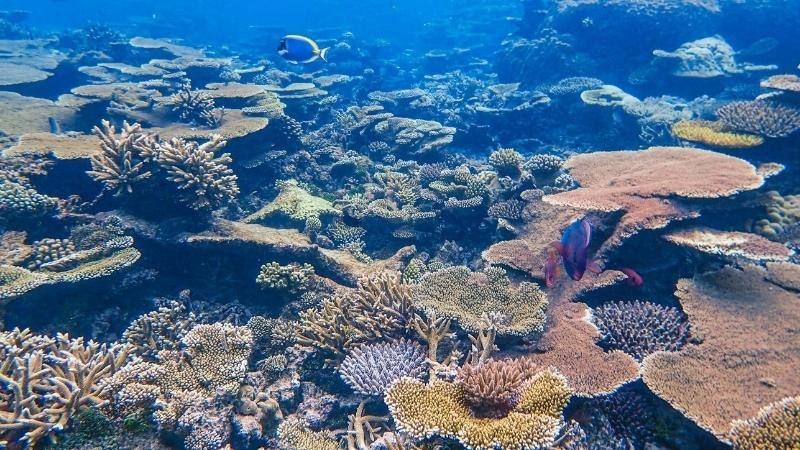
The Phoenix Islands Protected Area, designated a UNESCO World Heritage Site, encompasses over 400,000 square kilometers of ocean surrounding eight atolls and two submerged reef systems. Surrounding coral ecosystems support fish densities, reef health, and invertebrate diversity at levels that have effectively vanished from every human-accessible marine environment on the planet.
Research coordinated through the New England Aquarium’s joint conservation program has documented species assemblages in Phoenix Island waters that serve as irreplaceable reference points for what healthy tropical reef ecosystems looked like before industrial fishing and coastal pollution reshaped global marine biodiversity.
Balleny Islands Antarctic Waters
Strung along the Antarctic Convergence Zone, the Balleny Islands have never been comprehensively explored at ground level despite being identified in 1839. Persistent pack ice, ferocious polar storms, and their extreme southern latitude make even approaching these volcanic islands a serious navigational hazard.
The limited aerial surveys that exist suggest these islands harbor breeding colonies of Antarctic species including Adélie penguins and southern fulmars in numbers that remain unquantified by direct observation.
Niijima Western Pacific Ocean
Japanese researchers documented the emergence of Niijima, a newly formed volcanic island near the Ogasawara archipelago, providing an extraordinary natural experiment. Scientists observed primary ecological succession the very first organisms colonizing completely sterile volcanic rock through wind, waves, and bird dispersal. Before volcanic activity partially reshaped it, this island represented the most literally unexplored territory on Earth because it had not existed long enough for any life to establish itself.
Key Factors That Keep Remote Islands Beyond Human Reach
Understanding why these uncharted islands remain inaccessible requires examining five interconnected barriers that compound each other:
- Extreme geographic isolation Many unexplored islands sit thousands of nautical miles from the nearest research port, requiring expedition vessels capable of multi-week open-ocean crossings through the planet’s most dangerous maritime corridors.
- Volcanic and seismic hazards Islands within active volcanic formation zones produce lethal risks including toxic gas emissions, sudden eruptions, unstable terrain, and submarine earthquakes that can generate localized tsunamis without warning.
- Severe and unpredictable weather Subantarctic and Southern Ocean islands experience near-constant gale-force winds, freezing temperatures, and storm systems that make safe landings possible only during narrow and unpredictable weather windows.
- Chronic research underfunding According to the United Nations Environment Programme (UNEP), global investment in ocean exploration and remote island research remains a fraction of what terrestrial and space exploration receives annually.
- Environmental protection regulations International and national conservation frameworks rightly restrict human access to pristine uninhabited islands, creating necessary tension between scientific curiosity and the imperative to leave fragile ecosystems undisturbed.
These barriers explain why comprehensive exploration of Earth’s remaining unknown islands advances far more slowly than our technological capabilities might suggest.
Why Protecting Unexplored Islands Matters for Global Science and Conservation
The scientific and ecological value of these untouched island territories extends far beyond adventure narratives. Each unexplored island represents a closed evolutionary system a natural laboratory where species, geological processes, and ecological relationships operate without any human contamination.
| Scientific Value | Real-World Significance |
| Endemic species preservation | Organisms found nowhere else face silent extinction if habitats are lost before documentation |
| Climate change baselines | Pristine ecosystems provide reference data showing pre-industrial environmental conditions |
| Pharmaceutical discovery | Isolated organisms produce unique biochemical compounds with potential medical applications |
| Evolutionary biology | Undisturbed habitats demonstrate natural selection and adaptation without human interference |
| Ocean health monitoring | Surrounding marine environments reveal what healthy reef and pelagic systems look like naturally |
| Geological research | Active volcanic islands offer windows into Earth’s internal processes and landmass formation |
A landmark analysis published in the journal Nature established that island ecosystems worldwide support a disproportionately high share of Earth’s endemic species relative to their total land area making their conservation uniquely urgent compared to continental habitats.
The International Union for Conservation of Nature (IUCN) has repeatedly emphasized that island biodiversity faces extinction rates significantly higher than mainland species, largely because island populations tend to be small, specialized, and unable to migrate when conditions change.
How Climate Change Threatens Islands No One Has Ever Visited
Rising sea levels pose an existential threat to low-lying atolls and reef islands that may disappear beneath the ocean surface before any scientific team documents their ecosystems. Data from NASA’s Sea Level Change Portal confirms that global mean sea level has risen over 100 millimeters since 1993, with the rate of increase accelerating in recent years.
Beyond submersion, warming ocean temperatures disrupt the marine ecosystems surrounding unexplored islands by triggering coral bleaching, shifting fish migration patterns, and altering nutrient cycles that sustain entire food webs. These changes can devastate island-adjacent biodiversity even when the islands themselves remain physically above water.
Stronger and more frequent tropical cyclones, driven by warmer sea surface temperatures, also threaten to reshape or destroy fragile island coastlines, nesting habitats, and vegetation systems that took centuries to establish in isolation.
Emerging Technologies Enabling Future Island Exploration
While physical access remains difficult, new technologies are narrowing the knowledge gap surrounding unexplored islands on earth:
| Technology | Application for Island Exploration |
| High-resolution satellite imagery | Identifies vegetation patterns, landform changes, and wildlife aggregations from orbit |
| Autonomous underwater vehicles (AUVs) | Surveys surrounding marine environments without requiring crewed vessel proximity |
| Environmental DNA (eDNA) sampling | Detects species presence from water or soil samples without direct organism capture |
| Drone-based aerial surveys | Maps terrain, monitors wildlife colonies, and collects atmospheric data without human landing |
| LiDAR remote sensing | Penetrates vegetation canopy to reveal geological structures and terrain features beneath |
These tools allow researchers to gather meaningful data about inaccessible islands while minimizing the ecological disturbance that physical expeditions inevitably cause balancing scientific discovery with conservation responsibility.
Conclusion
Unexplored islands on earth stand as living proof that our planet still holds secrets worth protecting. From the glacial fortress of Bouvet Island to the volcanic newborn of Niijima, these untouched territories preserve ecological conditions, endemic species, and geological processes that have been erased from every human-accessible environment worldwide.
The barriers keeping these islands isolated extreme distance, violent weather, volcanic hazards, and protective regulations are the very forces that make them irreplaceable to science. Every undocumented island lost to rising seas or neglect represents a library of biological knowledge destroyed before its first page was ever read.
Protecting these last wild places demands stronger international marine conservation agreements, increased funding for remote sensing and ocean exploration programs, and a collective global commitment to preserving what we have not yet had the chance to study.
If this exploration of Earth’s hidden frontiers resonated with you, share it with someone who values ocean conservation. Explore what organizations like NOAA,UNEP, and IUCN are doing to map and safeguard these remaining pristine ecosystems and consider how your own choices about sustainability contribute to their survival.
Are there still islands on Earth that nobody has ever visited?
Yes, multiple islands across the Southern, Indian, and Pacific Oceans have no recorded history of human landing. While satellites have photographed them from orbit, their extreme remoteness and hazardous conditions mean no scientific team or explorer has physically set foot on their shores. These territories preserve ecosystems entirely free of human influence.
What is the most isolated uninhabited island in the world?
Bouvet Island in the South Atlantic is widely recognized as the most geographically isolated uninhabited island on the planet. It sits approximately 1,700 kilometers from the nearest continental landmass and is almost entirely covered by glacial ice, making even temporary landings exceptionally rare and dangerous.
Why haven’t modern ships and aircraft explored every island by now?
Extreme ocean distances, violent and unpredictable weather systems, active volcanism, limited research budgets, and strict environmental protections all combine to keep certain islands effectively unreachable. Even with current technology, organizing a safe expedition to the most remote uninhabited islands requires years of planning and significant financial investment.
What unique species might live on unexplored islands?
Unexplored islands likely harbor endemic species organisms that evolved in total isolation over thousands or millions of years and exist nowhere else on Earth. These may include specialized seabirds, unique invertebrate communities, undocumented plant species, and microbial organisms producing biochemical compounds unknown to science.
How does climate change specifically endanger unexplored islands?
Rising global sea levels threaten to submerge low-lying atolls and reef islands permanently. Warming ocean temperatures trigger coral bleaching and disrupt marine food webs surrounding these territories. Increasingly severe storm systems can reshape or destroy fragile coastlines and nesting habitats that took centuries to develop in isolation.
What can ordinary people do to help protect these islands?
Supporting international marine conservation organizations, advocating for stronger ocean protection policies, reducing personal carbon footprints to slow climate change, and raising awareness about the existence and value of unexplored islands all contribute meaningfully. Even sharing credible information about these territories helps build public support for their long-term preservation.