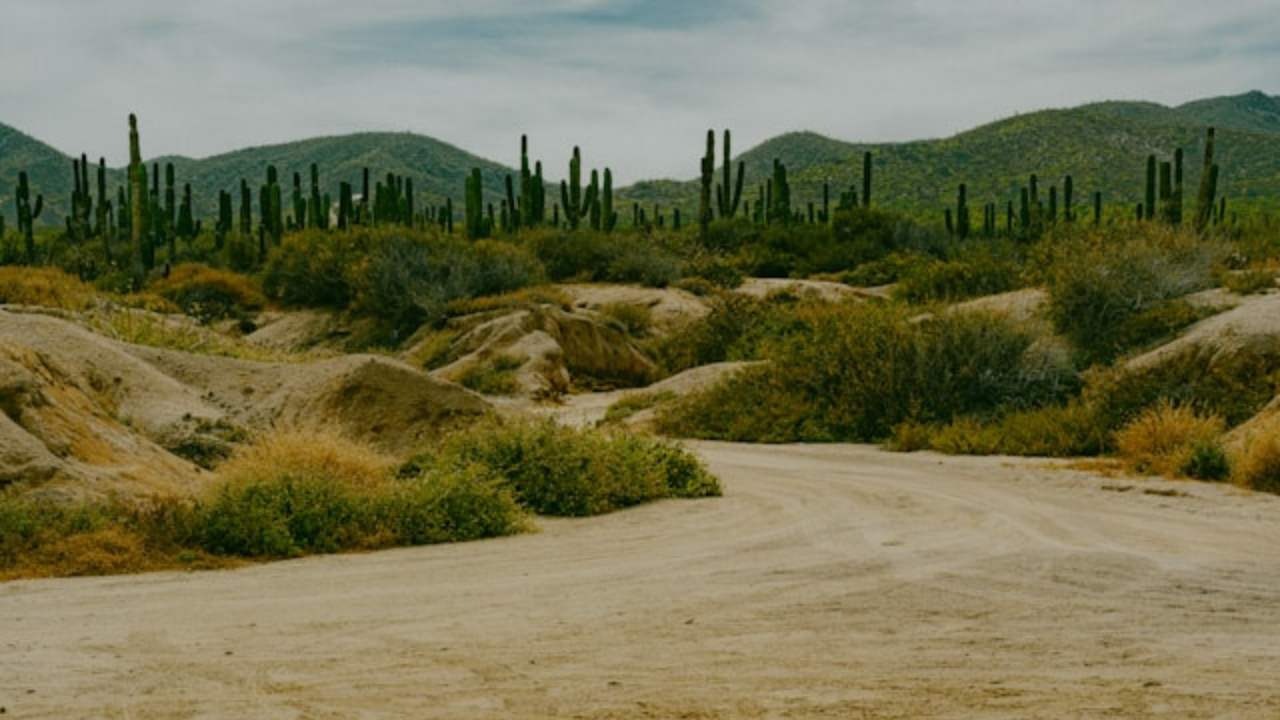
Desert greening is the practice of restoring vegetation, soil health, and ecological function to arid and semi arid lands that have lost their productive capacity. If you arrived here wondering whether humans can actually reverse desertification and turn sand into farmable soil, the short answer is yes, and multiple countries are already doing it at massive scale.
Table of Contents
According to the UNCCD, up to 40 percent of the planet’s land surface is now degraded, directly affecting roughly half of the global population. UNEP Between 2015 and 2019 alone, the world lost at least 100 million hectares of healthy land each year, an area roughly twice the size of Greenland. UNCCD These numbers make one thing clear: the need for large scale land restoration is no longer optional. It is an ecological and economic emergency.
This guide covers what desert greening actually involves, why it matters more now than at any point in modern history, the core techniques driving restoration projects worldwide, and the real world results that prove this work delivers measurable outcomes.

What Is Desert Greening and How Does It Work?
Desert greening refers to a collection of biological, agricultural, and technological interventions designed to convert degraded drylands into self sustaining ecosystems. It is not simply planting trees in sand. Effective desert restoration involves rebuilding soil microbiology, managing water cycles, selecting climate appropriate vegetation, and creating conditions where ecosystems can eventually maintain themselves with minimal human input.
The concept traces back decades. A Japanese horticulture professor named Seiei Toyama spent 30 years working to restore portions of China’s Kubuqi Desert, publishing his findings in 1995. Wikipedia Since then, the field has expanded dramatically, drawing from disciplines as varied as hydrology, mycology, renewable energy engineering, and remote sensing.
At its core, the process targets three interconnected systems:
Soil restoration means reintroducing organic matter, beneficial microbes, and nutrient cycling to ground that has become biologically inert.
Water management focuses on capturing, conserving, and distributing moisture through techniques ranging from ancient rainwater harvesting to modern drip irrigation.
Vegetation establishment involves selecting and planting species with deep root systems and drought tolerance that can stabilize soil, reduce erosion, and gradually shift local microclimates.
When all three systems work together, degraded land begins functioning as a living ecosystem again rather than an expanding wasteland.
Why Desert Greening Matters More Than Ever
Desert greening is critical because the scale of global land degradation now threatens food systems, water supplies, biodiversity, and economic stability across every continent.
The UNCCD estimates that 12 million hectares of productive land are lost to desertification and drought every year, enough area to produce 20 million tons of grain annually. UNCCD This degradation costs an estimated $42 billion in lost income each year worldwide. United Nations
The consequences extend far beyond agriculture. Degraded drylands produce massive dust storms that damage air quality thousands of kilometers away. Communities lose their livelihoods, triggering migration and resource competition. Carbon that was once locked in healthy soil escapes into the atmosphere, accelerating climate change.
Restoring these lands reverses each of those dynamics. Healthy soil sequesters carbon. Vegetation reduces dust emissions. Productive land supports local economies and food security. A single well executed greening project can deliver environmental, social, and economic returns simultaneously.
Here is how the core benefits break down:
| Benefit Category | Specific Outcome |
| Climate | Carbon sequestration through soil organic matter and biomass |
| Food Security | New agricultural capacity on previously barren land |
| Biodiversity | Habitat creation for native plant and animal species |
| Water Cycle | Improved groundwater recharge and reduced surface runoff |
| Economy | Job creation in restoration, farming, and eco tourism |
| Community | Reduced displacement and migration from degraded regions |
Topical Scope: What This Guide Covers
This article sits at the intersection of several related fields, and understanding how they connect is essential for anyone researching desert restoration seriously.
Desertification and land degradation provide the problem context, explaining why arid lands expand and lose productivity. Dryland agriculture and agroforestry represent the practical farming techniques adapted for low rainfall environments. Soil science and microbiology underpin the biological mechanics of restoring dead ground. Water harvesting and irrigation technology address the single biggest constraint in arid zone restoration. Renewable energy plays a growing role in powering desalination, irrigation pumps, and monitoring systems in remote locations. Climate policy and international frameworks like the UNCCD’s Land Degradation Neutrality targets shape the funding and political will behind large projects.
Each of these topics feeds directly into how desert greening is planned, funded, and executed on the ground.
Core Techniques Used in Desert Greening Projects
No single method works everywhere. Successful desert restoration programs combine multiple techniques adapted to local soil conditions, rainfall patterns, and community needs. Below are the most widely used and scientifically supported approaches.
Rainwater Harvesting and Micro Catchment Systems
In regions where annual rainfall is low but not zero, capturing every available drop becomes the foundation of any greening effort. Traditional techniques like zai pits (small planting holes that concentrate moisture around seeds) and half moon bunds (crescent shaped earthworks that trap runoff) have been used across West Africa’s Sahel region for generations.
These low cost, community managed methods require no electricity or imported materials. A farmer in Burkina Faso or Niger can dig zai pits by hand and see measurable vegetation recovery within a single rainy season. When scaled across thousands of hectares, these micro catchments collectively raise local water tables and shift the moisture balance of entire landscapes.
Drip Irrigation and Precision Water Delivery
Where rainfall alone cannot support vegetation, drip irrigation delivers water directly to root zones with minimal evaporation loss. This approach uses 30 to 50 percent less water than conventional flood irrigation, making it essential for water scarce restoration sites.
Israel pioneered large scale drip irrigation in the Negev Desert, turning one of the driest landscapes in the Middle East into a functioning agricultural hub. The same technology now operates across Saudi Arabia, the UAE, Egypt, and parts of sub Saharan Africa, often powered by solar panels to eliminate dependence on grid electricity.
Soil Regeneration Through Biochar, Compost, and Microbial Inoculants
Dead desert soil lacks the organic matter and microbial communities that make plant growth possible. Restoring these biological foundations is just as important as adding water.
Biochar, a charcoal like substance produced by burning organic waste at low oxygen levels, improves soil’s ability to retain moisture and nutrients for years after application. Compost adds organic matter and reintroduces decomposer organisms. Mycorrhizal fungi inoculants form symbiotic relationships with plant roots, dramatically extending their ability to access water and phosphorus in nutrient poor ground.
Together, these amendments transform sterile sand into biologically active soil capable of supporting sustained plant growth.
Planting Drought Resistant and Native Vegetation
Species selection can determine whether a greening project survives its first dry season or collapses entirely. The most effective programs prioritize native and locally adapted species over imported varieties.
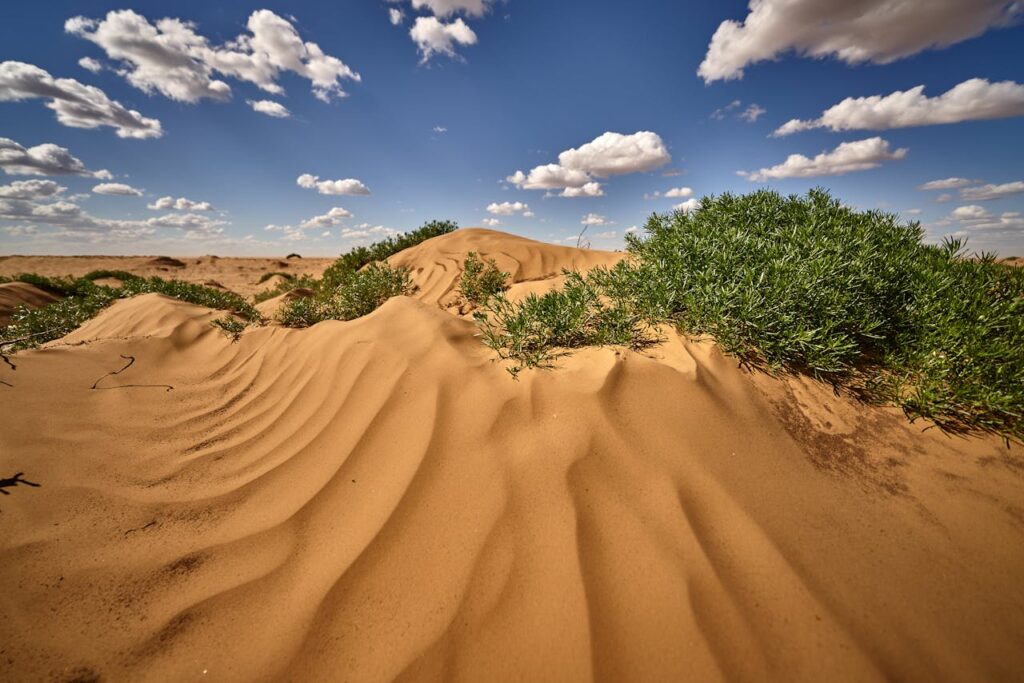
Acacia species, date palms, jujube trees, salt tolerant grasses like Sporobolus, and nitrogen fixing shrubs like Prosopis are commonly used across African and Middle Eastern restoration projects. Their deep root systems stabilize soil against wind erosion while their canopies reduce surface temperature and evaporation beneath them.
In China’s northern deserts, species like saxaul (Haloxylon ammodendron) and sand willow have proven especially effective at anchoring shifting dunes. Liquorice plants have shown strong results under solar panels in Chinese desert farms, fixing atmospheric nitrogen and gradually restoring soil fertility to a level where food crops like tomatoes and melons can eventually grow. Wikipedia
Global Desert Greening Projects That Are Delivering Real Results
The strongest evidence that desert restoration works comes from projects already producing measurable outcomes across multiple continents. These are not theoretical proposals. They are active, data backed initiatives transforming some of the harshest landscapes on Earth.
China’s Taklamakan and Kubuqi Desert Restoration
China operates the largest desert greening programs in history. The Three North Shelterbelt Program, launched in 1978, has planted more than 66 Live Science billion trees across northern China. In November 2024, authorities completed a 3,000 kilometer green belt encircling the entire Taklamakan Desert in Xinjiang.Wikipedia
Overall, China’s forest coverage has grown from roughly 10 percent of its territory in 1949 to over 25 percent today. Live Science A2026 study published in the Proceedings of the National Academy of Sciences (PNAS) found that vegetation expansion along the Taklamakan’s margins has turned what researchers called a “biological void” into a measurable carbon sink.
The Kubuqi Desert in Inner Mongolia tells a similar story. Techniques including drought resistant planting, drip irrigation, and straw checkerboard barriers to stabilize sand dunes have improved air quality, reduced sandstorm frequency, and generated economic opportunities through eco tourism and herbal medicine production. NDEP
However, these programs are not without criticism. A recent study found that China’s massive regreening efforts have altered the country’s water cycle, moving atmospheric moisture in ways scientists are only beginning to understand, with effects detectable up to 7,000 kilometers from the planting sites. Asia Financial
Africa’s Great Green Wall Initiative
Africa’s Great Green Wall is the most geographically ambitious land restoration project ever attempted. Launched by the African Union in 2007, it aims to restore 100 million hectares of degraded land across the Sahel, sequester 250 million tons of carbon, and create 10 million jobs by 2030. Wikipedia
As of recent reporting, roughly 30 million hectares have been restored and three million jobs created, putting the project at approximately 30 percent completion. Geographical Progress is real but uneven. Senegal has planted over 11 million trees, while Ethiopia has reclaimed 15 million hectares of degraded land.Wikipedia
The initiative faces serious obstacles. As of 2023, the project was described as facing the risk of collapse due to terrorist threats in the Sahel, insufficient political commitment, and funding that has been pledged but not delivered to grassroots projects. Wikipedia Total pledged funding surpassed $33 billion by 2024, yet only a fraction has reached on the ground restoration teams. Greenly
Despite these challenges, the Great Green Wall remains the most important test case for whether international cooperation can reverse desertification at continental scale.
Israel’s Negev Desert and Saudi Arabia’s Al Baydha Project
Israel has become a global leader in desert agriculture through advanced drip irrigation, greenhouse farming, hydroponics, and desalination, growing commercial crops in areas that receive almost no rainfall. NDEP The Negev model demonstrates that technology driven desert farming can be economically viable, not just ecologically beneficial.
In Saudi Arabia, the Al Baydha Project restores degraded land through water harvesting, terracing, and the revival of traditional Bedouin land management practices, blending modern restoration science with centuries old indigenous knowledge. NDEP
Challenges and Criticisms of Desert Greening
Desert restoration is not a simple solution, and honest assessment of its limitations is essential.
Water trade offs represent the most significant concern. Trees consume large volumes of water, and in already dry regions, large scale planting can lower water tables and reduce downstream flows. China’s greening programs have measurably altered regional hydrology, raising questions about long term sustainability in water scarce zones. Asia Financial
Cost and maintenance remain barriers. Restoring degraded land requires sustained investment over decades, not one time planting events. Infrastructure for irrigation, monitoring, and community support adds expense that many governments struggle to maintain.
Monoculture risks emerge when projects prioritize fast growing single species over diverse native ecosystems. Monoculture plantations are more vulnerable to disease, pests, and climate shocks than biodiverse restoration sites.
Measurement gaps make it difficult to verify actual ecological outcomes. A satellite analysis of Great Green Wall sites in Senegal found that only one out of 36 planted areas studied showed significantly more vegetation than would have occurred naturally, highlighting the gap between trees planted and land actually restored. The Conversation
The Role of AI, Satellites, and Emerging Technology
The next generation of desert greening projects will rely heavily on technology that did not exist when most current programs began.
Satellite monitoring through platforms like the Great Green Wall Observatory, launched in 2024 by the UNCCD, now tracks funding flows, project progress, and vegetation change across all 11 participating African countries in near real time.
Artificial intelligence is being applied to optimize irrigation scheduling, predict drought stress before visible damage occurs, and identify the most promising restoration sites based on soil composition and rainfall probability.
Hydrogel polymers, which absorb and slowly release water around plant roots, are extending seedling survival rates in extreme heat. Combined with solar powered desalination, these technologies are making restoration feasible in locations that were previously considered permanently barren.
Topical Context: Where Desert Greening Fits in the Broader Landscape
Desert greening connects to several related fields that researchers, policymakers, and practitioners should understand together.
Regenerative agriculture shares many of the same soil restoration principles but typically applies them to existing farmland rather than abandoned desert. Climate adaptation policy provides the funding mechanisms and political frameworks that enable large restoration programs. Ecological engineering offers design principles for constructing self sustaining ecosystems rather than simply planting vegetation. Carbon markets are increasingly relevant as restored drylands generate verifiable carbon credits that can attract private investment to supplement government funding.
Understanding these connections helps explain why desert greening is gaining momentum across so many sectors simultaneously.
Conclusion
Desert greening is no longer an experimental concept. Billions of trees already stand where sand once drifted freely. Millions of hectares have shifted from degraded wasteland back toward productive use. The data from China, Africa, Israel, and Saudi Arabia confirms that humans possess the knowledge and tools to reverse desertification when political will and sustained funding align.
The challenges are real. Water constraints, funding gaps, security threats, and measurement difficulties all slow progress. But the cost of inaction, measured in lost farmland, displaced communities, and accelerating climate damage, is far higher than the cost of restoration.
If this topic matters to you, share this guide with someone working in agriculture, environmental policy, or land management. The more people understand what desert greening can achieve, the faster these projects attract the support they need.
What is desert greening in simple terms?
Desert greening is the process of restoring plant life, healthy soil, and functioning ecosystems to dry, degraded land that has lost its ability to support vegetation. It combines water management, soil improvement, and carefully chosen plant species to rebuild landscapes that can eventually sustain themselves.
How much does desert greening cost per hectare?
Costs vary widely depending on location, technique, and scale. Estimates from various UNCCD reports suggest that large scale land restoration in the Sahel requires roughly $4 billion per year to restore 8.2 million hectares, which translates to approximately $400 to $500 per hectare for community based programs. Technology intensive approaches like those in Israel or the UAE can cost significantly more.
Can deserts actually be turned into forests?
Not all deserts should become forests, and attempting to force forest ecosystems onto naturally arid land can cause more harm than good. Effective desert greening focuses on restoring native vegetation, grasslands, and shrublands appropriate to local climate conditions rather than imposing forest cover where it would not naturally exist.
What is the most successful desert greening project in the world?
China’s combined restoration programs across the Kubuqi, Taklamakan, and northern drylands represent the largest and most documented success by area. Africa’s Great Green Wall holds the record for geographic ambition, spanning 8,000 kilometers across 11 countries, though it remains only about 30 percent complete.
Does desert greening help fight climate change?
Yes. Restored vegetation and healthy soil both absorb carbon dioxide from the atmosphere. The PNAS study on China’s Taklamakan shelterbelt confirmed that the project has created a measurable carbon sink. Africa’s Great Green Wall targets 250 million tons of carbon sequestration once fully realized.
How long does it take for desert greening to show results?
Simple techniques like zai pits and rainwater harvesting can produce visible vegetation recovery within one to two rainy seasons. Large scale ecosystem restoration with tree planting and soil rehabilitation typically requires 5 to 15 years of sustained effort before the landscape becomes self maintaining.