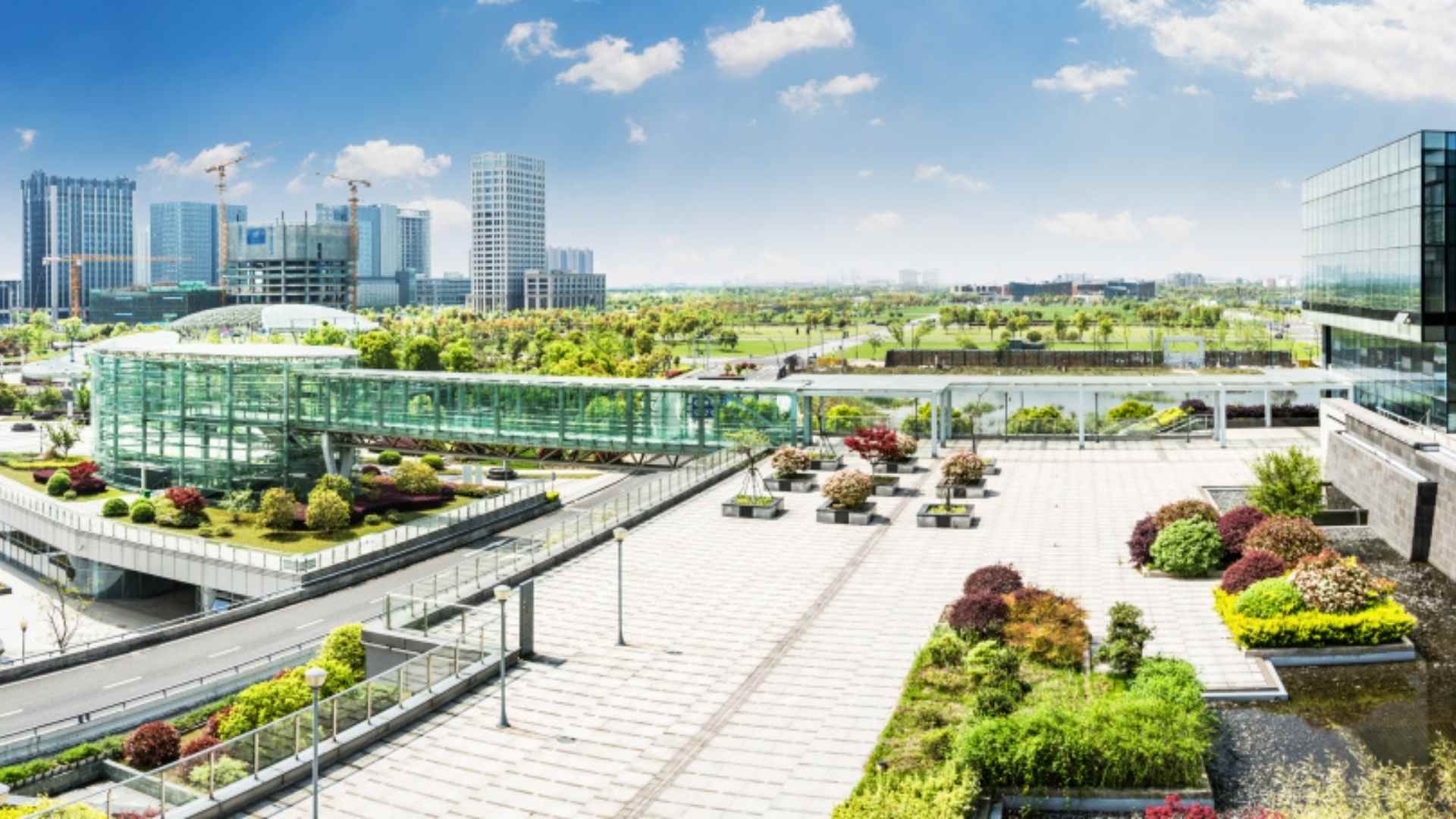
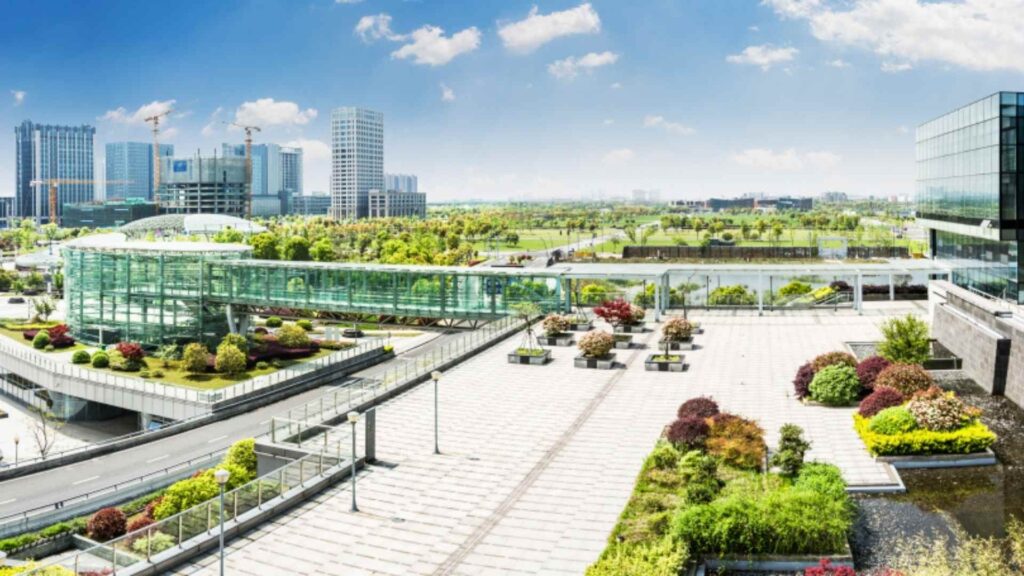
Green landscape architecture is the discipline behind every public park that absorbs a storm instead of flooding the street, every corporate campus that cools the air instead of trapping heat, and every waterfront restoration that rebuilds habitat instead of paving it over. According to the American Society of Landscape Architects, the profession combines design, ecology, hydrology, and engineering to create outdoor environments that perform environmentally while serving the people who use them. Most people have never heard the term. Yet from pocket parks to regional watershed plans, green landscape architects shape more of the built environment than almost any other design profession.
Table of Contents
This guide covers what green landscape architecture means in practice, how it emerged from over a century of ecological thinking, the rating systems that hold it accountable, the projects that demonstrate what it produces, and the career path for those who want to enter the field. For broader context on how climate change is driving demand for this work, our climate and global change coverage tracks the forces reshaping the profession in real time.
What the Discipline Covers
A landscape architect is not a gardener with a larger budget. The American Society of Landscape Architects describes the profession as one requiring an accredited degree (typically a Bachelor or Master of Landscape Architecture from a program recognized by the Landscape Architectural Accreditation Board), a supervised practice period, and passage of the Landscape Architect Registration Examination (LARE) before a state license is granted. Training spans design, plant science, hydrology, soil mechanics, civil engineering, and environmental planning.
The “green” prefix signals a specific commitment: treating ecological performance as a primary design objective rather than an afterthought. A green landscape architect models stormwater behavior across a site, estimates carbon sequestration potential across planting alternatives, specifies native species that anchor local food webs, and selects hardscape materials based on embodied carbon rather than catalog price. Every decision is weighed against both human function and environmental return.
The Council of Educators in Landscape Architecture established the intellectual foundation for this approach in 1988, defining sustainable landscapes as spaces that support human well-being while remaining in harmony with natural systems, that avoid depleting or damaging other ecosystems, and that work with existing site conditions rather than overriding them. Nearly four decades later, that definition reads like a mission statement for the field as it operates today.
The Difference Between Landscape Architecture, Landscape Design, and Gardening
These three terms get used interchangeably in casual conversation, but they describe different scopes of work, different levels of accountability, and different entry requirements. The distinction carries real legal weight.
| Practice | Typical project scale | Required education | Professional license |
| Gardening | Individual residential yards | No formal requirement | Not required |
| Landscape design | Residential to small commercial | Voluntary certificates available | Not required |
| Landscape architecture | Individual sites to entire regions | Accredited bachelor’s or master’s degree | Required (state-issued) |
A licensed landscape architect, as the U.S. Green Building Council notes in its SITES documentation, assumes legal responsibility for stormwater engineering, public safety, ADA compliance, and ecological outcomes on projects that often involve public funding and regulatory oversight. A gardener or landscape designer offers valuable services at a smaller scale without that level of exposure. Hiring the wrong professional for a given project wastes both budget and time.
Where the Discipline Came From
Green landscape architecture did not begin in the 2020s. Its intellectual roots reach back more than a century.
Frederick Law Olmsted, the designer of New York’s Central Park and the founder of the American park movement, was arguing by 1903 that cities needed connected networks of green corridors rather than isolated parks. His vision of linked open spaces improving public health and ecological function across urban areas anticipated what we now call green infrastructure by more than a hundred years. Landezine, one of the field’s most respected project databases, traces modern green infrastructure thinking directly back to Olmsted’s corridor concept.
The formal pivot toward ecological design came in 1969 when Ian McHarg published “Design with Nature.” McHarg proposed that every design decision should begin with a layered analysis of a site’s geology, hydrology, vegetation, wildlife, and climate rather than with the designer’s aesthetic preferences. His overlay mapping technique became the conceptual ancestor of modern GIS-based environmental planning, and the American Society of Landscape Architects continues to cite it as foundational to contemporary practice.
Since McHarg, the profession has expanded into three areas that define its current direction: climate adaptation (designing for rising seas, extreme heat, drought, and intensifying storms), social equity (distributing green infrastructure benefits across income levels rather than concentrating them in wealthy districts), and biodiversity (treating designed landscapes as functional habitat in regions where undeveloped land has vanished). Our coverage of global warming and melting ice caps illustrates the scale of the climate challenge that is now driving demand for this work.
Five Principles at the Core of Green Practice
Strip away the jargon and serious green landscape architecture reduces to five operating principles. They apply whether the project is a 500-square-foot courtyard or a 50,000-acre watershed plan.
Water Comes First
Every green landscape architect begins with hydrology. Before a single plant is placed, the designer maps how water enters the site, moves across it, pools, and exits. Rain gardens, bioswales, permeable paving, constructed wetlands, and vegetated channels are not decorative features. According to the Sustainable SITES Initiative, they are infrastructure performing the same function as storm sewers while also filtering pollutants and recharging aquifers. Water dictates what every other system on the site can do. Our coverage of desert greening projects worldwide shows how landscape architects in the driest regions on Earth have applied this principle at civilization scale.
Soil Is Living Infrastructure
In conventional construction, topsoil gets scraped away and hauled off. In green practice, soil is protected, tested, and restored. The SITES rating system includes specific credits for soil protection and restoration because healthy soil sequesters carbon, stores water, supports root networks, and filters runoff. Where prior land use has damaged the soil profile (a parking lot, a brownfield, a compacted construction zone), restoration becomes a planned project phase rather than an afterthought.
Native Plants Build the Food Web
Native and regionally adapted species are specified not for aesthetics but because they form the foundation of local ecosystems. They host specialist pollinators, feed native birds, and sustain the broader web of organisms that imported ornamental plants cannot support. The grass meadow ecosystem is one of the richest native plant communities a landscape architect can specify in temperate climates. Designed meadow plantings have become standard features on corporate campuses, urban parks, and highway corridors across the country. For a deeper look at why native ecosystems matter at the species level, our guide on what would happen if bees disappeared traces the consequences of food web disruption.
Materials Are Chosen by Carbon Cost
Hardscape carries embodied carbon from manufacturing and transportation. Green landscape architects specify locally sourced stone, recycled aggregate, reclaimed timber, and salvaged urbanite wherever performance requirements allow. Concrete is minimized and frequently blended with low-carbon supplementary materials. The goal, as Landezine documents across dozens of case studies, is to reduce the carbon footprint of everything on the site that is not alive.
Public Access Is Non-Negotiable
An ecologically flawless landscape that nobody can use or reach has failed at its job. Green landscape architecture commits to equitable access, universal design, and programming that draws real people into real spaces. The SITES framework, according to the U.S. Green Building Council, includes credits specifically for human health and well-being alongside its ecological metrics. The discipline measures success through occupancy rates and user satisfaction surveys in addition to stormwater capture volumes and species counts.
The SITES Rating System
The profession’s most important accountability framework is the Sustainable SITES Initiative, known as SITES. The American Society of Landscape Architects, the Lady Bird Johnson Wildflower Center at the University of Texas at Austin, and the United States Botanic Garden developed SITES jointly as the landscape equivalent of the LEED rating system used for buildings.
SITES awards up to 200 points across ten credit categories, according to its published documentation: site context, pre-design assessment, water, soil and vegetation, materials, human health and well-being, construction, operations and maintenance, monitoring, and innovation. Every project must satisfy 18 prerequisites before any credits are counted, and a minimum of 70 points is required for basic certification. Four rating tiers exist above that threshold.
The U.S. General Services Administration adopted SITES for federal capital construction projects, and in 2017, as the U.S. Green Building Council confirmed, Rhode Island became the first state to write SITES into green building law. The world’s first four-star SITES certification (the highest tier) was awarded to the Center for Sustainable Landscapes at Phipps Conservatory and Botanical Gardens in Pittsburgh, designed by Andropogon Associates.
Firms increasingly use the SITES framework as an internal design checklist even on projects that will not pursue formal certification. The structure forces teams to address soil, water, habitat, materials, and human use systematically rather than treating any of them as optional.
Green Landscape Architecture at Every Scale
The profession’s defining strength is range. Most design fields operate at a single scale. Landscape architecture works across three or more simultaneously.
Site scale (under 5 acres). A single park, a corporate courtyard, a school campus. Most SITES-certified projects fall here. The work allows fine-grained control over planting, grading, paving, and microclimate.
District and neighborhood scale (5 to 200 acres). Waterfronts, university campuses, large parks, and planned communities. At this level, landscape architects coordinate with civil engineers, urban planners, and architects to integrate stormwater systems, green corridors, and public space into broader development.
Regional and watershed scale. River corridors, coastal resilience plans, multi-jurisdiction greenway networks, and national infrastructure programs. Here the discipline intersects with hydrology, ecology, and public policy. Projects at this scale determine how entire metropolitan areas handle flooding, heat, and habitat loss.
The capacity to move between a rain garden and a regional watershed plan, sometimes within the same firm on the same project, is what makes green landscape architecture a strategic discipline rather than a decorative one.
Landmark Projects Worth Studying
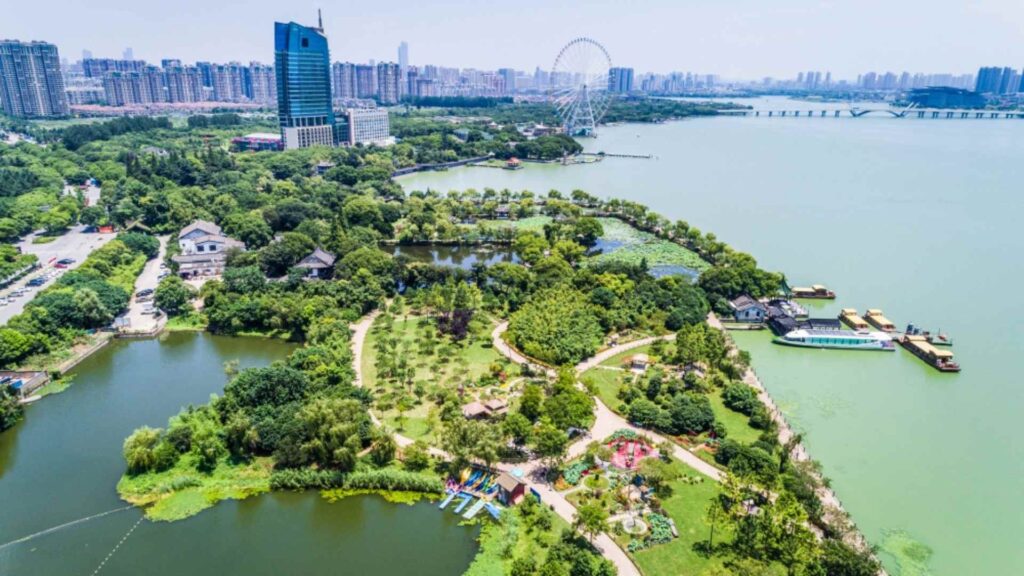
Real projects illustrate the discipline more clearly than theory. The table below, compiled from ASLA awards records and the Sustainable SITES Initiative project database, summarizes five that represent different scales, geographies, and certification paths.
| Project | Design firm | Location and year | Project scale | Key achievement |
| Center for Sustainable Landscapes | Andropogon Associates | Pittsburgh, 2012 | Site | World’s first four-star SITES certification |
| Chicago Navy Pier Transformation | James Corner Field Operations | Chicago, 2016 onward | District | SITES Gold certification |
| Brooklyn Bridge Park | Michael Van Valkenburgh Associates | New York, 2010 onward | 85-acre waterfront | Engineered soil and stormwater on former shipping piers |
| UTEP Campus Transformation | Ten Eyck Landscape Architects | El Paso, 2017 | Campus core | ASLA Professional General Design Honor Award |
| Sponge Cities Program | Turenscape (Kongjian Yu) | China, 2015 onward | Regional (multi-city) | Largest climate-adaptive landscape program worldwide |
Center for Sustainable Landscapes (Pittsburgh, 2012). Designed by Andropogon Associates for Phipps Conservatory and Botanical Gardens. According to the SITES project database, it treats every drop of stormwater on site, captures building greywater for landscape irrigation, and integrates the grounds into the conservatory’s research program.
Chicago Navy Pier (2016 onward). James Corner Field Operations, the firm behind New York’s High Line, turned a fading tourist destination into a functioning public landscape. The project earned SITES Gold certification through its use of regionally native plantings, integrated stormwater management, and reorganized pedestrian flow.
Brooklyn Bridge Park (2010 onward). Michael Van Valkenburgh Associates converted decommissioned shipping piers along the East River into 85 acres of public park land. The project required engineered soil systems capable of supporting mature trees on concrete pier structures and salt-tolerant native plantings adapted to waterfront conditions.
UTEP Campus Transformation (2017). Ten Eyck Landscape Architects replaced a parking-dominated campus center at the University of Texas at El Paso with plantings drawn from the Chihuahuan Desert ecosystem. The American Society of Landscape Architects awarded the project a Professional General Design Honor Award, and it has become a model for arid-climate campus design.
Sponge Cities (2015 onward). Kongjian Yu and his firm Turenscape, profiled extensively by Landezine, are leading a multi-city retrofit program across China that absorbs urban flooding through constructed wetland networks, permeable surfaces, and restored natural watercourses. It is the largest ongoing experiment in climate-adaptive green landscape architecture on the planet.
How to Enter the Field
The career path is structured and transparent.
Education. A Bachelor of Landscape Architecture (BLA) or Master of Landscape Architecture (MLA) from a program accredited by the Landscape Architectural Accreditation Board is the standard gateway. The MLA route, common for career-changers, typically takes two to three years for applicants with a prior bachelor’s degree. Coursework covers studio design, plant identification, ecology, hydrology, construction materials and methods, design history, and increasingly climate-focused electives.
Licensure. Most states require roughly two years of supervised professional practice after graduation, followed by passage of the Landscape Architect Registration Examination (LARE). The license permits a practitioner to call themselves a landscape architect and to stamp construction documents.
Green specialization. The SITES Accredited Professional (SITES AP) credential, administered by Green Business Certification Inc. (the same organization that administers LEED credentials), signals fluency with the SITES rating system. ASLA membership provides professional development resources, and many practitioners supplement their training through continuing education in stormwater engineering, ecological restoration, or climate-adaptation design at land-grant universities.
Compensation. Entry-level designers in the United States generally earn between $55,000 and $70,000, according to ASLA salary survey data. Licensed mid-career practitioners typically fall in the $85,000 to $130,000 range. Principals and directors at established firms earn beyond that. Demand continues to grow, driven by climate-adaptation investment, urban greening programs, and federal infrastructure spending.
Why Climate Makes This Discipline Essential
The argument for green landscape architecture in 2026 rests on climate reality. Cities that have invested in green infrastructure (urban tree canopy, permeable surfaces, restored wetlands, native plantings) are measurably more resilient to heat waves, flooding, and drought than those that have not.
The American Society of Landscape Architects codified this connection in its Climate Action Plan, published in the early 2020s, calling on the profession to treat carbon drawdown, biodiversity recovery, and equitable resilience as core design outputs. Firms like Sasaki have built internal carbon-accounting tools (notably the Carbon Conscience calculator) that let designers estimate the embodied and sequestered carbon of a project before construction begins.
Not everyone agrees the field has delivered. A widely discussed essay in Harvard Design Magazine argued that some “green” landscape architecture is functionally greenwash layered over conventional development. That criticism has merit in specific cases. The more accurate summary, as the Sustainable SITES Initiative’s own project tracking data shows, is that the discipline’s frameworks produce genuine environmental results when applied with rigor, but the profession still faces uneven implementation across projects and geographies. The science is not the bottleneck. Political will and funding are.
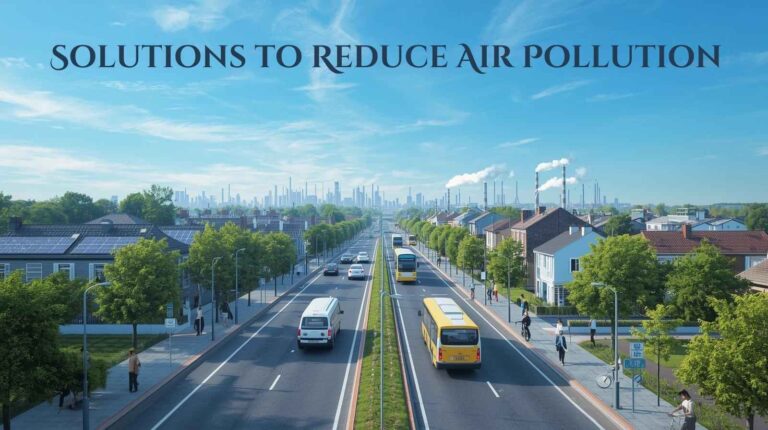
For property owners and municipalities looking to understand where their own environmental footprint fits, our sustainability assessment and eco tools offer a practical starting point. And for communities concerned about air quality’s connection to urban design, our guide to solutions for reducing air pollution covers the overlap between green infrastructure and cleaner air.
Are “green” and “sustainable” landscape architecture the same thing?
In current professional usage, yes. Both terms appear interchangeably in ASLA publications, university programs, and the SITES framework. “Green” tends to emphasize ecological function, while “sustainable” emphasizes long-term system health. A growing number of practitioners now use “regenerative” to describe work that goes beyond minimizing harm and actively restores degraded ecosystems.
Do landscape architects only work in cities?
No. The profession covers the full range of land types, according to ASLA: urban parks and streetscapes, suburban developments, university and corporate campuses, rural conservation projects, regional watershed plans, and private residential estates. The common thread is the design of outdoor space at any scale, guided by environmental performance and human function.
How does green landscape architecture differ from green building?
Green building (most commonly certified through LEED) addresses buildings and their immediate envelope. Green landscape architecture addresses the outdoor systems that surround, connect, or exist independently of buildings: stormwater networks, planted areas, public open space, and ground-level infrastructure. The U.S. Green Building Council administers both LEED and SITES, and the two certifications increasingly appear together on the same development.
Does the field actually deliver measurable results?
Evidence is mixed but improving. Rigorously certified projects (especially those achieving SITES Gold or higher) have documented reductions in stormwater runoff, measurable biodiversity gains, and lower urban surface temperatures, according to data published by the Sustainable SITES Initiative. Critics correctly note that less rigorous projects sometimes use “green” as branding without substantive environmental change. The tools exist. Consistent application remains the open challenge.
Can a homeowner hire a landscape architect?
Yes, though fees are typically higher than for a landscape designer or master gardener. For straightforward residential projects, a designer applying green principles is usually the more practical choice. Landscape architects add the most value when regulatory complexity is involved (stormwater permits, slope grading, proximity to wetlands) or when the property is large enough to require site-scale engineering.
What is the fastest way to explore the field without a degree?
Start with the SITES AP exam preparation resources available through ASLA and Green Business Certification Inc. Then consider a continuing-education program in sustainable landscape practices at a university extension. Colorado State University Extension’s Landscape for Life program is among the most accessible, and several other land-grant universities offer comparable coursework.
Sources
- American Society of Landscape Architects. “The Sustainable SITES Initiative (SITES).” https://www.asla.org/resources/practitioners/the-sustainable-sites-initiative
- Sustainable SITES Initiative. “Developing Sustainable Landscapes.” https://www.sustainablesites.org/
- U.S. Green Building Council. “SITES Certification and Sustainability for Landscapes.” https://support.usgbc.org/hc/en-us/articles/4425464783891-SITES-certification-and-sustainability-for-landscapes
- Harvard Design Magazine. “Green World, Gray Heart? The Promise and the Reality of Landscape Architecture in Sustaining Nature.” https://www.harvarddesignmagazine.org/articles/green-world-gray-heart-the-promise-and-the-reality-of-landscape-architecture-in-sustaining-nature/
- Landezine. “Green Infrastructure and Landscape Architecture.” https://landezine.com/green-infrastructure-and-landscape-architecture/