Termite mounds are towering, self ventilated structures built by colonies of millimeter sized insects using nothing more than soil, saliva, and digested organic matter. They function as climate controlled habitats that regulate temperature, humidity, and airflow for millions of inhabitants living beneath them. Some stand taller than a giraffe, others stretch wider than a school bus, and a few have survived for nearly 4,000 years.
Table of Contents
If you searched this topic looking for answers about what termite mounds actually are, how they work internally, or why they matter to science and architecture, this guide covers all of it. We go far beyond a surface overview by unpacking the biology, physics, species differences, ecological impact, and real world engineering applications that make termitaria one of the most studied natural structures on the planet.
Topical Range Covered in This Guide:
| Topic Cluster | What You Will Learn |
| Biology & Colony Structure | Castes, queen role, colony lifecycle |
| Construction Materials & Process | Soil composition, saliva bonding, building behavior |
| Internal Architecture | Ventilation shafts, nurseries, fungal chambers |
| Thermoregulation Science | How mounds control temperature without energy |
| Species & Regional Differences | Macrotermes, Amitermes, Nasutitermes, Syntermes |
| Ecological Importance | Soil enrichment, biodiversity, nutrient cycling |
| Biomimicry & Human Architecture | Eastgate Centre, passive cooling, sustainable design |
| Threats & Conservation | Deforestation, climate change, habitat loss |
What Exactly Is a Termite Mound?
A termite mound, also called a termitarium, is the above ground portion of a much larger underground colony. The mound itself is not where most termites live. Instead, it acts as a ventilation and gas exchange system for the subterranean nest below, functioning in a way that Harvard researchers have compared to a pair of lungs.
The structure is built from a mixture of local soil particles, termite saliva, and fecal material. Once dried, this blend hardens into a cement like composite that can withstand heavy tropical rains and seasonal flooding. Depending on the species and environment, mounds can take the form of tall cathedral spires, flat topped domes, blade shaped wedges, or broad conical heaps.
Key Physical Characteristics
| Feature | Typical Range |
| Height | 1 to 8 meters (some exceed 9 meters) |
| Base Diameter | 3 to 30 meters |
| Wall Thickness | 30 to 50 centimeters |
| Internal Temperature Variance | Maintained within roughly 2°C despite outside swings of 30°C or more |
| Lifespan | Decades to thousands of years |
According to radiocarbon dating published in Current Biology (2018), researchers found that some Brazilian mounds built by Syntermes dirus range from 690 to 3,820 years old. The total volume of displaced soil across roughly 200 million mounds in Brazil’s Caatinga region equals approximately 10 cubic kilometers, a volume comparable to around 4,000 Great Pyramids of Giza.
How Do Termites Build Their Mounds?
Termite construction operates without any centralized plan, blueprint, or leader coordinating the work. Instead, it relies on a process scientists call stigmergy, where individual termites respond to local environmental signals such as temperature gradients, humidity levels, and chemical cues from pheromones and metabolic gases.
A 2019 study published in Proceedings of the National Academy of Sciences (PNAS) by researchers at Harvard modeled this feedback loop. As termites modify a section of the mound, the resulting change in airflow redistributes pheromone concentrations and temperature. Those shifted signals trigger new building behavior in nearby workers. The cycle repeats continuously, producing complex architecture from extremely simple individual rules.
The Construction Feedback Loop
- External temperature changes drive airflow shifts inside the mound
- Airflow carries pheromones and CO₂ to different areas
- Workers detect chemical concentration changes locally
- They deposit or remove soil in response to those signals
- The modified structure alters airflow again, restarting the cycle
This self organizing process explains why mound shapes vary so dramatically between species and climates. Tall, narrow mounds emerge under certain thermal conditions, while squat, wide mounds arise under different ones, all without any termite “knowing” the overall design.
Internal Structure of a Termite Mound
The inside of a termite mound is far more engineered than it appears from outside. Each section serves a specific function within the colony’s survival system.
Ventilation Network
The most critical feature is the network of porous channels and shafts running through the mound walls. These tunnels allow stale, CO₂ rich air from the underground nest to rise and diffuse outward through the mound’s surface. Fresh, oxygen rich air enters through lower openings. Research indicates that the mound essentially “breathes” in response to daily temperature cycles, with warm daytime air creating upward convection and cooler nighttime air reversing the flow.
Royal Chamber
Deep underground, the queen occupies a reinforced cell with walls significantly thicker than surrounding chambers. A mature Macrotermes queen can grow to over 10 centimeters in length and produce thousands of eggs daily. Workers constantly tend to her, removing eggs and transporting them to nursery chambers.
Fungal Gardens
Species in the subfamily Macrotermitinae cultivate a specialized fungus called Termitomyces inside dedicated chambers. The fungus breaks down plant cellulose that the termites cannot digest on their own. These gardens must be maintained at precise temperature and humidity levels, which is one reason the mound’s ventilation system is so critical. The fungal chambers are typically positioned near the center of the underground nest where conditions are most stable.
Nursery Galleries
Eggs and developing nymphs are kept in thin walled chambers arranged to maximize warmth from the colony’s collective metabolic heat. Workers relocate brood between chambers as temperature conditions shift, essentially performing manual climate control at a micro scale.
How Termite Mounds Regulate Temperature
One of the most studied aspects of termite mounds is their ability to maintain a nearly constant internal temperature while outdoor conditions fluctuate wildly. In African savannas, for instance, daytime air may exceed 40°C while nighttime temperatures drop below 5°C. Yet the interior of a Macrotermes mound fluctuates by only a couple of degrees.
The Mechanism
The mound wall itself acts as a thermal mass, absorbing heat during the day and releasing it slowly at night. Meanwhile, the porous outer surface allows gas exchange driven by the temperature difference between the mound interior and the outside air. During the day, the sun heats the mound’s outer walls, warming the air inside the peripheral channels. This warm air rises and exits through upper pores while cooler air is drawn in from below. At night, the process partially reverses.
This is not a simple chimney effect. A 2019 PNAS paper demonstrated that daily temperature oscillations are the primary driver of these internal flows, not steady state convection. The mound essentially uses the sun’s rhythm as a pump.
Why This Matters Beyond Biology
This passive cooling mechanism caught the attention of architect Mick Pearce in the early 1990s. He applied termite inspired ventilation principles to design the Eastgate Centre in Harare, Zimbabwe, completed in 1996. The 48,000 square meter office and shopping complex operates without conventional air conditioning. According to multiple engineering assessments, the building consumes only about 10% of the energy a conventionally cooled building of similar size would require. The owners reportedly saved $3.5 million by eliminating the need for a mechanical cooling system, and tenants pay roughly 20% lower rent compared to neighboring buildings.
Major Termite Species and Their Mound Types
Not all termite mounds look or function the same. The shape, size, and internal design depend heavily on the species building them and the climate they inhabit.
Macrotermes (Cathedral Mounds) Africa
These are the largest and most iconic mound builders. Macrotermes bellicosus and Macrotermes michaelseni construct enclosed mounds in sub Saharan savannas that can exceed 8 meters in height. Their mounds feature fully sealed exteriors with internal ventilation driven by thermal gradients. They also cultivate fungal gardens, making their internal climate requirements especially strict.
Amitermes meridionalis (Magnetic or Compass Mounds) Northern Australia
These flat, blade shaped mounds are oriented along a north south axis. The narrow edges face east and west, minimizing sun exposure during the hottest part of the day while maximizing warmth from the low angle morning and evening sun. This orientation helps the colony regulate temperature in Australia’s harsh tropical climate.
Nasutitermes triodiae (Cathedral Termites) Australia
Found across northern Australia, these termites build tall, roughly conical mounds that can reach 6 to 8 meters. Their mounds feature open chimney structures that facilitate airflow differently from the sealed mounds of Macrotermes.
Syntermes dirus (Caatinga Mounds) Brazil
Responsible for the massive 200 million mound network in northeastern Brazil visible from satellite imagery. These mounds are conical waste piles, each roughly 2.5 meters tall and 9 meters wide, created as termites excavate vast underground tunnel systems. Unlike most mound building species, these structures are not ventilation systems but simply excavated soil deposits.
[Article continues in Part 2 with: Ecological Importance & Soil Science, Biodiversity & Habitat Role, Threats to Termite Mounds, Biomimicry Applications Beyond Eastgate, Conservation Efforts, FAQ Section with Featured Snippet Optimization, and Final Takeaways]
Ecological Importance of Termite Mounds
Termite mounds are not just insect shelters. They function as ecological engines that shape soil chemistry, water movement, and plant distribution across entire landscapes.
Soil Enrichment and Nutrient Cycling
Termites transport minerals from deep underground layers to the surface during mound construction. This process, known as bioturbation, redistributes nitrogen, phosphorus, potassium, and calcium into topsoil zones where plants can access them. A study published in BMC Research Notes (2020) found that soil collected from termite mound surfaces in central Uganda contained significantly higher concentrations of organic carbon and essential nutrients compared to soil sampled just 15 to 30 meters away.
In rural communities across Africa and Asia, farmers have long recognized this nutrient difference. Many deliberately spread crushed mound material across their fields as a natural soil amendment, a traditional practice now being validated by peer reviewed agricultural research.
Water Infiltration
The underground tunnel networks carved by termite colonies dramatically improve how water moves through soil. Rainfall that would otherwise run off compacted ground instead percolates downward through termite galleries. This reduces surface erosion during heavy storms and recharges groundwater reserves, both of which are critical in seasonally dry tropical environments.
Biodiversity Hotspots
Termite mounds create islands of elevated fertility and structural complexity in otherwise uniform landscapes. In African savannas, research reviewed on ScienceDirect shows that trees growing on or near mounds tend to have higher nutrient content in their foliage, which attracts browsers like elephants, giraffes, and various antelope species. The mounds themselves also serve as nesting sites for reptiles, birds, and small mammals.
Even abandoned mounds continue supporting life. A 2025 study highlighted by Queen Mary University of London found that unoccupied mounds in Borneo’s rainforests harbored five to nine times more invertebrates than surrounding soil, with 17 different ant species colonizing the vacated structures. Researchers estimated these abandoned mounds housed over 340,000 individual invertebrates per hectare in undisturbed primary forest.
Threats Facing Termite Mounds Today
Despite their resilience, termite mound ecosystems face growing pressure from multiple directions.
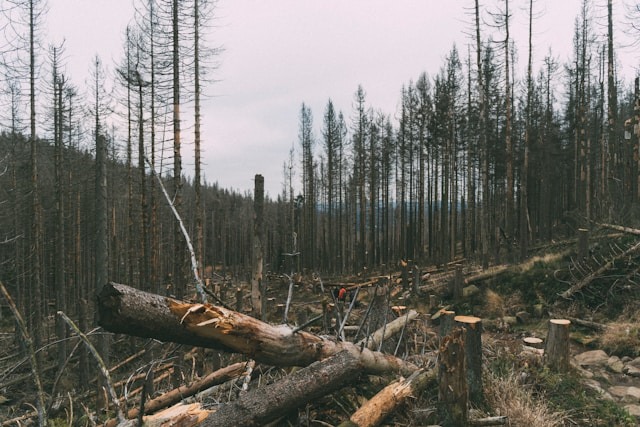
Deforestation eliminates the leaf litter and dead wood that many termite species depend on as their primary food source. When forests are cleared for agriculture or grazing, colony populations decline and existing mounds deteriorate without active maintenance.
Climate change alters rainfall patterns and soil moisture levels, both of which directly affect mound structural integrity and the delicate internal conditions termites maintain. Prolonged droughts can cause mound walls to crack, while unusual flooding events may collapse underground tunnel networks entirely.
Urban expansion and farming physically destroy mounds during land clearing. Because a single mature mound may take decades to reach full size, this loss is not quickly replaced. In regions where mound density is already declining, the cascading ecological effects on soil health and local biodiversity can be significant.
Predation from aardvarks, anteaters, pangolins, and certain bird species also places pressure on colonies, though this is a natural dynamic rather than an emerging threat.
Biomimicry Applications Beyond the Eastgate Centre
The Eastgate Centre in Zimbabwe remains the most cited example of termite inspired architecture, but the concept has expanded considerably since 1996.
Architect Mick Pearce applied refined versions of the same passive ventilation principles to Council House 2 (CH2) in Melbourne, Australia, completed in 2006. This ten story municipal office building uses solar heated ventilation stacks on its facades that mimic the way warm air rises through mound chimneys. According to the Institution of Mechanical Engineers, the Eastgate Centre uses 35% less total energy than six comparable conventionally cooled buildings in Harare, with capital savings estimated at 10% of total construction cost.
Beyond individual buildings, urban planners and materials scientists are studying mound soil composition for insights into creating stronger, more sustainable construction materials. The natural cement termites produce by mixing clay particles with organic secretions achieves remarkable compressive strength without any industrial processing, a property that researchers believe could inform low carbon building techniques in developing regions.
Robotics engineers at Harvard have also drawn from termite construction behavior to develop swarm robotics systems where small autonomous robots collaborate on building tasks without centralized instructions, directly applying the stigmergy principles observed in living colonies.
Conclusion
Termite mounds represent one of the most sophisticated examples of collective engineering found anywhere in nature. Built by insects barely a centimeter long, these structures regulate temperature, cycle nutrients through entire ecosystems, support complex webs of biodiversity, and have directly inspired some of the most energy efficient buildings on the planet. They demonstrate that intelligence in design does not require a single architect or a central plan. It can emerge from millions of simple decisions made in response to local conditions.
Understanding how termitaria function is not just an academic exercise. It has practical implications for sustainable architecture, soil science, conservation biology, and even artificial intelligence. As climate change intensifies the need for low energy building solutions and ecological restoration, the lessons encoded in these ancient structures become more relevant every year.
If this guide gave you a new perspective on what these remarkable insects create, consider sharing it with someone interested in nature, architecture, or sustainability.
What are termite mounds made of?
Termite mounds are constructed from a blend of local soil, termite saliva, and fecal matter. When this mixture dries, it hardens into a durable composite that can withstand tropical rains, temperature extremes, and physical impact from predators.
How tall can a termite mound get?
The tallest recorded termite mounds exceed 8 meters in height, built by species like Nasutitermes triodiae in northern Australia. In terms of scale relative to builder size, this is roughly equivalent to humans constructing a structure over 1,500 meters tall without tools or machinery.
Why are termite mounds important to the ecosystem?
Termite mounds enrich surrounding soil with nitrogen, phosphorus, and other nutrients while their underground tunnels improve water infiltration and reduce erosion. Mounds also create biodiversity hotspots by providing shelter and nutrient rich habitat for dozens of animal and plant species.
How do termite mounds stay cool inside?
Mounds use a passive ventilation system driven by daily temperature changes. The porous walls allow gas exchange while the dense soil structure absorbs daytime heat and releases it slowly at night, maintaining internal conditions within a narrow range without any mechanical energy input.
How long do termite mounds last?
Some mounds persist for centuries or even millennia. Radiocarbon dating of mounds in Brazil’s Caatinga region, published in Current Biology, revealed ages ranging from 690 to 3,820 years, making them among the oldest known biological structures still standing.
Can termite mound designs help humans build better buildings?
Yes. The Eastgate Centre in Harare, Zimbabwe, modeled its ventilation system on termite mound airflow principles and operates on roughly 10% of the energy a conventional building its size would need. This biomimicry approach has since influenced additional projects in Australia and ongoing research in sustainable construction worldwide.