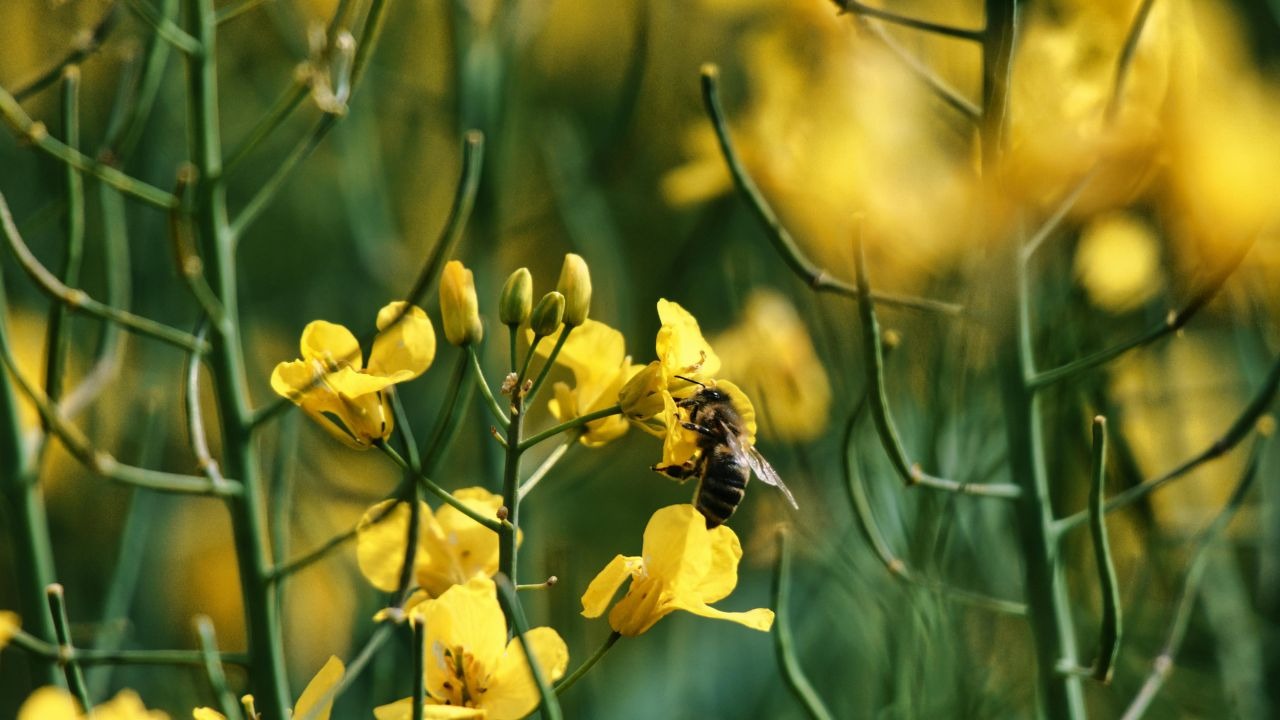
What if bees disappeared is a question that scientists, farmers, and ecologists are now treating as a genuine emergency rather than a distant hypothetical. Global bee populations have been declining at alarming rates over the past two decades, with entire colonies collapsing overnight and native pollinator species vanishing from habitats they occupied for millions of years.
Table of Contents
According to the Food and Agriculture Organization (FAO), three out of four crops that produce fruits or seeds for human consumption depend, at least in part, on pollinators like bees. If these vital insects were to disappear completely, the consequences for agriculture, biodiversity, and human civilization would be catastrophic.
The Critical Role Bees Play in Global Ecosystems
Understanding what if bees disappeared begins with recognizing how deeply human civilization depends on a single group of insects that most people take for granted. Bees are the most efficient and widespread pollinators on Earth. They facilitate reproduction in roughly 75 percent of all flowering plant species and contribute directly to one-third of every food item consumed by humans, according to the United States Department of Agriculture (USDA).
There are more than 20,000 distinct bee species worldwide, ranging from solitary ground-nesting varieties to the highly social honeybee colonies that dominate commercial agriculture. Each species fills a unique ecological niche within pollination networks that have coevolved over millions of years. Removing bees from these ecosystems would unravel biological relationships so deeply interconnected that cascading failures would ripple through every level of the food web.
A Brief History of Pollinator Decline Research
Scientific concern about declining bee populations first emerged in the 1990s when European beekeepers reported unusual colony losses exceeding normal seasonal patterns. The crisis escalated sharply in 2006, when American beekeepers documented what became known as colony collapse disorder (CCD) a phenomenon that wiped out approximately 30 percent of managed honeybee colonies in the United States annually, as reported by the U.S. Environmental Protection Agency (EPA).
Since then, researchers have expanded their investigations to include wild pollinator species experiencing equally severe population declines across every inhabited continent. Long-term monitoring programs confirm that pollinator decline is not limited to a single species or region but represents a global phenomenon driven by pesticide exposure, habitat destruction, climate change, and parasitic infections.
Year-Over-Year Decline Rates
Between 2006 and 2023, American beekeepers reported annual colony losses ranging from 30 to 45 percent, according to data from the Bee Informed Partnership. In Europe, similar surveys revealed that some countries lost more than 50 percent of their managed colonies during severe winters. Wild bee species are even harder to track, but a landmark 2019 study published in Biological Conservation found that over 40 percent of insect pollinator species are now threatened with extinction globally.
How Global Food Chain Collapse Would Unfold Without Bees
The most immediate and devastating consequence of bees disappearing would be a global food chain collapse. Crops such as almonds, apples, blueberries, cherries, avocados, cucumbers, and countless other fruits, vegetables, and nuts depend entirely or substantially on bee pollination for successful yields.
Without bees fulfilling their pollination role, agricultural output for these crops could decline by 60 to 90 percent within a single growing season. This production failure would trigger food shortages, price spikes, and nutritional deficiencies across populations already struggling with food security. The Intergovernmental Science-Policy Platform on Biodiversity and Ecosystem Services (IPBES) estimates that the economic value of pollination services exceeds $235 billion annually a contribution that no existing technology can replace at scale.
Biodiversity Cascade Failure Across Terrestrial Ecosystems
The impact of bee disappearance extends far beyond farms. Wild plants that require bee pollination would fail to produce seeds, causing population crashes that eliminate food sources for herbivorous insects, birds, and mammals. This cascading extinction pattern would move upward through food webs as predator species lose prey populations sustained by pollinator-dependent vegetation.
Forest Ecosystems at Risk
Forest regeneration would slow dramatically as tree species requiring bee pollination fail to reproduce. Over time, woodland ecosystems would degrade into simplified landscapes dominated by wind-pollinated species, offering reduced habitat complexity and nutritional diversity for wildlife. Research published in Nature confirms that pollinator loss triggers long-term decline in plant diversity, which in turn destabilizes entire ecological communities.
Freshwater and Marine Ripple Effects
The damage would not stop on land. Riverside and wetland plants that depend on bee pollination stabilize soil along waterways and filter runoff before it enters rivers and lakes. Without these plants, increased erosion and nutrient runoff would degrade freshwater habitats and contribute to algal blooms in coastal marine ecosystems, according to research from the World Wildlife Fund (WWF).
Agricultural Economic Destabilization and Human Consequences
The economic fallout from a world without bees would extend well beyond crop losses. Systemic agricultural destabilization would affect farming communities, food processing industries, and international trade networks across the globe. Developing nations where smallholder farmers depend heavily on pollinator-dependent crops for both nutrition and income would bear the greatest burden.
Research indicates that bee disappearance would eliminate roughly 35 percent of global crop production volume, forcing agricultural systems to shift toward wind-pollinated staple grains like wheat, rice, and corn. While those crops would survive, the resulting dietary monotony would cause widespread deficiencies in vitamins, minerals, and micronutrients currently supplied by pollinator-dependent fruits and vegetables.
Impact on Livestock and Dairy Industries
The consequences would not stop at plant agriculture. Livestock and dairy industries depend on pollinator-sustained feed crops for animal nutrition. Alfalfa, clover, and numerous other forage crops critical for cattle, sheep, and goat feeding require bee pollination for seed production and field regeneration.
A Compounding Crisis
Losing bees would therefore create compounding agricultural failures undermining both direct human food production and the animal farming systems that provide meat, dairy, and eggs. This dual disruption would intensify food security challenges beyond what either crop or livestock losses would produce independently, as outlined in a comprehensive Royal Society report on pollinators.
Global Trade and Economic Inequality
Countries that depend on exporting pollinator-dependent crops such as coffee from Ethiopia, cocoa from Côte d’Ivoire, and fruit from Chile would face severe trade imbalances and economic contraction. The United Nations Conference on Trade and Development (UNCTAD) has warned that commodity-dependent developing nations are most vulnerable to ecological supply shocks, making pollinator collapse a direct threat to global economic stability.
Key Threats Driving Pollinator Decline Today
Understanding the forces already pushing bee populations toward collapse is essential. Several deeply entrenched systemic threats continue to undermine pollinator survival despite growing awareness and conservation efforts.
- Neonicotinoid Pesticides: These widely used agricultural chemicals poison bees through contaminated pollen and nectar, causing neurological damage that impairs navigation, foraging, and colony reproduction. The European Food Safety Authority (EFSA) has confirmed the high risk neonicotinoids pose to bees.
- Habitat Destruction: Urban expansion, monoculture farming, and wildland conversion eliminate the diverse flowering plant communities bees need for adequate nutrition throughout their active seasons.
- Climate Change: Shifting weather patterns disrupt the synchronization between bee emergence timing and the flowering periods of plants they depend upon, creating nutritional mismatches that weaken colony health and reduce reproductive success.
- Varroa Destructor Mites: These parasitic mites and their associated viral pathogens devastate managed honeybee colonies worldwide while increasingly spreading into wild bee populations that lack evolved resistance mechanisms.
- Industrial Monoculture: Large-scale single-crop farming reduces floral diversity across vast landscapes, forcing bees to travel greater distances for inadequate nutritional resources that compromise their immune function.
Real-World Examples of Pollinator Loss
Hand Pollination in China’s Sichuan Province
China’s Sichuan province offers a sobering preview of a world without bees. Excessive pesticide use during the 1980s eliminated native bee populations across major apple and pear growing regions, forcing farmers to hire thousands of workers to manually pollinate individual blossoms with small brushes. This labor-intensive process dramatically increases production costs while achieving significantly lower pollination efficiency compared to the natural services bees once provided, as documented by China Dialogue.
California’s Almond Industry Dependency
Each February, approximately two million honeybee colonies roughly 80 percent of all commercially managed hives in the United States must be transported to California specifically for almond pollination. This artificial mass migration highlights the fragile infrastructure sustaining modern food production and demonstrates how dependent agriculture has become on managed bee populations, according to Scientific American.
Europe’s Declining Wild Bumblebee Populations
Across Europe, wild bumblebee species have experienced sharp range contractions over the past three decades. A large-scale study published in Science found that the likelihood of a bumblebee population surviving in any given location dropped by an average of 30 percent between 2000 and 2015 compared to the baseline period of 1901–1974. Rising temperatures and land-use changes were identified as the primary drivers of this dramatic decline.
Why Alternative Pollinators Cannot Fill the Gap
Some people assume that butterflies, hoverflies, bats, and other pollinators could simply take over if bees disappeared. While these species do contribute to pollination, they are nowhere near sufficient to replace the work bees perform.
Butterflies and Moths
Butterflies visit flowers primarily for nectar and transfer far less pollen per visit than bees. Their body structures are not designed for efficient pollen collection, and most butterfly species are themselves declining due to the same habitat loss and pesticide threats affecting bees.
Hoverflies and Beetles
Hoverflies are increasingly recognized as valuable supplementary pollinators, but they lack the behavioral specialization of bees. They do not perform targeted foraging trips or communicate resource locations to colony members the way honeybees do through waggle dances. Beetles, while abundant, are even less efficient and tend to damage flowers rather than pollinate them effectively.
Robotic and Drone Pollination
Engineers have developed small drone pollinators and robotic systems, but these technologies remain experimental, enormously expensive, and incapable of operating at the scale required to replace natural bee pollination across millions of hectares of farmland. A 2020 review in Trends in Ecology and Evolution concluded that technological substitutes for pollination are decades away from practical viability and would cost far more than protecting existing bee populations.
Protecting Pollinators: What Must Be Done Now
Preventing the catastrophic scenario of a world without bees requires coordinated global action. The most scientifically validated strategies include the following measures.
- Pollinator Habitat Restoration: Planting wildflower corridors, hedgerows, and cover crops on agricultural land provides bees with diverse foraging resources throughout the season. The Xerces Society for Invertebrate Conservation offers practical habitat restoration guides for landowners and communities.
- Stricter Pesticide Regulations: Banning or restricting neonicotinoid use as the European Union has done since 2018 protects pollinators from the most harmful chemicals. Governments worldwide must follow this lead with evidence-based policy.
- Diversified Farming Practices: Crop rotation, polyculture, and integrated pest management reduce chemical dependency while supporting wild bee populations and improving long-term soil health.
- Supporting Local Beekeepers: Purchasing honey and bee products from local, sustainable apiaries strengthens the economic viability of beekeeping operations that maintain healthy managed colonies.
- Individual Action: Planting pollinator-friendly gardens with native wildflowers, avoiding pesticide use on lawns, buying organic produce, and advocating for stronger environmental regulations all contribute meaningfully to pollinator protection.
Every third bite of food you eat depends on pollination services that bees provide freely. Protecting them is not optional it is essential to human survival.
Conclusion
The evidence is clear: what if bees disappeared is one of the most alarming ecological scenarios facing humanity today. From food chain collapse wiping out 35 percent of crop production to biodiversity breakdown devastating entire terrestrial ecosystems, the consequences would be both immediate and far-reaching.
Neonicotinoid exposure, habitat destruction, climate disruption, and parasitic infections are collectively pushing pollinator populations toward critical thresholds that modern agriculture cannot withstand. The hand-pollination crisis in China, the extreme bee dependency of California’s almond industry, and the rapid decline of Europe’s wild bumblebees serve as urgent warnings that the consequences of inaction are already visible around the world.
However, understanding the stakes also reveals a clear path forward. Supporting habitat restoration, demanding stricter pesticide regulations, adopting sustainable farming practices, and taking simple individual actions like planting native wildflowers are steps that individuals, communities, and governments can take right now. Protecting bees ultimately means protecting the agricultural systems and food security infrastructure that sustain billions of lives worldwide.
What would happen to the food supply if bees disappeared?
If bees disappeared, crops like almonds, apples, avocados, and blueberries would see production drop by 60 to 90 percent. Around 35 percent of global crop production depends on pollinators, so food prices would spike, nutritional diversity would plummet, and food shortages would affect billions of people worldwide.
Why are bee populations declining around the world?
Bee populations are declining due to a combination of neonicotinoid pesticide exposure, habitat destruction from urbanization and monoculture farming, climate change disrupting bloom timing, and parasitic Varroa destructor mites spreading disease through colonies. These threats are interconnected and compound one another.
Can technology replace bees as pollinators?
While robotic pollination and drone technology are being tested, no current technology can match the efficiency, scale, or cost-effectiveness of natural bee pollination. Bees pollinate trillions of flowers daily across diverse ecosystems a feat that remains far beyond artificial alternatives and would cost dramatically more than protecting existing populations.
What is colony collapse disorder (CCD)?
Colony collapse disorder is a phenomenon in which the majority of worker bees abandon a hive, leaving behind the queen and immature bees. First widely reported in 2006 in the United States, CCD was linked to pesticide exposure, parasites, disease, and nutritional stress, and it caused the loss of roughly 30 percent of managed honeybee colonies annually.
How can I help protect bees in my daily life?
You can help by planting native wildflowers and pollinator-friendly plants in your garden, avoiding pesticide use on your lawn, buying organic produce, supporting local beekeepers, and advocating for stronger environmental regulations that protect pollinator habitats.
How much is bee pollination worth to the global economy?
The economic value of pollination services provided by bees and other pollinators is estimated at over $235 billion per year globally, according to the Intergovernmental Science-Policy Platform on Biodiversity and Ecosystem Services (IPBES).
Are bees endangered or going extinct?
While not all bee species are formally classified as endangered, many are in serious decline. A 2019 study in Biological Conservation found that over 40 percent of insect pollinator species are threatened with extinction. Several specific species, including the rusty patched bumblebee in North America, have already been placed on endangered species lists by the U.S. Fish and Wildlife Service.
What countries are most affected by bee decline?
Bee decline is a global problem, but it has been most extensively documented in the United States, Canada, the United Kingdom, and several European Union member states. Developing countries in Africa, Asia, and Latin America may be equally or more affected but have fewer monitoring programs in place to track the losses accurately.