Jet stream changes are fundamentally transforming the way our planet experiences weather, driving everything from prolonged heatwaves and unexpected cold snaps to severe flooding and record-breaking droughts across continents. These powerful, fast-moving air currents in the upper atmosphere act as invisible highways that direct storms, regulate temperatures, and define seasonal cycles for billions of people. As global temperatures continue to climb, scientists are observing significant shifts in the speed, path, and behavior of these winds, raising urgent questions about the future of weather predictability and climate stability worldwide.
Table of Contents
The connection between the jet stream and climate change has become one of the most closely studied topics in modern atmospheric science. Researchers from institutions like NOAA,NASA, and leading universities are working to understand how warming temperatures interact with these high-altitude currents. This understanding is essential for forecasting extreme weather events, protecting agricultural systems, and building resilient communities. This comprehensive guide explores the science behind these atmospheric shifts, their environmental and societal consequences, and the strategies that can help humanity adapt to a rapidly evolving climate system.
What Is the Jet Stream and Why Does It Matter
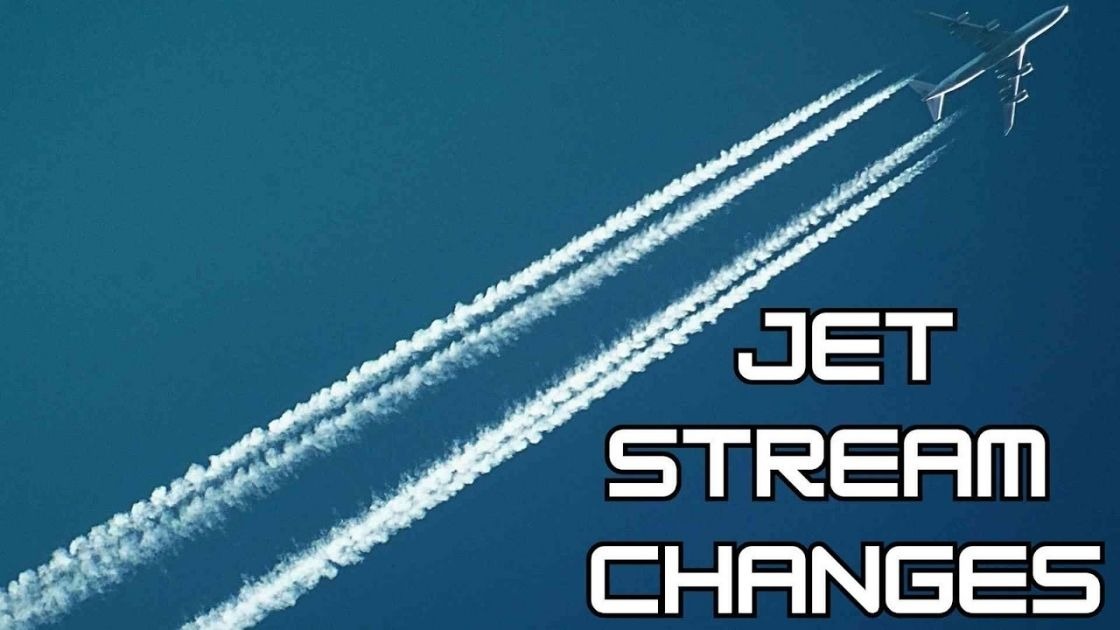
The jet stream is a narrow band of strong winds that flows from west to east high in the upper atmosphere. According to NOAA, these winds typically occur around 30,000 feet (9,100 meters) in elevation and form at the boundary where warm tropical air masses meet cold polar air. The sharp temperature contrasts at this boundary generate powerful airflows that guide weather systems, influence storm tracks, direct precipitation patterns, and help regulate regional climates across both hemispheres.
Types of Jet Streams
Earth has four primary jet streams, two in each hemisphere. The polar jet stream sits at mid-latitudes, generally between 50 and 60 degrees, and has the greatest influence on day-to-day weather in North America, Europe, and Asia. The subtropical jet stream flows closer to the equator, around 30 degrees latitude, and plays a role in transporting moisture and energy across tropical and semi-tropical regions. As NOAA’s SciJinks educational platform explains, these currents typically move at around 110 miles per hour but can exceed 250 miles per hour during winter when temperature contrasts are strongest.
How the Jet Stream Influences Daily Weather
When the jet stream flows in a relatively straight and fast pattern, weather systems move through regions quickly. Storms arrive and depart on a predictable schedule, and seasons follow familiar rhythms. However, when the jet stream slows down or develops large bends and loops, weather systems can stall over specific areas for days or even weeks. According to NASA’s Scientific Visualization Studio, the polar jet stream meanders around the planet as cold air descending from the Arctic meets rising warm air from the tropics, creating deep troughs and steep ridges that give it a characteristic wavy appearance. This stalling effect is at the heart of why jet stream changes matter so profoundly for human societies and natural ecosystems.
Historical Background and Scientific Discovery
Early Observations in Aviation
Researchers first identified strong high-altitude winds during the early twentieth century while studying conditions that affected aviation. Japanese meteorologist Wasaburo Oishi conducted regular weather balloon launches in the 1920s that consistently traveled eastward over the Pacific Ocean at remarkable speeds. As NOAA Climate.gov documents in a detailed historical account, Oishi’s measurements revealed the jet stream’s position in the upper troposphere, roughly six to eight miles above the surface. Pilots quickly recognized that flying with these air currents dramatically reduced travel times, while flying against them added significant resistance.
From Stability to Disruption
For much of recorded history, jet stream patterns followed relatively stable and predictable seasonal paths. The polar jet would shift northward during summer months and retreat southward in winter, creating consistent seasonal transitions that communities relied upon for agriculture, water management, and daily life. Early weather forecasting models incorporated these predictable movements to generate reasonably accurate seasonal outlooks.
However, observations over recent decades have revealed a notable departure from this historical stability. Long-term atmospheric records show increasing variability in jet stream behavior, including more frequent blocking patterns and occasional significant slowdowns in speed. These observed shifts correlate with accelerating global warming and rapid Arctic ice loss, marking a new chapter in our understanding of how the climate change jet stream relationship operates.
How Global Warming Is Altering the Jet Stream
The Shrinking Temperature Gradient
The single most important driver of jet stream strength is the temperature difference between the poles and the equator. This gradient creates the pressure differences that generate and sustain the fast-flowing winds in the upper atmosphere. Under stable conditions, a large temperature contrast produces a strong, fast, and relatively straight jet stream that efficiently pushes weather systems across continents.
As the planet warms, this critical temperature gradient is shrinking. The Arctic is warming at roughly two to four times the rate of the global average. Climate Signals notes that this phenomenon, known as Arctic amplification, has seen Arctic temperatures rise at twice to three times the global rate, particularly since 2000. This rapid heating at the poles reduces the contrast with warmer equatorial regions, weakening the force that keeps the jet stream strong and on a relatively straight path.
The relationship between the jet stream and global warming becomes clear through this mechanism. A weaker temperature gradient can produce a slower, more meandering jet stream. Instead of pushing weather systems through quickly, the weakened flow may allow large loops and bends to develop, potentially trapping high-pressure or low-pressure systems over specific regions for extended periods.
Increased Atmospheric Instability
Warmer air holds significantly more moisture and energy than cooler air. This fundamental physical reality means that as global temperatures rise, the atmosphere becomes loaded with additional fuel for weather events. When this increased energy combines with a slower, wavier jet stream, the result can be amplified weather extremes.
Heatwaves that might once have lasted a few days can persist for weeks when trapped beneath a stalled high-pressure ridge. Rainfall events that would normally pass through a region in hours can dump extraordinary amounts of water when a slow-moving jet stream keeps feeding moisture into the same area. Research published in Nature Communications has shown that interactions between Arctic warming and mid-latitude circulation patterns could lead to more persistent hot-dry extremes through weakened storm tracks, shifted jet positions, and amplified quasi-stationary waves.
The Role of Melting Polar Ice
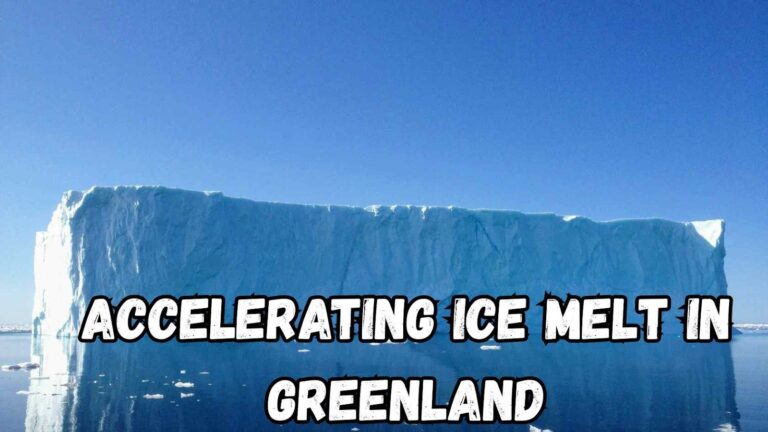
The rapid loss of Arctic sea ice is both a consequence of global warming and a potential contributor to further jet stream disruption. As ice cover diminishes, darker ocean water absorbs more solar radiation, accelerating warming in the polar region. This additional warming further reduces the pole-to-equator temperature gradient, creating a feedback loop that may continue to influence jet stream behavior.
Research from the Polar Amplification Model Intercomparison Project, published in Communications Earth and Environment, has identified robust responses to Arctic sea-ice loss that include local warming and moistening, shifts in the jet stream and storm track in the North Atlantic, and fewer cold extremes over North America. The study notes that while these responses are generally smaller than natural internal variability, Arctic sea-ice loss contributes a significant component to projected future climate changes.
The Scientific Debate Around Jet Stream Waviness
It is important to note that the relationship between Arctic warming and jet stream behavior remains an area of active scientific investigation. While early research by Francis and Vavrus in 2012 proposed that Arctic amplification was causing increased jet stream waviness and more extreme mid-latitude weather, subsequent studies have introduced important nuance.
Research from the University of Exeter, published in Science Advances, found that previously reported trends toward a wavier jet stream during autumn and winter had reversed in recent years despite continued Arctic warming. The researchers concluded there was no long-term increase in waviness directly attributable to Arctic amplification, suggesting the observed correlation may partly reflect natural variability rather than a straightforward causal relationship.
However, a 2023 study from the University of Georgia, published in Nature Communications, provided evidence of a direct link between observed shifts in summer atmospheric circulation over Greenland and amplified warming at high latitudes. The research connected diminishing spring snow cover, which scientists confidently attribute to climate change, to changes in jet stream behavior during summer months.
The National Snow and Ice Data Center summarizes the current state of understanding by noting that while a stronger case has been made for regional effects of sea ice loss on weather patterns, particularly in areas near the Barents and Kara Seas, the precise amount of influence on broader mid-latitude weather remains challenging to determine. Sea ice decline may amplify the effects of existing weather patterns rather than creating entirely new ones.
This ongoing scientific discussion underscores that while jet stream changes are real and observable, their exact causes and future trajectory involve complex interactions that researchers are still working to fully understand.
Types of Jet Stream Shifts
Understanding the different ways the jet stream can change helps explain the wide variety of weather impacts observed around the world.
Zonal Shifts
Zonal patterns occur when the jet stream flows relatively straight from west to east with minimal bending. During these patterns, weather systems move through regions efficiently, and conditions tend to be moderate and predictable. Some research suggests these patterns may become less frequent as warming reduces the temperature gradient, though this remains subject to scientific debate.
Meridional Shifts
Meridional shifts involve a wavier, more meandering jet stream with large north-to-south undulations. During these patterns, warm air pushes much farther north than usual while cold polar air plunges unusually far south. These configurations create temperature extremes and can trap weather systems in place for extended periods, leading to prolonged heatwaves, cold spells, and heavy precipitation events.
Polar Shifts
Polar shifts refer to the overall northward or southward migration of the jet stream’s average position. Research from the Polar Amplification Model Intercomparison Project has examined how Arctic sea ice loss affects the position of the North Atlantic jet stream, finding small but identifiable equatorward shifts in some models, though the magnitude and significance vary across different climate models.
Jet Stream Splits
Occasionally, the jet stream divides into two separate branches. These splits can create unpredictable storm systems, unusual temperature patterns, and highly variable conditions across regions that normally experience similar weather. Split jet patterns are particularly challenging for forecasters because they introduce additional complexity into an already dynamic system.
Impacts on Global Weather Patterns
Extreme Weather Events and Blocking Patterns
One of the most concerning potential consequences of jet stream changes is the possible increase in extreme weather events worldwide. When the jet stream develops large, slow-moving waves, it can create what meteorologists call blocking patterns, where large ridges or troughs in the atmospheric flow become nearly stationary.
Extended heatwaves become far more likely when a high-pressure ridge stalls over a region, preventing cooler air from moving in and trapping heat at the surface. Similarly, prolonged rainfall and flooding events intensify when a slow-moving jet stream continuously feeds moisture into the same region. Unexpected cold outbreaks also result from jet stream disruptions, as deep southward loops in the polar jet can send frigid Arctic air into regions that rarely experience such temperatures, stressing power grids, transportation networks, and vulnerable populations.
Seasonal Disruptions and Agricultural Impacts
The increasingly variable behavior of the jet stream is blurring traditional seasonal boundaries in ways that directly affect agriculture and food security. Planting and harvesting cycles that farmers have relied upon for generations are being disrupted by unpredictable temperature swings, unseasonal frost events, and shifting precipitation patterns.
Spring may arrive weeks early in some years only to be interrupted by a late cold snap driven by a southward jet stream loop. Summers may bring unexpected cool spells or persistent heat depending on the jet stream’s configuration during critical growing periods. These disruptions affect not only individual farmers but also global food supply chains, commodity prices, and food security for vulnerable populations. Understanding the connection between the jet stream and climate change is becoming essential for agricultural planning and food system resilience at every scale.
Regional Weather Variability
Jet stream changes affect different regions in different ways, creating a complex mosaic of shifting weather patterns across the globe. Some areas experience significantly heavier storms and more frequent flooding, while neighboring regions may face lengthening dry periods and increasing drought risk. This regional variability makes weather forecasting more challenging and increases uncertainty for communities, businesses, and policymakers who rely on accurate weather predictions for planning and decision-making.
Environmental and Economic Consequences
Ecosystem Disruptions
Stable atmospheric flows help maintain the predictable seasonal conditions that ecosystems depend upon. When the jet stream becomes more erratic, the consequences can ripple through natural systems in profound ways. Bird migration patterns may be disrupted when temperature and weather cues arrive at unexpected times. Marine ecosystems can be affected when altered wind patterns change ocean current behavior and upwelling patterns. Forest health may suffer when unusual temperature extremes stress trees and create conditions favorable for pest outbreaks and wildfires.
The interaction between jet stream changes and ocean currents deserves particular attention. Wind-driven ocean circulation is closely linked to atmospheric patterns, and shifts in the jet stream can alter the strength and position of major ocean currents. These changes in turn affect marine food webs, coastal weather, and the distribution of heat around the planet, creating additional feedback loops that complicate long-term climate projections.
Economic and Infrastructure Impacts
Weather extremes influenced by jet stream disruptions carry enormous economic costs. Disaster recovery expenses, insurance losses, agricultural damage, transportation disruptions, and energy system stress all increase when weather events become more extreme and less predictable. Infrastructure designed for historical weather conditions faces premature failure when subjected to events that exceed its design parameters.
Energy systems are particularly sensitive to jet stream behavior. Heating and cooling demand fluctuates dramatically during temperature extremes, while renewable energy generation from wind and solar resources depends on weather patterns that are becoming harder to predict. The economic ripple effects of these disruptions extend through supply chains and affect communities far from the immediate weather event.
Human Health and Safety
Persistent heatwaves driven by stalled jet stream patterns pose serious and growing risks to human health, particularly for elderly populations, outdoor workers, and communities without adequate cooling infrastructure. Heat-related illness and mortality increase sharply during prolonged extreme heat events, and these impacts fall disproportionately on vulnerable populations. Severe storms, flooding, and cold outbreaks all threaten lives and property, making accurate forecasting and early warning systems more critical than ever.
Challenges in Predicting Future Jet Stream Behavior
Scientific Complexity and Model Uncertainty
Although the evidence connecting jet stream and global warming is substantial, accurately modeling future jet stream behavior remains one of the most challenging problems in atmospheric science. The atmosphere is a chaotic system where small changes in initial conditions can produce dramatically different outcomes. Complex interactions between oceans, land surfaces, ice sheets, and the atmosphere create feedback loops that are difficult to capture in even the most sophisticated climate models.
A 2025 study published in AGU Advances developed a new record of wintertime jet stream waviness spanning from 1901 to 2023 and found that the increase in waviness observed from 1990 to 2010, which some researchers attributed to Arctic amplification, had frequent precedent earlier in the twentieth century. The polar jet stream was comparably wavy in the 1940s, 1960s, and 1980s, suggesting that long-term natural variability plays a significant role alongside any forced climate changes.
Data and Observation Limitations
Accurate jet stream predictions require extensive satellite data, upper-atmosphere observations, and long-term atmospheric records. While observation networks have improved dramatically since the satellite era began in 1979, some regions still lack the detailed atmospheric monitoring needed for precise forecasting. Expanding global monitoring capabilities, particularly over the Arctic and oceans, remains a critical priority for improving our understanding of how jet stream changes will unfold in the coming decades.
Practical Recommendations for Adaptation
Preparing for the impacts of jet stream changes requires action at multiple levels, from individual communities to international cooperation.
Supporting and expanding climate monitoring and research programs provides the foundational data needed for better forecasting and planning. Investment in advanced satellite systems, atmospheric observation networks, and computational modeling capacity directly improves our ability to anticipate and prepare for extreme weather events.
Building climate-resilient infrastructure means designing buildings, transportation networks, water systems, and energy grids to withstand a wider range of weather conditions than historical norms suggested. This includes upgrading drainage systems for more intense rainfall, strengthening power grids against temperature extremes, and ensuring critical facilities can operate during prolonged weather events.
Improving early warning systems for extreme weather saves lives and reduces economic damage. These systems depend on accurate forecasting models that incorporate the latest understanding of jet stream behavior and its connection to surface weather conditions.
Encouraging sustainable land and energy practices helps address the root cause of atmospheric disruption by reducing greenhouse gas emissions that drive global warming. Transitioning to renewable energy, improving agricultural practices, and protecting natural carbon sinks all contribute to slowing the warming that influences jet stream behavior.
Promoting public awareness of how jet stream changes affect daily weather and long-term climate helps communities make informed decisions about preparedness, land use, and resource management.
Conclusion
Understanding jet stream changes reveals how sensitive Earth’s atmosphere is to rising global temperatures and how profoundly these high-altitude winds shape the weather conditions that affect every aspect of human life. The connection between the jet stream and climate change helps explain why weather appears to be becoming more variable and, in many regions, more extreme. As the climate change jet stream relationship continues to evolve under the pressure of ongoing warming, the consequences for ecosystems, agriculture, economies, and human safety are likely to grow.
The link between the jet stream and global warming is now well established in atmospheric science, even as researchers work to refine predictions and resolve ongoing debates about the exact mechanisms and magnitude of change. What remains clear is that the era of relatively stable and predictable jet stream behavior may be giving way to a new reality of increased variability, more frequent extremes, and greater challenges for forecasting and preparedness.
By investing in research, building resilient systems, improving early warning capabilities, and addressing the root causes of warming, societies can prepare more effectively for the future that jet stream changes are already helping to shape. Recognizing the importance of these atmospheric shifts is not just a scientific priority but a practical necessity for every community that depends on predictable weather and a stable climate.
What exactly are jet stream changes?
Jet stream changes refer to shifts in the speed, position, and pattern of the fast-flowing air currents located high in the upper atmosphere. These currents normally blow from west to east and guide weather systems across continents. Scientists have observed that rising global temperatures are altering the way these winds behave, causing them to slow down, develop larger bends and loops, and shift their average position over time.
How does global warming affect the jet stream?
Global warming affects the jet stream primarily by reducing the temperature difference between the Arctic and the equator. The Arctic is warming much faster than the rest of the planet, and this shrinking temperature gradient weakens the force that keeps the jet stream strong and straight. A weaker jet stream tends to meander more and can allow weather systems to stall over specific regions, potentially contributing to prolonged extreme weather events.
Can jet stream changes cause extreme weather?
Yes, altered jet stream behavior is associated with increases in certain extreme weather events. When the jet stream develops large, slow-moving waves or blocking patterns, it can trap heat domes that cause extended heatwaves, feed persistent moisture into regions causing severe flooding, or send Arctic cold air plunging into areas that rarely experience such temperatures. Research continues to quantify the exact contribution of jet stream shifts to individual extreme events.
Is the jet stream getting wavier because of climate change?
This is one of the most debated questions in current climate science. Some studies have found evidence of increased waviness linked to Arctic warming, while others have found no long-term trend in waviness despite ongoing Arctic amplification. The most recent research suggests the answer is more complex than a simple yes or no, with natural variability playing a significant role alongside forced changes from global warming.
How do jet stream changes affect agriculture?
Jet stream shifts can disrupt traditional growing seasons by bringing unseasonal frost, extended heat, or altered rainfall patterns during critical planting and harvesting periods. When weather systems stall due to a meandering jet stream, crops can face prolonged drought or excessive moisture that damages yields. These disruptions affect food supply chains, commodity prices, and food security for populations worldwide.
What is the polar vortex and how does it relate to the jet stream?
The polar vortex is a large area of low pressure and cold air that circulates around the Arctic in the stratosphere. It is closely related to but distinct from the jet stream. When the polar vortex weakens or becomes disrupted, it can push the jet stream into unusual configurations that send extremely cold Arctic air southward into mid-latitude regions. This interaction between the polar vortex and the jet stream has been linked to several major cold outbreaks in recent years.
What can be done to prepare for the impacts of jet stream changes?
Preparation involves investing in better climate monitoring and forecasting systems, building infrastructure designed to withstand a wider range of weather conditions, improving early warning systems for extreme events, supporting research into atmospheric science, and reducing greenhouse gas emissions to slow the warming that drives these changes. Individual communities can also focus on local adaptation measures suited to their specific climate risks.