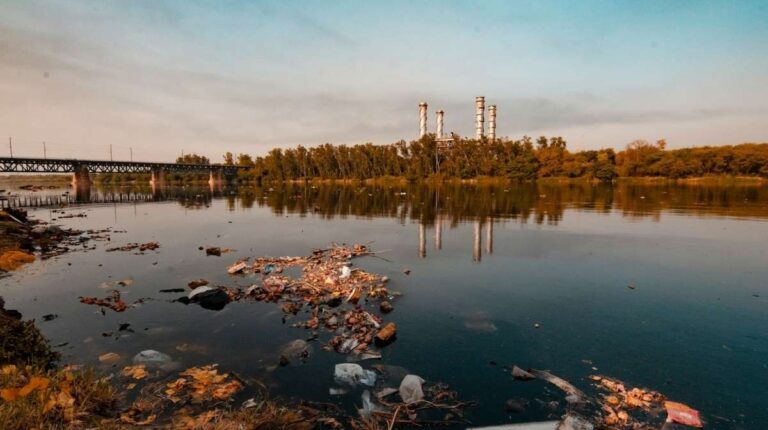
Land pollution problems refer to the degradation of the Earth’s land surface caused by human activities such as industrial dumping, improper waste disposal, chemical farming, and urban expansion. This form of terrestrial contamination destroys soil fertility, poisons groundwater, and threatens the health of billions of people worldwide.
Table of Contents
As someone researching environmental degradation for over five years and drawing on published data from leading global agencies, I have compiled this guide to help readers understand the full picture what causes soil contamination, how it affects communities, and which remediation strategies are producing real results today.
According to a 2022 FAO Global Soil Health Report, approximately 33% of the world’s soils are moderately to highly degraded due to pollution, erosion, and nutrient loss. That statistic alone signals why land pollution problems deserve immediate, coordinated action.

What Causes Land Pollution Problems?
Land pollution causes and effects are deeply interconnected. The following table breaks down the primary drivers of soil degradation and how each one damages the environment:
| Cause | How It Pollutes the Land | Scale of Impact |
| Industrial waste | Factories discharge heavy metals such as lead, mercury, and cadmium into surrounding soil | Global affects every industrialized nation |
| Agricultural chemicals | Overuse of synthetic pesticides, herbicides, and fertilizers kills soil microorganisms | Widespread the USDA estimates over 900 million pounds of pesticides are used annually in the US alone |
| Improper waste disposal | Overfilled landfills leach toxic compounds into soil and nearby water tables | Critical in developing nations lacking waste infrastructure |
| Urbanization and construction | Land clearing, deforestation, and debris dumping strip soil of protective vegetation | Accelerating urban land area is projected to triple by 2030 per UN Habitat |
| Electronic waste | E-waste releases cadmium, lead, and brominated flame retardants into topsoil | Growing the Global E-waste Monitor 2024 reported 62 million tonnes of e-waste generated in 2022 |
| Mining operations | Acid mine drainage and tailings introduce sulfides and heavy metals into surrounding land | Severe contamination persists for decades after mine closure |
These drivers rarely act in isolation. In most affected regions, industrial runoff mixes with agricultural chemicals and household waste, creating compounding contamination that is far harder to reverse.
How Land Pollution Affects Health and Ecosystems
The effects of ground pollution ripple outward from the soil into water, air, food, and human bodies.
Human Health Effects
The World Health Organization has identified contaminated soil as a direct pathway for toxic exposure through skin contact, inhalation of dust, and consumption of crops grown in polluted ground. Specific health consequences documented in peer-reviewed research include respiratory conditions such as asthma and chronic bronchitis, elevated cancer risk from prolonged heavy metal exposure, kidney and liver damage linked to chemical leaching into drinking water, and developmental delays in children living near contaminated sites.
A 2023 Lancet Commission on Pollution and Health update estimated that soil and land pollution contribute to over 500,000 premature deaths globally each year. Communities near industrial zones and landfills bear a disproportionate burden, raising serious environmental justice concerns.
Environmental Effects
Soil contamination disrupts the delicate microbial ecosystems that cycle nutrients and support plant growth. When these systems collapse, the damage cascades. Crop yields decline, threatening regional food security. Toxic chemicals leach into underground aquifers, contaminating drinking water for entire communities. Habitat destruction drives biodiversity loss, endangering plant and animal species. Degraded land becomes more vulnerable to flooding and erosion during extreme weather events.
Research from the European Environment Agency (EEA) confirms that contaminated sites across Europe number over 2.8 million, with roughly 390,000 requiring urgent remediation.
Five Types of Land Contamination
- Chemical pollution industrial solvents, pesticide residues, and petroleum spills that alter soil chemistry and poison organisms
- Biological pollution pathogens from untreated sewage and livestock waste that spread waterborne and soil-borne diseases
- Radioactive contamination nuclear facility waste, medical isotope disposal, and uranium mining tailings
- Physical pollution non-biodegradable plastics, construction rubble, tire fragments, and microplastic accumulation
- Agricultural pollution synthetic fertilizer runoff, topsoil erosion from monoculture farming, and concentrated livestock waste
Real-World Cases That Show the Scale
Nigeria’s Niger Delta: Decades of oil extraction have left farmland unusable across the region. A landmark UNEP assessment found that soil contamination in Ogoniland would require 25 to 30 years of sustained cleanup.
Agbogbloshie, Ghana: Once one of the world’s largest informal e-waste processing sites, this area exposed thousands of workers to lead and mercury levels far exceeding safe thresholds, according to reporting by Pure Earth (formerly Blacksmith Institute).
Love Canal, United States: This 1970s disaster where a residential neighborhood was built on a buried chemical dump became a turning point that led directly to the creation of the US EPA Superfund program, which has since cleaned over 450 contaminated sites.
These cases illustrate that land pollution problems are not theoretical. They carry measurable human costs and require sustained investment to resolve.
Expert-Backed Solutions for Soil Restoration
Remediating contaminated land is expensive, but proven technologies exist. The following table compares the most widely used approaches:
| Solution | How It Works | Best Used For |
| Bioremediation | Natural microorganisms break down organic pollutants in soil | Petroleum spills, agricultural chemical residues |
| Phytoremediation | Specific plant species absorb and neutralize heavy metals through their root systems | Sites with moderate metal contamination |
| Soil washing | Contaminated soil is excavated and treated with chemical solutions to remove pollutants | Concentrated hotspot areas |
| Thermal desorption | Polluted soil is heated to vaporize and destroy organic contaminants | Industrial sites with solvent or fuel contamination |
| Encapsulation | Impermeable barriers contain hazardous material in place to prevent spreading | Radioactive or highly toxic waste zones |
| Organic farming transition | Eliminates synthetic chemical inputs and rebuilds soil biology through composting and crop rotation | Agricultural land suffering from chemical overload |
Prevention remains far more cost-effective than cleanup. The OECD Environmental Outlook emphasizes that every dollar invested in pollution prevention saves an estimated three to five dollars in future remediation costs.
Practical Steps Individuals Can Take
Supporting soil health does not require a science degree. Segregating household waste properly, composting organic scraps, recycling electronics through certified programs, choosing organic produce when possible, and advocating for stronger local waste management policies all contribute meaningfully to reducing land pollution problems at the community level.
Conclusion
Land pollution problems remain among the most urgent yet underestimated environmental crises of our era. Industrial discharge, irresponsible waste disposal, chemical-heavy agriculture, and rapid urbanization continue degrading the soil that sustains all terrestrial life. The health toll respiratory disease, cancer risk, contaminated water falls hardest on vulnerable communities near polluted sites.
The evidence is clear, and so are the solutions. Bioremediation, phytoremediation, organic farming, and strong regulatory enforcement have all demonstrated measurable results in restoring degraded land. What is missing is not knowledge but collective willpower.
Share this guide with someone who cares about environmental protection. If you manage land, operate a business, or simply want to reduce your household footprint, start with one change today. Healthy soil is the foundation of clean water, safe food, and a livable future.
What are the biggest land pollution problems in 2025?
The most pressing land pollution problems include overflowing landfills in developing nations, industrial heavy metal contamination near manufacturing zones, and the rapid growth of electronic waste. The Global E-waste Monitor 2024 reported that only 22% of e-waste generated in 2022 was formally recycled, meaning the vast majority ended up contaminating soil.
How does soil contamination enter the human food chain?
Crops grown in polluted soil absorb heavy metals and chemical residues through their root systems. When people consume these crops, toxins accumulate in the body over time. The WHO has identified this pathway as a significant public health risk, particularly in regions where subsistence farming occurs on degraded land.
What is the most effective method for cleaning polluted land?
The best method depends on the contaminant type. Bioremediation works well for organic pollutants like petroleum, while phytoremediation is effective for moderate heavy metal contamination. For severely polluted industrial sites, soil washing or thermal desorption may be required. Environmental engineers typically combine multiple techniques for optimal results.
Can land pollution affect water quality?
Yes. Contaminated soil allows toxic chemicals to leach downward into groundwater aquifers, which supply drinking water for millions of people. The EEA has documented this linkage extensively across European contaminated sites, where soil pollution directly correlates with elevated pollutant levels in nearby wells and streams.
Why is land pollution considered an environmental justice issue?
Landfills, industrial plants, and waste processing facilities are disproportionately located near low-income communities and communities of color. The Lancet Commission on Pollution and Health has highlighted this pattern, noting that the health burden of pollution falls most heavily on populations with the least political and economic power to resist it.
How long does it take to restore polluted land?
Timelines vary widely depending on contamination severity. Lightly polluted agricultural soil may recover within a few years using organic practices. Heavily contaminated industrial sites can require 10 to 30 years of active remediation. The UNEP Ogoniland assessment, for example, projected a minimum 25-year cleanup timeline for oil-polluted land in Nigeria.