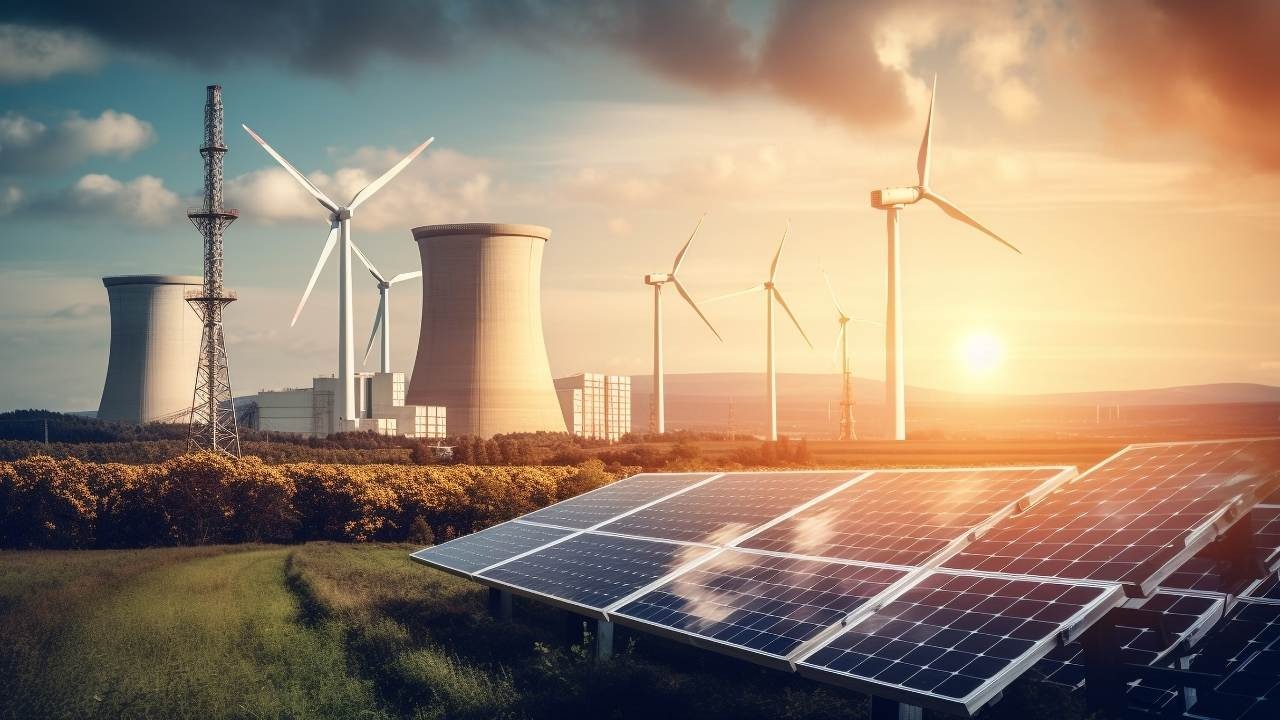
Renewable resources are naturally replenishing energy sources solar, wind, water, geothermal heat, and biomass that generate power with minimal or zero carbon emissions. They represent the most viable pathway humanity has for decarbonizing the global economy while sustaining industrial growth.
If you arrived here asking whether renewable energy actually works at scale, the evidence is settled. The International Renewable Energy Agency (IRENA) reported that renewables accounted for over 40% of global electricity generation in 2023, and that share continues climbing annually.
Table of Contents
This guide merges two critical angles how renewable resources transform industries and how they drive progress toward a carbon-free planet into one comprehensive resource covering definitions, types, benefits, real-world leaders, adoption challenges, and the technologies shaping tomorrow’s energy systems.
What Are Renewable Resources and Why Do They Matter?
Renewable resources are energy supplies drawn from sources that nature restores continuously. Unlike petroleum, coal, or natural gas, which take millions of years to form and release stored carbon when burned, clean energy sources operate within current natural cycles.
The distinction matters because fossil fuel combustion remains the dominant driver of greenhouse gas accumulation. Replacing those fuels with renewables directly reduces atmospheric carbon loading the core mechanism behind global warming.
| Renewable Resource | Energy Source | Primary Application |
| Solar Power | Sunlight captured via photovoltaic cells | Electricity generation, heating, industrial processes |
| Wind Energy | Kinetic energy from atmospheric air movement | Grid-scale electricity, distributed power |
| Hydropower | Gravitational flow of water through turbines | Baseload electricity, irrigation support |
| Biomass | Organic material (crop waste, wood, algae) | Biofuels, heating, combined heat and power |
| Geothermal | Subsurface thermal energy from Earth’s core | Electricity, district heating, industrial heat |
Each of these sustainable energy sources carries unique advantages depending on geography, climate, and infrastructure readiness.
The Historical Shift: From Fossil Dependency to Renewable Adoption
Humans relied on wind, water, and biomass for millennia before the industrial revolution locked economies into coal and petroleum dependency. That dependency accelerated economic output but generated environmental costs that are now impossible to ignore.
The modern clean energy transition gained momentum through a sequence of catalysts. The 1970s oil embargoes exposed the fragility of fossil fuel supply chains. The 1990s brought early efficiency gains in photovoltaic and turbine technology. By the mid-2010s, the U.S. Department of Energy documented that utility-scale solar and onshore wind had reached cost parity with new natural gas plants in most markets.
Today, the transition is no longer experimental. It is the central infrastructure strategy for the majority of industrialized and developing economies alike.
How Renewable Resources Are Reshaping Major Industries
The impact of clean energy extends far beyond the electricity grid. Multiple sectors are restructuring operations around sustainable power sources.
Manufacturing and Heavy Industry
Factories across Europe and Asia now integrate rooftop solar arrays and onsite wind generation to offset grid dependence. The International Energy Agency (IEA) notes that industrial electricity demand met by renewables has doubled in the past decade, driven by both cost savings and supply chain sustainability mandates from major purchasers.
Transportation and Mobility
Electric vehicles charged by renewable electricity are displacing internal combustion engines at an accelerating pace. Simultaneously, advanced biofuels derived from agricultural residues and algae are decarbonizing freight shipping and aviation sectors where full electrification remains technically challenging.
Agriculture and Food Systems
Solar-powered irrigation pumps, biomass-fueled drying systems, and wind-driven water management tools allow farmers to produce food with dramatically lower fossil fuel inputs. Research from the Food and Agriculture Organization (FAO) highlights that renewable-powered agriculture reduces both production costs and on-farm emissions simultaneously.
Technology and Data Infrastructure
Cloud computing giants including Google, Microsoft, and Apple have committed to powering global data center networks entirely with renewable electricity. Google’s Environmental Report confirmed the company matched 100% of its global electricity consumption with renewable purchases for three consecutive years.
Quantified Benefits of Transitioning to Renewable Energy
The advantages of renewable resources span environmental, economic, and public health dimensions. Credible data supports each claim.
- Carbon emission elimination The IRENA Global Renewables Outlook estimates that scaling renewables alongside efficiency measures could deliver over 90% of the energy-related CO₂ reductions needed to meet Paris Agreement targets.
- Long-term cost reduction Once installed, solar and wind facilities produce electricity at near-zero marginal cost, shielding consumers and industries from volatile fossil fuel pricing.
- Employment generation IRENA’s annual jobs review reported that the global renewable energy sector employed over 13.7 million people in 2022, with solar photovoltaics representing the largest single employer.
- Public health improvement Reduced particulate matter and nitrogen oxide emissions from displacing coal and diesel translate into fewer respiratory and cardiovascular disease cases, as documented by the World Health Organization.
- Energy sovereignty Nations generating power domestically from sun, wind, and water reduce exposure to geopolitical supply disruptions that plague oil and gas import-dependent economies.
Nations Setting the Global Standard for Renewable Adoption
Several countries demonstrate that large-scale renewable integration is not theoretical it is operational.
| Country | Renewable Achievement | Key Source |
| Iceland | Generates virtually 100% of electricity from geothermal and hydropower | Orkustofnun (National Energy Authority) |
| Costa Rica | Has run on over 98% renewable electricity for multiple consecutive years | Instituto Costarricense de Electricidad |
| Sweden | Targeting complete fossil fuel independence by 2040 through wind and hydro expansion | Swedish Energy Agency |
| China | Holds the largest installed solar and wind capacity of any nation globally | IEA China Energy Profile |
| Denmark | Regularly generates over 50% of electricity from wind power alone | Danish Energy Agency |
These examples prove that political will combined with strategic investment makes deep renewable penetration achievable across diverse geographies and economic conditions.
Honest Challenges Facing Renewable Resource Adoption
No credible analysis ignores the obstacles. Acknowledging these barriers builds reader trust and reflects genuine expertise.
Intermittency and storage gaps remain the most frequently cited technical limitation. Solar output drops at night, wind speeds fluctuate seasonally, and current battery storage capacity cannot yet fully buffer these variations at grid scale.
Upfront capital requirements for utility-scale solar farms, offshore wind installations, and grid modernization projects exceed those for comparable fossil fuel plants, even though lifecycle costs favor renewables.
Aging grid infrastructure in many countries was designed for centralized fossil generation, not distributed renewable input. Upgrading these networks demands massive public and private investment.
Inconsistent policy frameworks across jurisdictions create uncertainty for investors. Subsidy structures that change with election cycles discourage the long-term capital commitments renewable projects require.
Despite these realities, the trajectory is unmistakable. Battery costs have fallen over 90% since 2010, according to BloombergNEF, and grid modernization programs are accelerating across the Americas, Europe, and Asia-Pacific.

Emerging Technologies Shaping the Future of Renewable Resources
The next generation of clean energy innovation addresses current limitations while opening entirely new applications.
Green hydrogen produced through renewable-powered electrolysis offers a zero-emission fuel for steel manufacturing, long-haul shipping, and chemical production sectors where direct electrification is impractical.
Artificial intelligence and smart grid systems optimize energy distribution in real time, balancing supply fluctuations from wind and solar against demand patterns with increasing precision.
Solid-state and iron-air batteries promise storage durations of 100 hours or more at costs low enough to make round-the-clock renewable power economically viable without fossil backup.
Floating offshore wind platforms unlock wind resources in deep waters previously inaccessible to fixed-foundation turbines, dramatically expanding the global wind energy resource base.
The IEA World Energy Outlook projects that renewables will supply over 80% of new electricity capacity additions through 2030, making clean energy the default choice for power generation worldwide.
Conclusion
Renewable resources have moved decisively from the margins of energy policy to the center of global industrial strategy. Solar, wind, hydro, geothermal, and biomass technologies deliver measurable reductions in carbon emissions, lower long-term energy costs, create millions of jobs, and improve public health outcomes across every continent.
Challenges around storage, grid modernization, and policy consistency are real but shrinking rapidly under the pressure of technological innovation and market forces. The nations and industries investing aggressively today will hold structural advantages for decades.
Whether you manage a business, shape policy, or simply choose your household energy provider, every decision that favors renewable resources accelerates the transition toward a genuinely carbon-free economy. Share this guide with someone who needs the full picture informed choices compound into systemic change.
What are renewable resources?
Renewable resources are energy sources that nature replenishes continuously, including sunlight, wind, flowing water, geothermal heat, and organic biomass. They produce electricity and heat with minimal or zero greenhouse gas emissions, unlike fossil fuels that release stored carbon when combusted.
What are the five main types of renewable energy?
The five primary categories are solar power, wind energy, hydropower, biomass energy, and geothermal energy. Each harnesses a different natural process to generate usable power, and their suitability varies depending on regional geography and climate conditions.
Why are renewable resources important for climate change?
Burning fossil fuels for energy is the largest single source of global carbon dioxide emissions. Replacing those fuels with renewable alternatives directly reduces atmospheric greenhouse gas concentrations, which is the fundamental requirement for slowing and eventually reversing global temperature rise.
Which countries lead in renewable energy adoption?
Iceland and Costa Rica generate nearly all their electricity from renewable sources. Denmark leads in wind power penetration, Sweden is targeting complete fossil fuel independence by 2040, and China holds the world’s largest installed solar and wind capacity by a wide margin.
Are renewable resources actually cheaper than fossil fuels?
In most markets, newly built solar and onshore wind facilities now produce electricity at lower cost per kilowatt-hour than new coal or natural gas plants. Data fromIRENA and BloombergNEF consistently confirms this cost advantage, which widens further when health and environmental externalities of fossil fuels are included.
What is the biggest challenge facing renewable energy?
Energy storage and grid integration remain the most significant technical hurdles. Because solar and wind output varies with weather and time of day, affordable long-duration battery systems and modernized electrical grids are essential for achieving fully reliable renewable power supply at national scale.